

*****
This 1993 play is characterised by dry northern wit, knowing ridiculousness and profound sadness. A story of love, loss and relationships.
It helps to know a little about Kay Mellor, the playwright’s background.
Mellor was born in Leeds on 1951, to a Catholic father, and Jewish mother, whose marriage was unhappy, and beset by domestic violence.
She wrote for TV soaps Coronation St, Brookside, and created the hit television series Band of Gold. Her daughter Gaynor Faye found TV fame on Coronation St and Emmerdale.
The tale, a four hander, features a working-class woman caught in an unfulfilling marriage, yearning for romance, themes more popularly realised in Shirley Valentine
Betty, played with no-nonsense charm by Pippa Olliver , is a dutiful wife and mother who, dressed in a peach two-piece on the day of her son’s wedding, takes a life-changing detour into her loft. As she rummages among its dusty old boxes and suitcases, it becomes a portal, of a kind, back to a more vital past self. Olliver deftly switches between wry comedy and suicidal despair in a powerful, assured, pivotal performance.
Inspired by a story told to Mellor by her mother, it is awash with regret, specifically Betty’s decision to end a secret affair with her now dead Polish lover, Craze (Dan Burnham). In the retelling of that love affair, Olliver delightfully reveals herself as a passionate woman, not the drudge of today.
Director Phil Astle adroitly maintains a pace and predictable punchiness of a sitcom. The first act is part monologue, part playful badinage. Betty’s bamboozled son Mark (Gareth May), is trying to talk her down from the loft while her husband (Richard Irons), looks for her downstairs. The second act sees them up on the roof.
The cast have to contend with a daring script that straddles genres, from gentle comedy to kitchen sink drama while the family pick over the fault lines in their relationships . It is also part ghost story, when Craze emerges in the loft and cajoles Betty into a grand escape from her life. In the retelling of that love affair, Olliver explores herself as that passionate woman, sentimentally, and explosively.
Her poor bewildered, and, as it turns out, lonely husband Donald, is performed exquisitely and sensitively by Richard Irons , being left flummoxed by his wife’s extraordinarily out-of-character behaviour.
Malcolm Robertshaw’s set is both real and surreal – a fitting combination for a salt-of-the-earth comedy that has the dead roaming among the still living. It alternates between the dusty loft, full of unspoken secrets and sentimental memories, and the perilous roof top. The revolving set is a treat, with the roof a platform for jeopardy and intrigue. Credit to Marion Chittenden for her sensitive lighting to close the first half and her boldness in illuminating Betty whilst up on the roof in the second act.
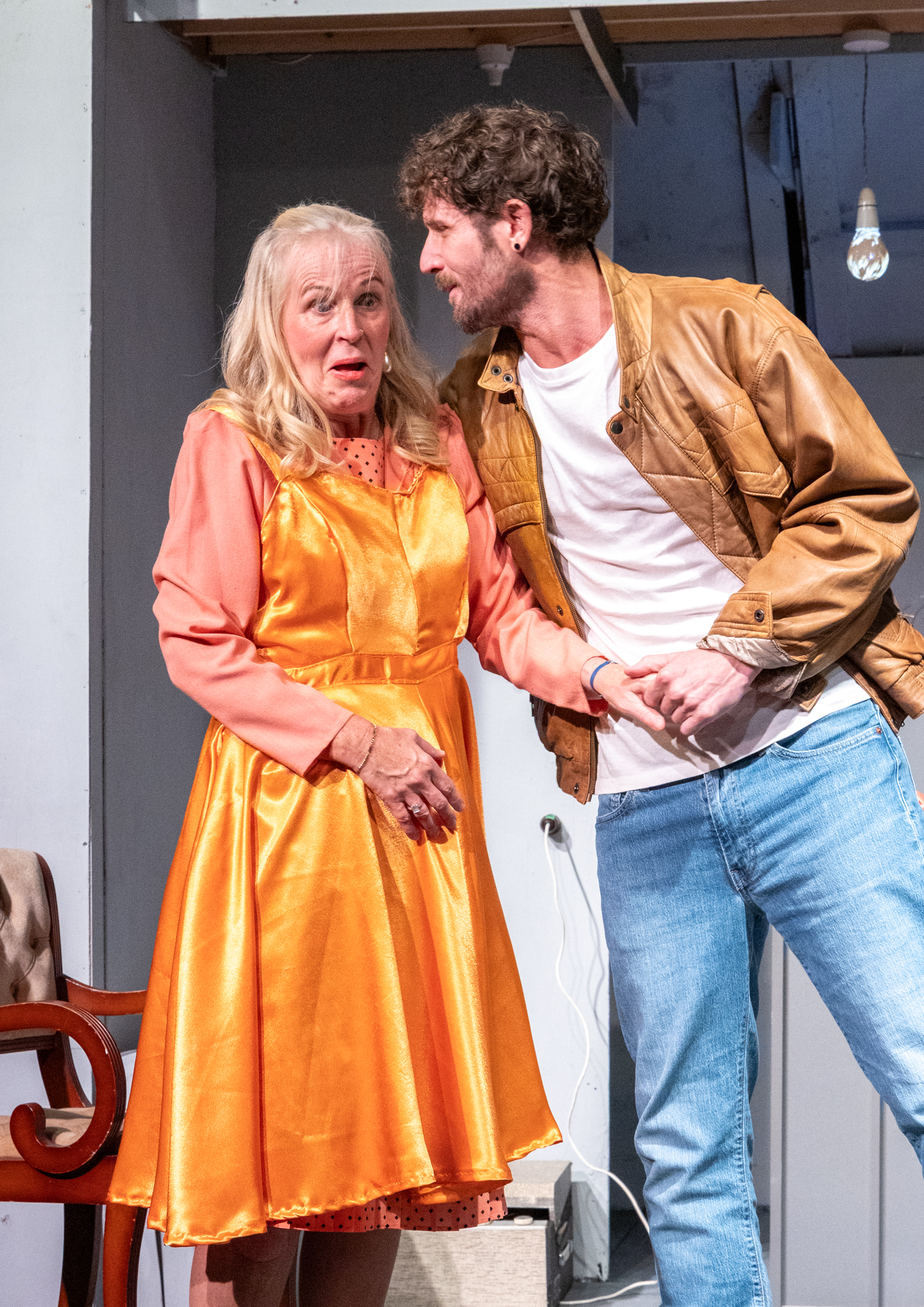
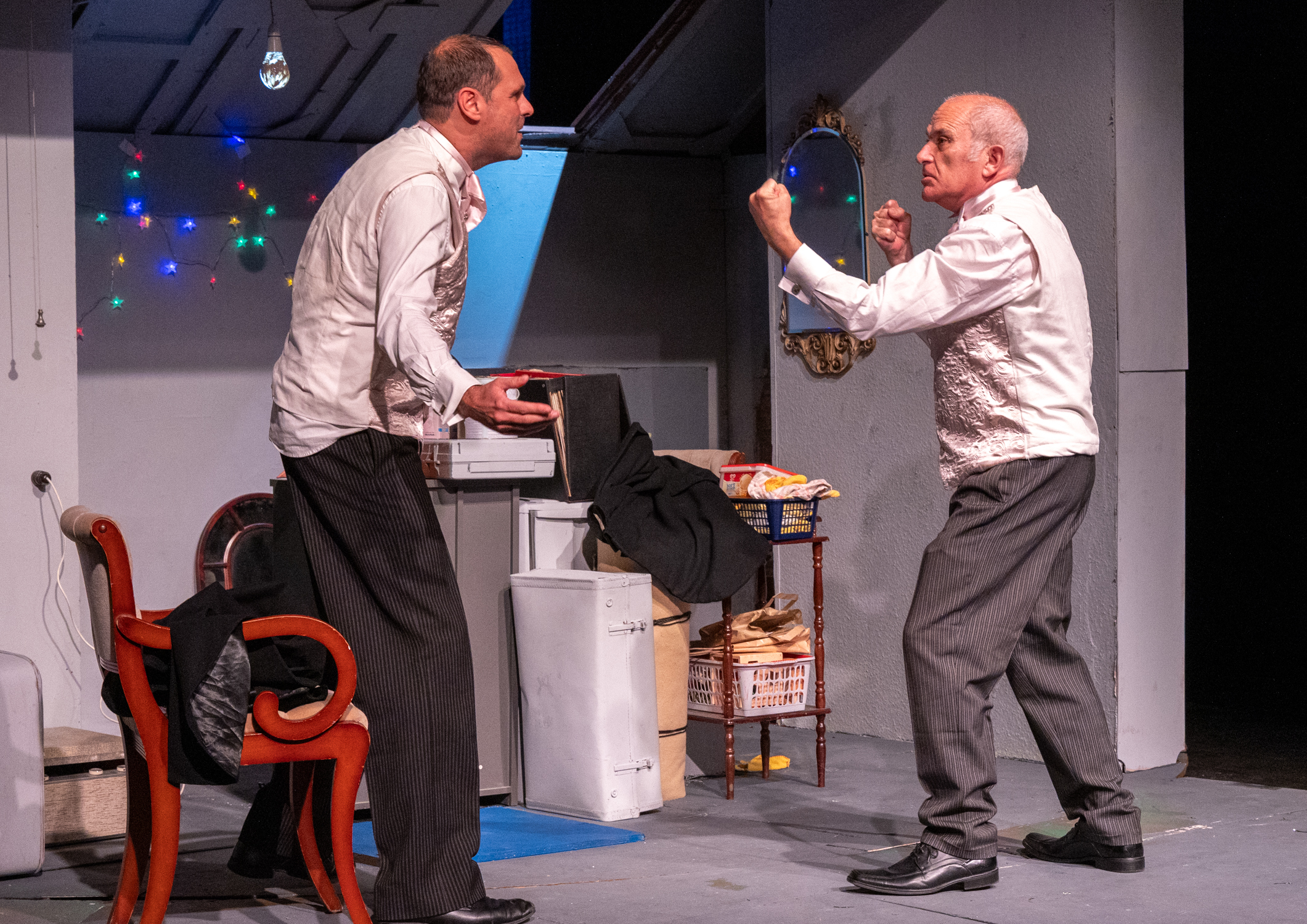
The father-son showdown is especially powerful for its awkward humour and pathos.
The denouement on the roof as a hot air balloon appears is wonderfully absurd. Was it all a dream?
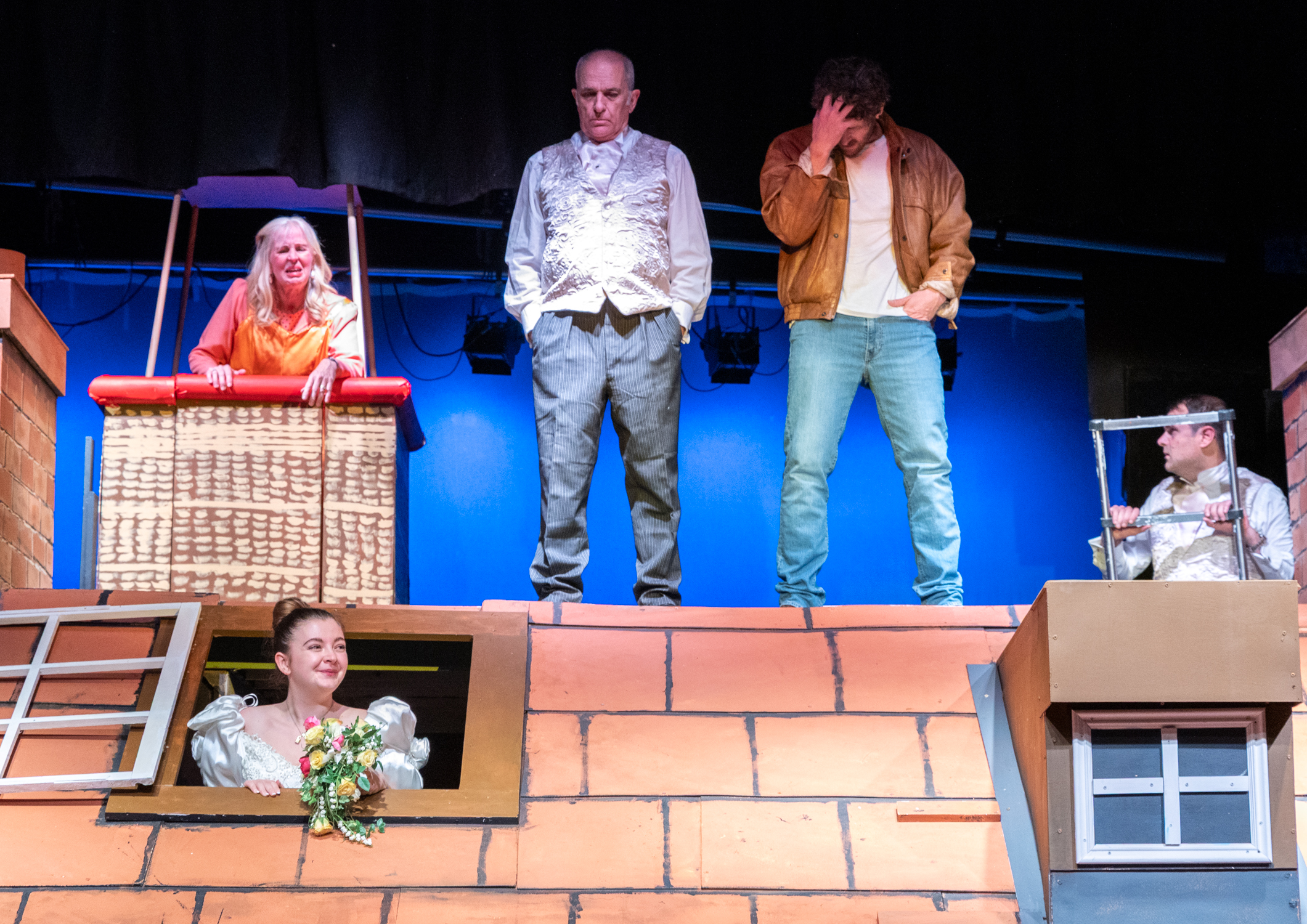
Astle brings the best out of this play, dialogue rich, which leaves you laughing out loud one moment, before then morphing into poignant moments of loss and regret, contemplating roads left untravelled.
The running time is a taut hour and three quarters , not a minute is wasted. Runs until 26th September.
Gary Longden
 Garyswordz