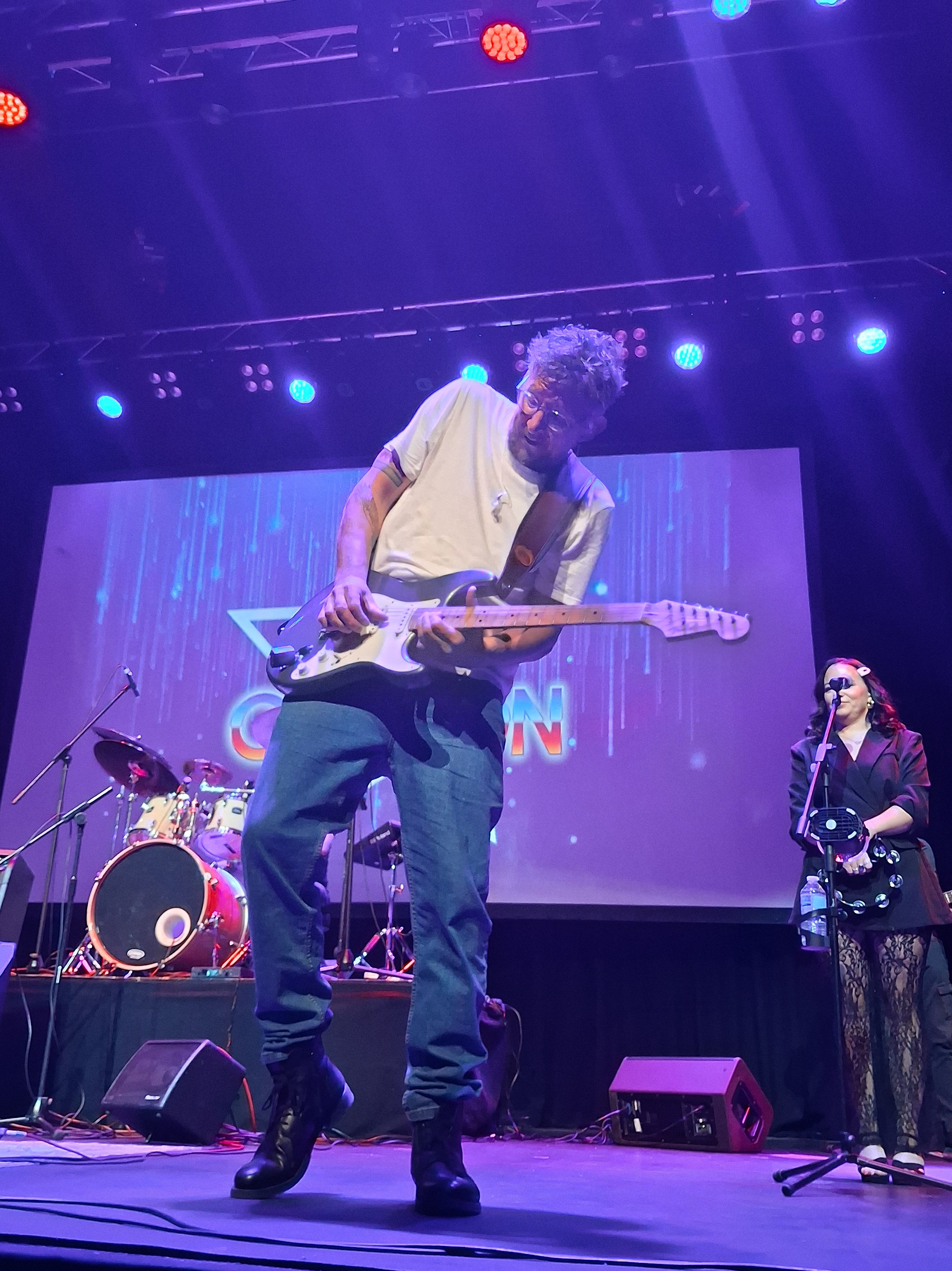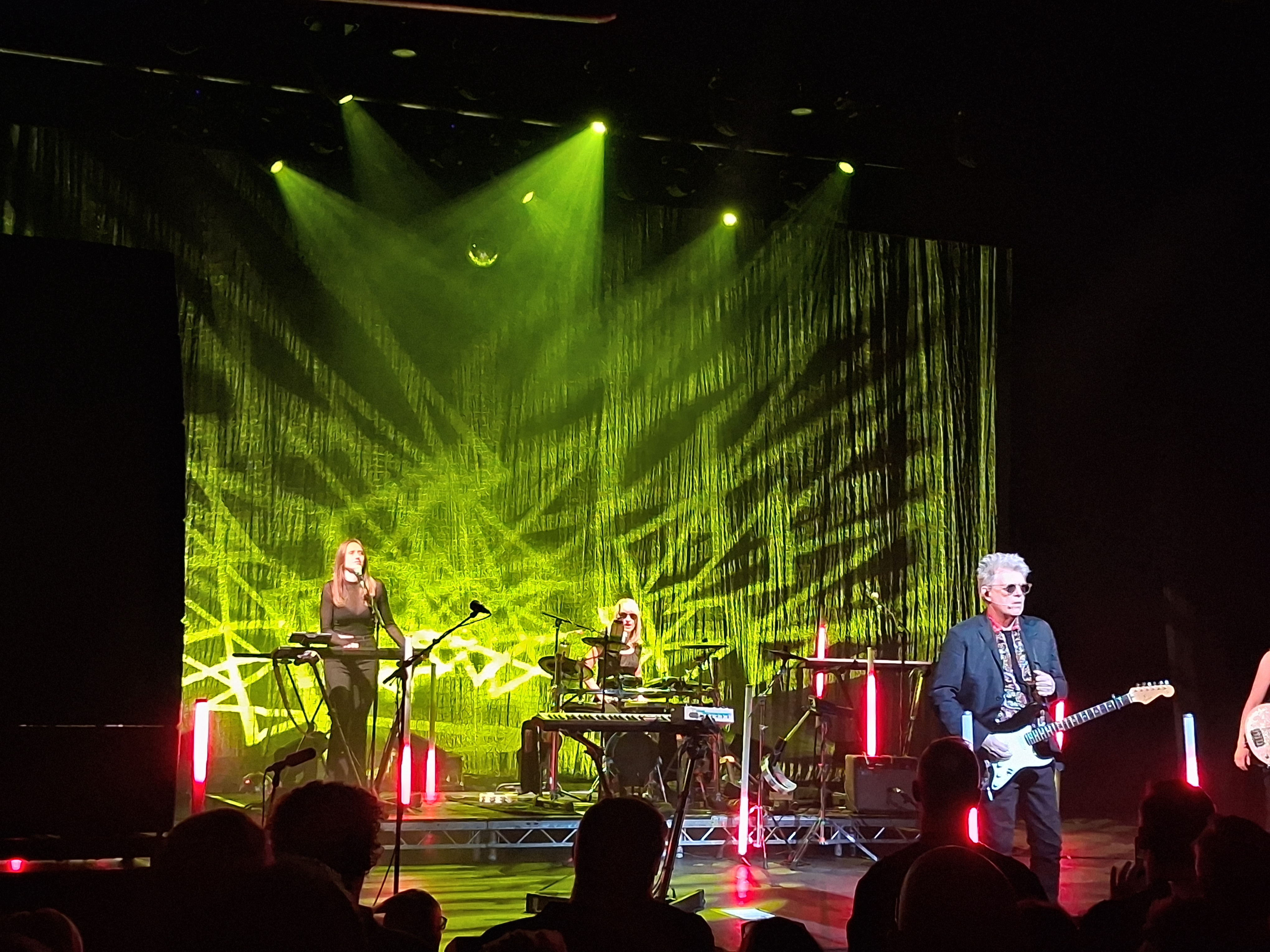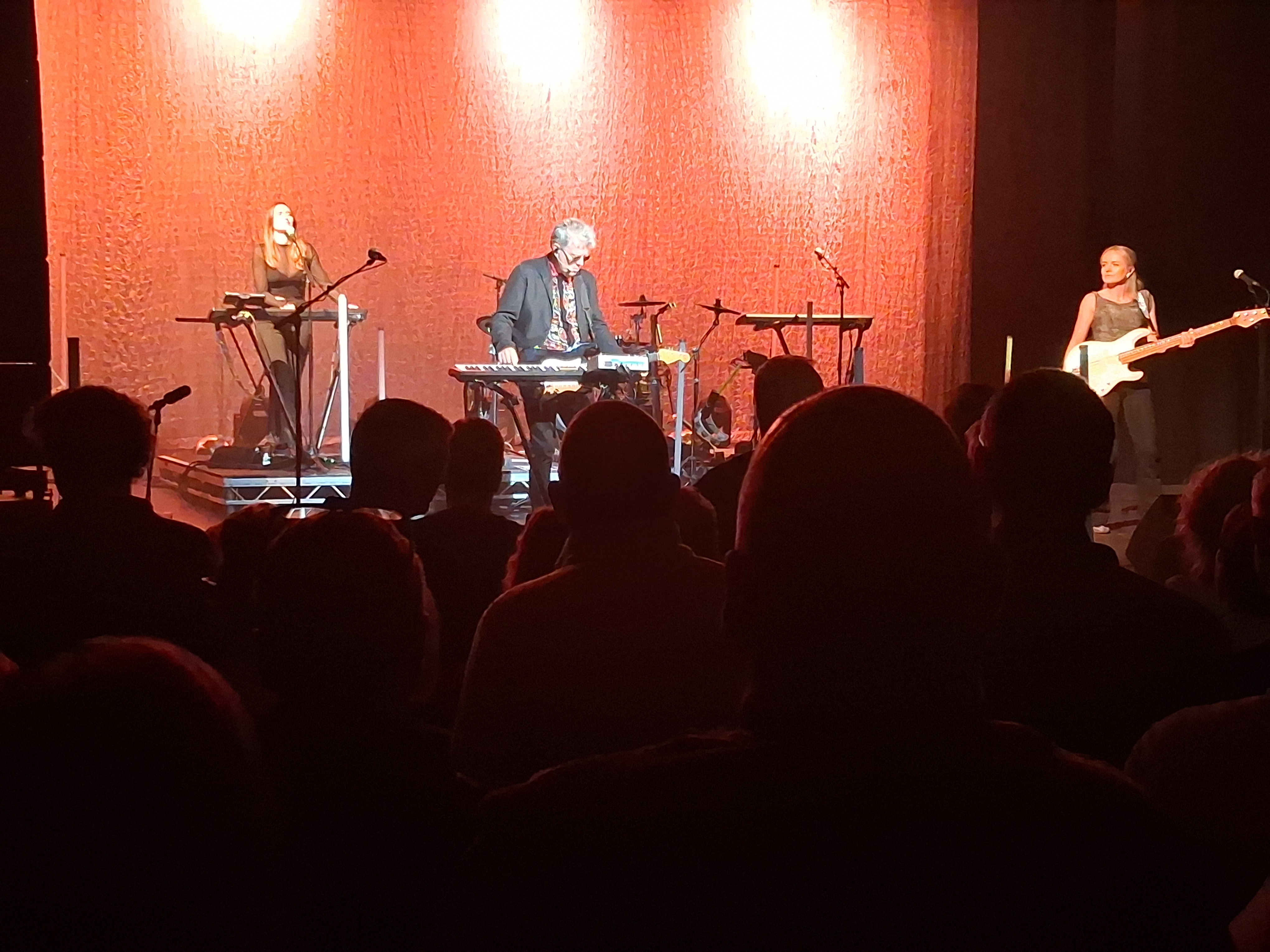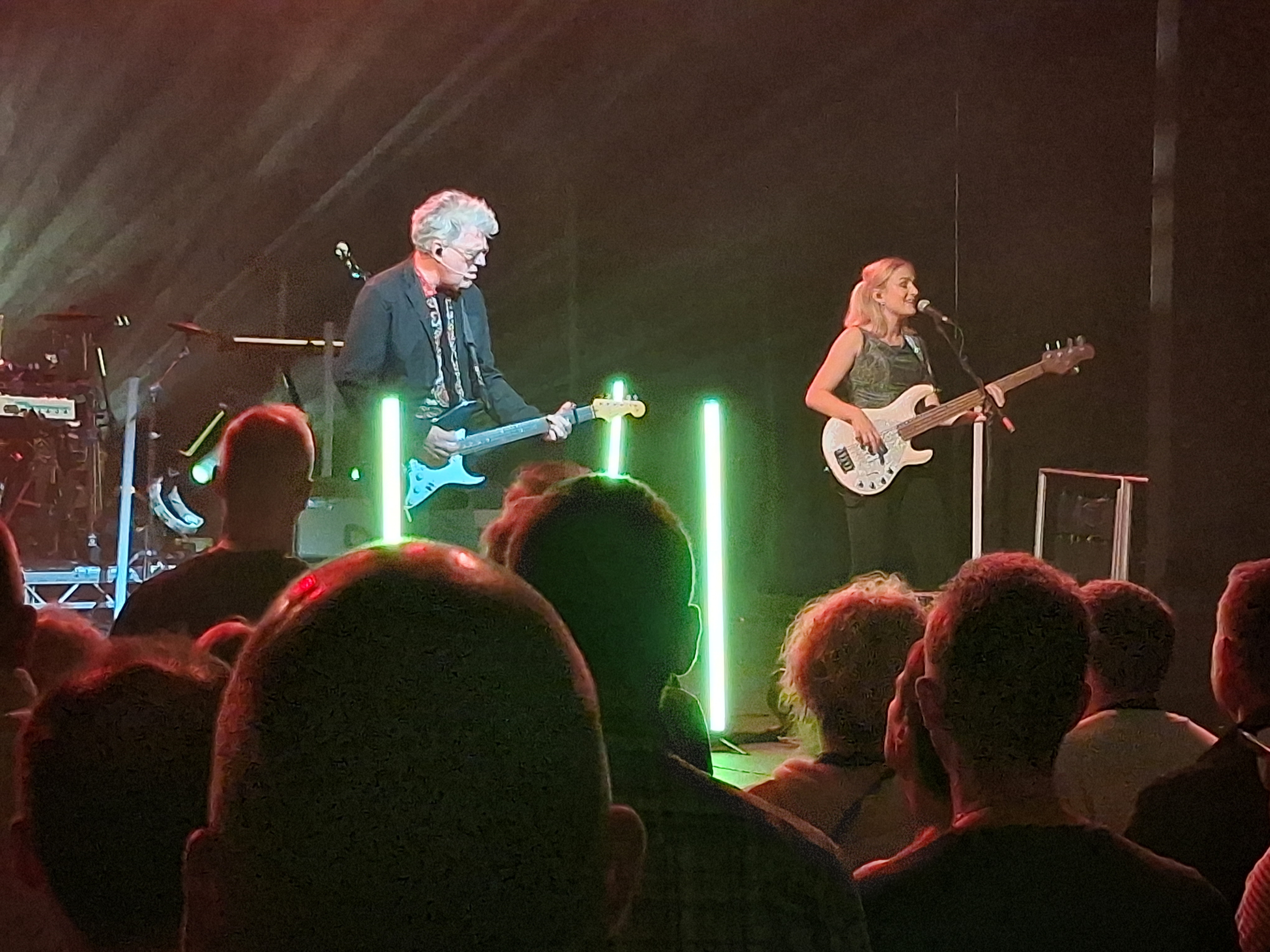
***** This was the third time I had seen the show on this tour, and the fourth overall. It continues to grow on me.
For a detailed review search for the Nottingham Theatre and Alex theatre, Birmingham shows.
What stood out this time was quality of Ray Davies song writing and the coherence of the song choice. The end is a little forced and rushed but after two hours all good things must end.
The Friday night finale of “Lola” was electrifying, energising the entire theatre. before that “I go to sleep” was sublime. The entire cast gave it their all for the closing mash up of tunes- of course we needed “You really Got Me” one more time.
Unusually for a jukebox musical there is a story, and it is well told, and well acted. Continues on nationwide tour
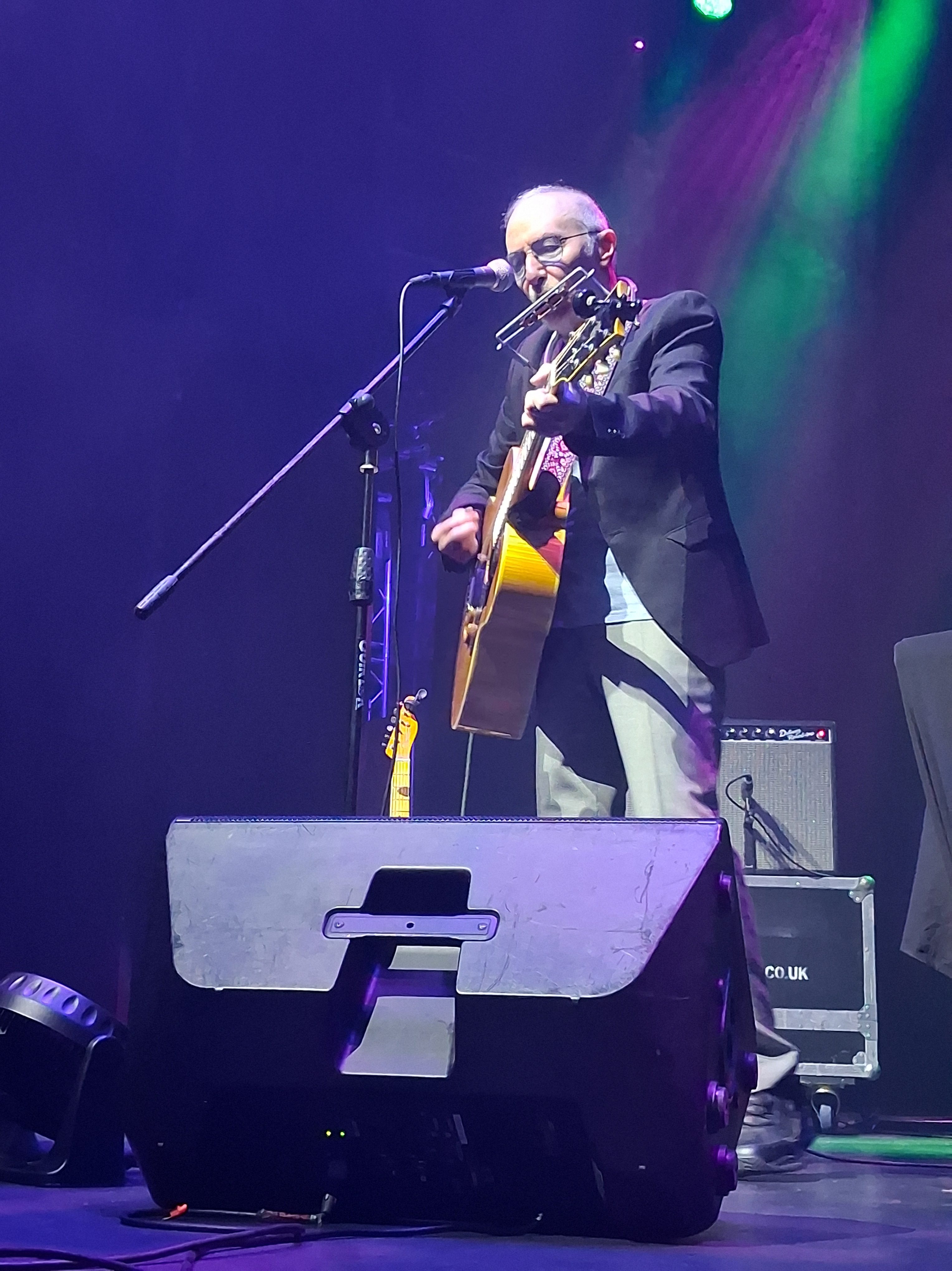
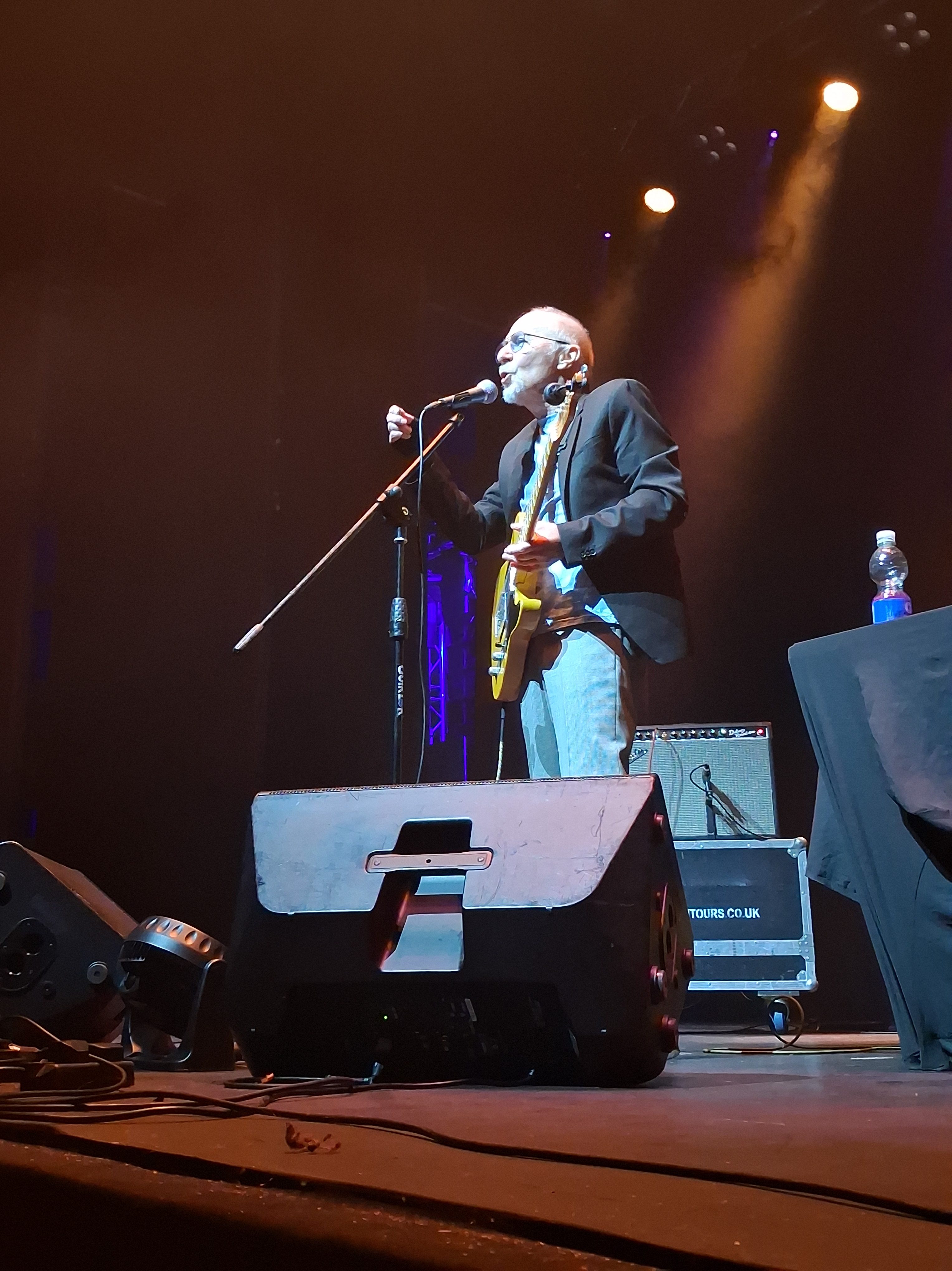
As the Rock era draws to a close, heroes are thinner on the ground. Unusually, Ashcroft has had two bites at the cherry, first as an Indy icon with the Verve, then after a period in the wilderness ,and a career pivoting stint supporting Oasis as a solo superstar. Stadiums and festivals are unforgiving places, intolerant of those that are merely filling in time before the main event. Ashcroft triumphed. Tonight I saw why.
Saturday night for a bank holiday weekend in Birmingham England’s second city and a 16000 sell out. No wonder as he came on he made his way to the front of the stage and took a minute to savour the atmosphere and occasion before blitzing the evening.
One thing he can never be accused of is modesty. Billed as Richard Ashcroft, not the Richard Ashcroft band, his initials are emblazoned in lights as the backdrop. He doesn’t introduce or name check his backing singers, the five piece string section, or band. This is him- and he pulls it off. No snazzy stage, no glitzy costumes. Just shades, jeans and t shirt and hoody for him.
What he did have was a killer set of songs, many stretched out, all improved for live performance. “Music is power” and “Break the night with Colour” became ten minute opuses. Two hours of compelling genius. “Hold on” was Springsteenesque in its call to arms cry.
Yes he does love the “all along the watchtower” chord changes ( weeping willow and others), and the lyrical nod to Reach out ill be There in Cmon people is shameless. But he gladly name checked Joan Armatrading for Lover and William Blake for the imperious History.
Wrexham’s the Royston Club held their own as the opening act with a sharp thirty minutes
The East Midlands has been treated to Shakespeare’s greatest hits just recently. A few weeks ago the RSC brought Hamlet to Nottingham. Now Derby theatre in conjunction with Hull Truck Theatre , and Octagon Theatre Bolton, offer us Macbeth
–
The Tragedy of Macbeth is thought to have been first performed in 1606 and dramatizes the physically violent and damaging psychological effects of political ambition and power. It is Shakespeare’s shortest tragedy written during the reign of King James I, and contains the most allusions to James, patron of Shakespeare’s acting company. In the era of the predominance of Donald Trump this cautionary tale of the dangers of power could not be more prescient.
–
If you don’t know the plot, where have you been for the last four hundred and twenty years?
–
The set is spartan, industrial and austere. Grey flagstones are speckled with weeds against a backdrop of doorways and an iron staircase illuminated by eerie lamplight. This is no luxury castle. Is it a bunker? Is it a barracks? Is it a prison? Is it an underground carpark? It is brutal, and unforgiving- just like the play. There are lots of doors, some dead ends, some exits, some entrances, just like the choices facing the play’s characters. The multiple multi level doors and doorways create a sense that whatever route or door is taken, the fate of the characters is sealed. Hell is murky
–
Costuming and weaponry is modern as is the overall tenor of proceedings. Rachel Canning does a skilful job with her set and costume design to underscore that. Rarely do I namecheck fight directors. With the suitably exotically named Haruka KurodaI , I make an exception. The closing showdown is terrific, visceral, muscular and tense, enormously aided by the physical presence of Oliver Alvin Wilson in the titular role. The ensuing bloodbath makes Quentin Tarantino look tame.
–
The main protagonists are Macbeth (Oliver Alvin-Wilson) and his conniving wife, Lady Macbeth, played by Derby theatre favourite Jo Mousley.
–
Not only does Alvin Wilson have an imposing physique, he also has the ability to roll hubris, ambition and vulnerability into a compelling performance. That performance is hugely energised by Jo Mousley who smoulders as Lady Macbeth.
–
In the 1970’s Helen Mirren gave a career defining performance as a gangster’s moll in the film; “The Long Good Friday”. Mousley’s performance is a raven haired spin on that. Sexy, sassy, and assured, she brings 21st Century Girl Power to a 17th century creation. Yet still she also convinces in her white nightgown , disintegrating amidst the wreckage of her plotting, centre stage. It is a wonderfully executed scene.
Director, Mark Babych, has managed to update this tragedy without losing its essence, aided and abetted by an unusually strong ensemble cast- the witches themselves chilling and thrilling. It lasts a taut two hours and thirty minutes including interval and runs until Saturday 18th April
Priscilla Queen of the desert- Birmingham Hippodrome
****
Old sparkling favourite Priscilla Queen Of The Desert returns to the Birmingham Hippodrome stage with a dazzling, brand new 30th anniversary tour production.
An unseasonably cold, drab Tuesday evening in Birmingham , metamorphosed into the warmth and colour of the Australian desert drag and transgendered scene, as Priscilla rolled into town as part of a triumphant nationwide tour.
The premise of the show, that a group of drag queens take a tour bus – the eponymous Priscilla, into the Australian outback to perform a show is inauspicious. The realisation of it is a delight, aided and abetted by the cast alchemy of this stage production . Its origins lie in the 1994 film, by Stephan Elliott and Allan Scott, The Adventures of Priscilla, Queen of the Desert, but the musical did not debut until 2006. Legend has it that show Producer Scott could sing the scores of some three dozen musicals. That knowledge , grasp and touch for musical theatre is much in evidence here.
–
Musically, the songs are culled from the club Hi- energy scene of the eighties. Richard Atkinson, musical director, and Ben Harrison, sound design, have done a fine job both with song choice and with the arrangements using a live band, orchestrations by Richard Weeden .
The evening is jam packed with 80’s dance favourites including; Hot Stuff, It’s Raining Men, I Will Survive, Girls Just Wanna Have Fun, Finally, and Shake your grove thang- which the audience did enthusiastically until the end.it is also very funny.
The songs are supported by the stunning choreography courtesy of Matt Cole. Vicky Gill produces a visual cornucopia of costuming. Ian Talbot as Director delivers a compelling entity with vim and vigour. The ensemble singing is at once beautiful and stirring featuring delightful harmonies packing punch whilst knowing when to provide space in the music.
–
The Drag queen triumvirate of Tick, ( Kevin Clifton), Bernadette (Adele Anderson) and Felicia (Nick Hayes) are perfectly cast combining pathos and joy with equal aplomb. Adversity always gives way to triumph, as the ladies overcome prejudice and preconception by dint of their personalities, music and resilience.
The most compelling performance comes from Adele Anderson as Bernadette, whose ageing female persona is alluring, tragic but life affirming. Understated in a way his two lead performing companions, Tick and Felicia are not, she anchors the show from drifting off into plain Burlesque.
Nick Hayes has the fun, flouncy part as the irritating Felicia, with the camp button always turned to the maximum. It is only when he is fully dressed, and sings “Hot Stuff” that his natural talent emerges, giving the song, which is often routine, an edge and poignancy rarely apparent in the renditions of other singers.
–
Special mention should be made of Billie Hardy, who plays Ticks’ wife, Marion . In the face of overwhelming competition for the skirts, heels and stockings in the wardrobe, she still stands out with sharp dance moves and a figure the boys would die for.
–
The show carries a torch for all members of society who may feel marginalised for whatever reason, hence its success.
In a troubled world, this life affirming show and message strikes a timely chord with its feel good vibe and irascible humour- runs until Sat 28th and continues on nationwide tour.
Star of the show is boy band heartthrob Duncan James, from Blue, who plays Tick, a drag queen who wants to travel to Alice Springs to see his wife and young son aboard a rickety old coach christened Priscilla. James carries the role with ease, and on “I Say a Little Prayer For You” and “Always on my Mind” sings with power and conviction, a trait demonstrated by the entire, substantial cast.
p4
Production values are glitzy and opulent, with the focus on costuming and the bus. The choreography, originally by the late Ross Coleman, and now in the hands of Andrew Hallsworth is snappy and crisp, with an eye for the panorama of the stage, including the airborne divas!
p5
It is pretty much impossible to watch this show without clapping your hands, tapping your feet, and singing along to the club classic score. The energy injected into this opening night from a large talented cast was impressive, as were the smiles and standing ovation at the end from the audience. The show runs till Saturday 7th May and continues on nationwide tour.
Lad is an immersive pop up play by John Booker, set in a pub, and here, performed in a pub.it tackles masculinity and identity. Coincidentally I saw fellow East Midlands playwright’s James Howard’s production of Punch in Nottingham last weekend which covers similar ground.
–
Old school friends Jack and Luke have found their lives diverging, one going to university, the other to jail. Do old ties still bind? Or have their new experiences reshaped them? Had the lads originally understood their own identities? Had they done so, but were merely projecting an identity for themselves- to fit in with how they thought they should be seen?
–
There is much to cram into a forty minute play. Jack and Luke,( Kurtis Lowe and Kwamé Kandekore) are the protagonists, England vs. Spain, Euro 2024 Final, the backdrop. The tension off the pitch is as great as it is on it.
–
Pubs are strange places where intimate, yet transient conversations occur, Booker captures that perfectly. Supporting England provides that sense of belonging collectively against individual vulnerability and doubt. As an audience we are part of that, same room, same pub, same discussion. Throw in class, race, and masculinity in a post industrial world, and the audience is faced with much to contend with.
–
What the play succeeds in doing is striking up an important conversation, well told, well written and well acted. Inevitably the more profound and far ranging the questions asked , so the limitations of forty minutes bite.
–
The second world war proved that women were equal in the workplace. The 1960s/70s rise in feminism occurred as traditional male roles and hierarchies were being dismantled by de-industrialisation while improved educational opportunities for women simultaneously saw mass encroachment on traditional male white collar jobs and roles. Where do today’s lads fit into all of this? How does the remote sense of belonging and identity of the internet fit into all of this? Can it be resolved over a pint?
Kurtis Lowe and Kwamé Kandekore perform superbly in this intense two hander sat at a pub table. Secrets are revealed, and the sympathy of the audience vacillates as their story unfolds, tautly directed by Danny Bailey, dramaturgy by Nic Wass . The dialogue is authentic, the banter funny and on point.
–
Thus, Lad is a beginning rather than an end. It feels like one act of a larger entity. I suspect that Booker will explore this further in future pieces, both he and the subject matter deserve him to do so.
Midsomer Murders- the Killings at Badgers Drift- Derby theatre
***
The television series is something of a cult show now, as a packed Wednesday night demonstrated. All of the ingredients which make this murder mystery so compelling on screen were here on the stage. Strange goings on in a picture postcard setting, wry humour and exaggerated, eccentric characters.
–
This was Caroline Graham’s first Inspector Barnaby novel, The Killings at Badger’s Drift, was published in 1987. and was named by the Crime Writers’ Association as one of “The Top 100 Crime Novels of All Time”. It also won the 1989 Macavity Award for “Best First Novel” and was nominated for the same honour at the 1989 Anthony Awards and the 1988 Agatha Awards. Her expertise as a novelist and dramatist is well demonstrated in this offering.
–
Daniel Casey plays the lead role of DCI Tom Barnaby, although on screen he plays the part of Sgt Gavin Troy this time played by James Bradwell introduced amusingly as “his apprentice”.
–
The plot unfolds around the death of spinster Emily and sex in the bushes. A visually pleasing pastoral set by Dave Woodhead allows slick lightning fast set changes complete with “magic carpet” technology.
–
The plot, characters and scenery move with ruthless precision, as alibis, lies and red herrings are laid bare. Of course it is all ridiculous, Caroline Graham knew it, the cast know it, and we the audience know it- but that does not stop us all signing up for the ride. We wallow in the absurdity, warmed by the sincerity and gentleness of touch, reassured by the familiar music. Matt Haskin’s lighting is bright to the point of glaring, teasing us that we are on a film set, deliberately artificial.
Each act runs for an hour in this glorious homage to a bygone age that never was. Runs until Sat 28th and continues on nationwide tour. Essential viewing for all devotees of the series.
Punch returns to Nottingham Playhouse, following its remarkable simultaneous openings on Broadway and in the West End. After its premiere in 2024, this powerful account of Jacob Dunne’s story sparked discussions everywhere, from theatres to courthouses and the House of Commons. Now it is back, with a brand new cast. This production is dedicated to James Hodgkinson and all victims of one-punch.
–
One punch. One action was all it took for a young lad from Nottingham to change not only his own life but also the lives of many people around him, as well as those he didn’t even know. Based on the book ‘Right from Wrong’ by Jacob Dunne, this heartbreaking, horrific story of redemption deserves another day in the sun.
–
Written by local author James Graham, based on the local Meadows Estate , and playing at Nottingham Playhouse this a truly remarkable local event for a play that has received national, and international acclaim. A special occasion.
It is a perspective on Nottingham which is uncomfortable, but true, struggling with school, an alcoholic mother and coping by binge drinking and taking drugs at the weekends with his friends, Jacob Dunne is a member of the aspirational working class. Marching into town wearing his Fred Perry trainers and clutching a bottle of vodka on a random Saturday night in July, Jacob’s need to be seen and heard as well as respected by his friends leads him to punch a stranger once- resulting in the victim’s death.
A trainee paramedic from Southampton, James, Hodgkinson,he was in Nottingham to watch the Test Match with his father and his friends: a kind and compassionate young man who had his whole life ahead of him.
Told through the eyes of Jacob, played by Jack James Ryan, we embark on an almighty journey of redemption. Jack brings energy, credibility and an authentic accent to his role as the protagonist. He can narrate and explore what it was like for Jacob growing up with an autism diagnosis, many school detentions and the temptation to take drugs with the local gangs from the estate where following Forest is as entertaining as life becomes.
–
Adam Penford directs this punchy and emotive production in which the UK’s pub and gang culture is depicted accurately, as well as providing the audience with a timely reminder that although 15 years have now passed, these issues and incidents continue to occur.
Watching Jacob’s face appear on the evening broadcast on East Midlands Today is James’ parents, Joan and David. Struggling to understand how James died from only one punch to the face, the family have questions and would like to know whether Jacob’s actions were premeditated or unfortunate, as there is a difference.
–
Finty Williams and Matthew Flynn play James’ mother and father, both respectfully and powerfully, through their emotions and subtle differences in their personalities. “Will he go straight back to what he knew before?” is one of the many questions they have for Jacob and after several years they decide to embark upon restorative justice to try and get answers to their questions.
In the gripping second act, the focus is on the restorative justice session.
Although this play covers some difficult themes and at times can be a tear-jerker, there are moments of light and humour throughout the production. Grace Hodgett Young, who plays Clare and Nicola, brings many of those moments to life, and her ability to switch between two very different characters is admirable.
The set design, designed by Anna Fleischle, is also really clever and adds personality and a different dynamic to the relationships that are explored on stage. An ominous concrete subway tunnel dominates centre stage, zig zag barriers obstruct the walkways to the side.
It is widely reported that Jacob and James’ parents continue to meet regularly and speak to a range of audiences, sharing their story. This play is dedicated to James Hodgkinson and to all victims of one-punch violence. Many around me were moved to tears
As a keen historian I knew the story. This was my first opportunity to catch up with the show itself replete with hyperbole . It’s a good story- but a musical?
–
The first 20 minutes I struggled. The narrative was mainly sung through meaning you had to concentrate on the words. The five actors played interchangeable roles, and genders amidst lightning quick costume and scene changes. What on earth was going on? But thr first act runs to seventy five minutes for a reason. The audience adjusts, the story starts to unfold and the audience starts to make sense of it all. The first half songs are very Noel coward and could be being sung in the piano lounge of the Savoy in London.
–
Commercially the show is paydirt. A historic story, so no royalties, all original songs, so no third party royalties, only a cast of five, so low touring costs and low stage set and costume costs- accountancy heaven.
–
The second half is decidedly rap, the opening second act number sees as rap song driven at high tempo by five Nazis- I thought I was at a Reform rally, and from then on the pace, and cohesion never lets up. ( And Nazis in musicals has history- think the Sound of Music and The Producers.)
( photo credit Matt Crockett)
_
The concept, book, music and lyrics all originated from the combined talents of David Cumming, Felix Hagan, Natasha Hodgson and Zoe Roberts – collectively known as Split Lip. It has morphed from its 2019 original fringe theatre days, through the West End and to Broadway.
–
Its construction is its strength, inventive in structure, faultless in delivery, meticulous in detail, with an unrelenting pace.
–
The company for the UK part of the tour includes Charlotte Hanna-Williams, Seán Carey, Christian Andrews and Holly Sumpton from the West End cast who are joined by Jamie-Rose Monk, Katy Ellis, Georgia Hagen, Jordan Pearson and Morgan Phillips. This being a five-hander, the casting changes nightly not as understudies but as a gender-blind multiple role-playing interchangeable entity.
( photo credit Matt Crockett)
–
I was caught out by the pathos of establishing the identity of the mysterious dead corpse. Previously gallows humour, and ribald jokes abounded- but the gear change jolted and worked.
–
Robert Hastie’s direction is brisk and relentless, Jenny Arnold’s choreography is demanding and effective. Ben Stones’ set is simple but versatile, effortlessly transporting us from the War room to Spain- and back.
–
Operation Mincemeat indeed matches the hyperbole with a warmth which is its secret weapon,-a celebration of the best of British inventiveness in theatre, and war time.
A play about sardines and doors. A favourite with amdram companies because if things go wrong the audience think it is part of the play.
–
Noises Off was written in 1982 by artistic polymath Michael Frayn, a journalist, philosopher, and novelist as well as playwright. It was inspired in 1970, when Frayn was watching from the wings a performance of his own The Two of Us – “It was funnier from behind than in front, and I thought that one day I must write a farce from behind.” And so the seeds were sown for this brilliant back-to-front farce about a dysfunctional touring company on the last leg of its tour – or simply on its last legs.
–
Subject to periodic revision by Frayn, the play explores the battle between the forces of order and disorder, and our search for happiness in our lives. Metaphors dance tantalisingly before our eyes. A tax evader, caught with his trousers round his ankles watches his second home descend into anarchy, while all around seem obsessed with sardines.
–
Director Alison Cahill has assembled a very strong cast. Unusually for a farce it does not mainly comprise conventional warring couples. It does however have a lot of doors, and windows, a harbinger of things to come. There are doors that stick when they should open, doors that swing open when they ought to be closed, doors viewed from the back, and doors viewed from the front.
–
Denise Phillips is a delight as housekeeper Dotty, a surreal fusion of Hilda Ogden and Mrs Brown, who is preoccupied with sardines as the world revolves around her. Teresa Berry provides the glamour as Brooke. A late addition to the role, she cleverly eschews the blonde bimbo trope, instead presenting an acerbic tax inspector who is good with figures in more ways than one.
–
As well as the accident-prone cast, the stage management team add to the confusion, putting out front-of-house calls that the performance will commence in one minute, three minutes, two minutes and finally three minutes again prompting the wonderful lament: “there’s a lot of OAP’s out there who haven’t got long to go.” Beth Morrissey is wonderful as the perennially exasperated stage manager Poppy.
–
There’s a satisfying depth to the cast, epitomised by Ron Parker as Selsdon Mowbay , the old stager whose secret hoards of whisky keep having to be removed from just about everywhere as he continually breaks in through a window at varying stages of the plot, planned, and unplanned.
–
The pivotal second act is handled adroitly, with skill, timing and energy, after the slower paced, scene setting, first act. Inventive, funny and incessant, I, along with the rest of the audience, roared with laughter, who couldn’t laugh when failed lothario Lloyd ( Sean Mulkeen) sits on a cactus?
–
Costuming is understated ( apart from Brooke!) but satisfying . Malcolm Robertshaw and his team take on the huge task of producing a front of house, and back of house, set, and win. Producing a play which depends upon things going wrong is more difficult than it may at first appear. Director Cahill delivers and embellishes proceedings with numerous nice touches such as director Lloyd appearing from within the audience as the play commences. Anyone who has been involved with an amateur theatre production will wince at how sharply the script is written.
–
A hugely enjoyable evening. Noises off can be heard, and seen, until 21st march.
Shakespearean traditionalists should give this a wide berth, the Court of Elsinore is now to be found on a ship.under Rupert Goold’s Captainship as director.
No expendse is spared, A roiling wake of waves down-stage (video design: Akhila Krishnan) makes the play seem to be sailing towards us, while the deck (designer: EsDevlin) sways and sometimes violently lurches. Will poison do for them- or seasickness?
There is textual precedent, Four characters are put to sea (in this version, corpses also get a naval burial) and fear is expressed at the number of “shipwrights” working in Norway to prepare its invasion of Denmark. Speeches are given a nautical twist “chamber” becomes cabin, “earth” is overtaken by “sea”. Ingenuity is required to explain why Yorick’s skull is not in the drink with the rest of him and the biggest loss is Gertrude’s haunting speech about Ophelia’s river death. Here, she just goes over the edge. Bold ideas include a red digital onstage clock, “witching hour” signalled as 00:00 The whole play takes place during one long night.
Ralph Davis’Hamlet, is terrific, closing the first act with the “To be soliloquy” , the entire audience were mouthing the words in case he forgot any of them
Raymond Coulthard’ Claudius exudes the sexual and political ruthlessness of a man willing to kill for a crown and to keep it, Poppy Miller , as Gertrude, is the surprise star poised then unravelling as, her growing guilt of having betrayed both son and husband bites.
Richard cant’s Polonius is strikingly more dapper diplomat than the standard windbag with a touch of Peter Mandelson thrown in
The unravelling of Georgia Mae Myers ‘Ophelia is exquisite but here she drowns at sea rather than in a river resulting in Gertrude’s beautiful eulogy being cut. That is not the only change. Polonious is killed bya gunshot from hamlet rather than a rapier thrust to an unknown behind the arras resulting in the “Dead for a ducat” line disappearing.
Performing the play in this magnificent theatre which existed during the new 1914 timeline was a treat. The Georgian costuming was a delight, none more so than Gertrude wearing a sumptuous long ivory skirt and bodice, and lace top latterly stained with Polonious’ blood.
every Rosencrantz and Guildenstern (or vice versa) are shadowed by the Stoppard spin-off,
Including interval the show runs for two hours and forty minutes but is unevenly split, one hour twenty five minutes versus fifty five minutes. Th evening runs like a greatest hits show a scene after iconic scene unfolds.
This is a must see for all who do not like to see Shakespeare messed around with.