20th Century Boy- Wolverhampton Grand Theatre

t rex

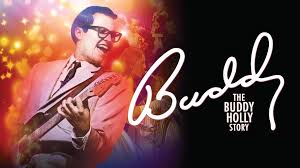
Modern musicals based upon pop stars and their music continue to find a place on stage. That place is determined by a number of factors; the star quality of the artist, whether they are dead or not, whether they still tour or not, the extent of their fame and/or notoriety, and the quality and durability of their music. Some, like Buddy, are a thinly veiled excuse to trot out some great music, others, like Taboo , about Boy George ,largely eschew the music in favour of narrative. 20th Century Boy strikes a middle ground, offering all the hits, but in the context of a narrative which aims to stand on its own two feet.

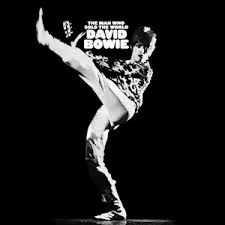
I had just entered my teens when T Rex swept to the top of the charts, and there is no doubt that Marc Bolan was a pop sensation with catchy songs, androgynous good looks, and star quality. When he died, in 1977, he had last had a top ten single in 1973, his powers and popularity were on the wane, with David Bowie snatching his creative mantle, and numerous glam rockers out-glamming Marcs’ early image. Yet his legendary status endures with his supporters claiming both that his work was under rated, and that there was more to come. Tony Stringfellow has written the definitive appreciation of Marc Bolan in The Wizard’s Gown – rewoven, and makes just such a case.

This show is an evolution of the one that opened in Ipswich some years ago, twenty minutes is trimmed down from the running time of the original three hours by director and choreographer Gary Lloyd and writer Peter Rowe. The cast is strong starring Warren Sollars (Mamma Mia!, From Here To Eternity) as Marc Bolan with TV stars Sue Jenkins (Brookside , ”Gloria” in Coronation Street) and Luke Bailey (Waterloo Road, Casualty).

The story opens through the eyes of son Rolan (Luke Bailey), who leaves behind his American mother, Northern Soul singer Gloria Jones (Donna Hines), to retrace his father’s musical steps in London. The year is 1992, 15 years since Bolan died when Gloria crashed his Mini into a tree after a celebration of his 30th birthday.

Marc’s mother Phyllis ( Sue Jenkins) has not spoken to Gloria since then, but she welcomes her grandson, and opens photo albums as she and Marc’s taxi-driver brother Harry (Peter Manchester) start a journey of rediscovery.

The songs are not played in chronological order but to support he story, most notably when the late career Dreamy Lady appears at the front end of the show as Bolan seduces June Child.
rex ensemmble

Bolan’s narcissism and addictions are not whitewashed, yet the show has a light touch too wit some good comic oments. Matthew Ashcroft’s leery Mickey Finn, and the punk caricature of The Damned entertain. The Bolan cogniscenti will be intrigued by the references to Tony Visconti and John Peel. Sollars gives an unashamed imitation of the star vocally, and in mannerism and movement. This is no reimagining of him, and he does so convincingly and faithfully.

The hits still sound great and the audience were dancing in the aisles for the greatest hits encore finale which the audience and cast enjoyed in equal measure in a boisterous finish.The second act ran out of steam a little as the hits ran out. I Love to Boogie was the highlight of the first half. Hot Love, Jeepster, Metal Guru , Children of the Revolution and 20th Century Boy were magnificent, Telegram Sam sounded derivative, the rest was a little lightweight save for Helpless Dancer which is now inextricably linked with Billy.

20th Century Boy runs till 5th July and continues on tour.

http://www.20thcenturyboythemusical.co.uk/
http://www.tonystringfellow.com/index.asp?pageid=506176

Posted in Behind the Arras Reviews | Tagged , , | Leave a comment

Buddy- Birmingham Hippodrome

buddy
This is the 25th anniversary tour of a show which celebrates the songs of an artist whose recording career lasted barely two years, but whose music endures. A jukebox musical, the two halves mainly comprise his rise to fame and studio work in the first half, and an extended concert sequence in the second.

Glen Joseph took the eponymous role in this performance which is shared on the tour with Roger Rowley, who plays guitar in the band. Angular and enthusiastic, Joseph is credible and lively, Rowley provides formidable back up on second guitar. In all Joseph has ten supporting musicians and singers, a luxury which Buddy Holly never had, providing a full, sumptuous and authentic sound.

The plot fairly thinly joins the dots between the musical numbers, but does not shirk the casual misogyny and more pernicious racism which was abroad at the time. The Hippodrome is a magnificent theatre and provided a fitting showcase for a talented cast. Amongst numerous satisfying cameos, Vivienne Smith shone as Maria Elena, a Hayrider, a Snowbird, and violinist. She also wore the best dress of the night, in beautiful cream, with pleated skirt, in a show which is particularly well costumed.

buddy group
The Hippodrome’s voluminous stage was well suited to a set which incorporates recording studios, concert halls, radio stations, and living space and provided a sense of occasion as the theatre stage became a concert stage.

There is no secret to this show’s success and longevity, the songs are very strong. A stripped down “Everyday” is the highlight of the first half, “Rave On” the raucous star of the second. Contemporary hits “Shout” , “ La Bamba” and “Johnny B Goode” flesh out the musical numbers offering variety, shade and musical context.

British audiences are satisfyingly frugal with offering standing ovations, but all felt obliged to do so for the finale, a deserved acknowledgement of a fine show, well produced and performed. Buddy runs until 28th June and then continues its nationwide tour.

Posted in Behind the Arras Reviews | Tagged , , , | 1 Comment

Caught on the Hop- Sutton Arts Theatre

COTH

Written by Derek Benfield, and first performed in 1977, Caught on the Hop is a romantic farce as popularised by Brian Rix. Its success is wholly dependent upon the energy and brio of the characterisation. Fortunately Sutton Arts were well up to the challenge with Ian Cornock and Alison Daly co-directing, the latter in addition to her acting duties. The eight parts, four male and four female, make it ideal for amateur productions, and was performed as a contemporary piece, eschewing the need for dubious seventies fashion.

Stage Director John Islip and his team excelled with a convincing single lounge set offering the obligatory multiple doorways which every farce requires. A complimentary mood soundtrack pleased.

What makes this production such a delight is the casting. The plot frequently not only requires a suspension of disbelief, it requires the abandonment of it. It is the actors who must convince and carry the show. The central pairing is Phil ( Gary Pritchard), who has the unfortunate habit of falling in love with girls on buses, and his best friend George ( Rod Blissett), whose job it is to try to extricate him from his scrapes. Rod Blissett has the best part in the play, and makes the very most of it, as he mixes horrified bemusement with his friends’ actions, with the need for frantic action to try to save him. The pivotal part, he excels and delights. Gary Pritchard has to develop being aghast, very aghast, and very very aghast, as events spiral out of control around him, and does so well. He plays Phil as an unlikely romeo, a man always one step behind .

The central female pairing is Julie (Michelle Dawes), Phils’ latest love interest, and Maggie ( Alison Daly), Phils’ long suffering wife , who can both carry killer heels in some style. Michelle is perfect as Phils’ young, gullible, sexy squeeze, Alison is equally strong as the older, and smarter than she lets on, long suffering wife.

Creditably, a very talented supporting cast are happy to allow the central characters to shine. Dan Payne is amusing as Julie’s fireman father, always ready to deal with any hint of fire , including an evening sunset. Lovers Alan (Dexter Whitehead) and Greta ( Suzy Donnelly) confuse the plot, but entertain the audience. The scene stealer is veteran Mavis Atkinson as Mrs Pufffet. She makes every line, every glance, count, in a comic master class. Her entrance following the kitchen conflagration brought the house down, as did her exit line, reflecting on her day, “ It started with a bang up the backside and ended with a bang up the oven”.

Farce can descend into stupidity unless executed well, and there was never a moment when the cast allowed the pace to slacken, or the laughter to stop. The best line of the night, in excuse of marital infidelity, was; “ when you are selling a car you don’t stop driving it when you put an ad in the paper “. Running until 28th June, this show is the perfect summer evening out for wholesome fun and laughs.

Posted in Behind the Arras Reviews | Tagged , , , , , , , , , , | Leave a comment

Design for Murder- Wolverhampton Grand Theatre

design

Set in the 1970’s, this psychological thriller, written by Donald F East, unfolds in the living room of Clive and Moira Richards replete with ghastly furniture and a record player. Although the costume is neutral, with the fashion excesses of the decade studiously avoided, the period is nicely evoked with incidental music by Herb Alpert and the Tijuana Brass playing Bacharach/David classics as instrumentals.

Clive (Paul Lavers) and Moira (Carly Nickson) are a middle class couple existing in a loveless marriage which explodes as secrets, passion and treachery overwhelm them. Lavers is dry and understated, Nickson neatly unfolds from carping, irritating, shrew, to scheming player. Opposite them in this four-hander are Philip Norden (Peter Amory) and Jane Richards (Bridget Lambert). Amory is best known for his part as plotting businessman Chris Tate in Emmerdale , and he reprises that role in this production as the business partner of Clive, and lover of Moira. However his plans are challenged by the appearance of a mystery woman, Jane Richards, whose conniving , brassy ways, Lambert revels in.

The story plays out over six scenes in two acts. The slow first scene is in stark contrast to the eventful climax of the final scene in the final act. Author Donald East uses a love triangle as the start point for his drama, then adds some twists and turns to beef up the action laced with some welcome humour. This is not a “whodunit”, more a “who is going to do what to whom ?” Offering no profanity , or any risqué material, the drama is cerebral rather than visceral, and a safe genre piece.

After the final curtain Peter Amory steps forward, out of character, to thank the theatre, and audience, for their support for the production which was a nice touch. Design for Murder runs until Saturday 21st June.

Posted in Behind the Arras Reviews | Leave a comment

Lines- Phil Binding

“Stories of Railway Folk and other important people”
railways

Some dismiss poetry as esoteric, ethereal, and divorced from the everyday. Those doubters would be well advised to consider Phil Binding’s debut collection. Binding was a railwayman in the days of British Rail. His writing has the precision of a train timetable, but the emotion of steam.

The sub-heading is a good introduction as the poetry is of people. Gnarled, tough characters, forged by heavy engineering and long hours, stalk the rails. But their stories are told with a soft brush, and a warm heart.

The pivotal poem of the collection is “The singing rail” whose graceful elegiac opening is shattered by the realisation that this is the tale of a suicide, told in the first person by the driver.

“They found me in the cab at derby, hand still
gripping the dead mans’ handle like a rigor- mortis claw
They led me gently away, for I could not see
Anything except those eyes, and the sun on the bright rail”

It is people who are centre stage . Jasmine is a single parent, struggling to make ends meet, Arthur is The pickled onion stabber and Railway Tea is drunk in abundance.

Black and white photographs of the railway abound, evoking an affectionate sense of nostalgia, and the poems themselves serve as snapshots of a bygone era, and an industry radically altered by technology and privatisation. Binding has carved out a niche for himself, in industrial poetry, where the machinery and the people are as one. His closing poem is a charged coda to the collection, a career, and an epoch.

The End

My oily cap is gone, lost in the hills.
Many winters lay in its folds.
Yet never would I weep for m small loss,
Ignoring what the future holds.

You younger ones; you lads are the losers,
More than old headgear have you lost.
Your cheapened lives are poor, growing poorer
Slaughtered on the later of cost

I walk away, farewell, regretting naught.
Valley of dragons, tempt me not.
My flowing eyes are wet, but not with grief.
The coals of my heart burn ever hot.

Phil Binding can be found performing most months at Spoken Worlds in Burton on Trent, the event has a facebook page.

Posted in Blog | Tagged , , | 1 Comment

Unlucky 2013 by Paul Francis

paul francis
Poets were once feared and jailed for their forthright and controversial views, yet the contemporary view of poets ,and poetry, tends to be rather more soft than that, with absent punctuation and rhyming the main source of consternation amongst a broader readership.

Paul Francis is a retired schoolteacher from Shropshire who is a prominent and welcome presence on the West Midlands and Borders poetry circuit. He attends and performs at Slams and festivals , as well as conventional readings ,and is a volunteer for the Wenlock Poetry Festival. It is often said that you cannot write great poetry without going out and finding it, by reading or meeting. Paul soaks up influences wherever he goes.

His most recent collection is an angry polemic on the state of the nation, Unlucky 2013. His rallying cry is laid down in Mission Statement in the final line: “We’re all in this together, aren’t we? No!”, The coda ,What Might Have Been, does not anticipate that things will turn out fine either. What I liked about this collection is its immediacy. The writing is straight and direct. There is no subtle allegory or pithy word play, just full on emotion, something which poetry, and Paul Francis do rather well. My favourite poem is The Ballad of Shaker Aamer, the insistent, almost jolly, rhyme belies a shameful story:

“Down in a bunker, there’s people we don’t know,
Who say which body is on the plane and where it needs to go”

It is as if Francis has taken the Daily Mail for a month, kept the headlines, and chosen to reply to each one poetically, although I somehow doubt that the Mail will be serialising this collection!

So instead of poetry’s traditional milieu of love, nature and introspection we have the bedroom tax, problem families and secret courts to contend with , all of the latter will I suspect strike a greater chord with many than the former subject might have done. Thirty five years ago The Clash spat out at their inception in White Riot;

“All the power is in the hands of the people rich enough to buy it
While we walk the streets to chicken to even try it
And everybody’s doing, just what they are told to
And nobody wants, to go to jail
White Riot I want to riot white riot I want a riot of my own”

I feel confident that Paul Francis and Joe Strummer would have got on just fine. And these poems in this collection feel like a punk rock album, short sharp shocks, biting, grabbing, then stepping back, wanting a reaction. I have had the pleasure of hearing Paul perform several of these, and their strength is even greater in a performed environment as part of a body of work. Satisfying and provoking.

Copies are available from: Liberty Books. Much Wenlock, TF13 6JQ,priced £3

francisliberty@btinternet.com

See Paul’s website:www.paulfranciswrites.co.uk

Posted in Blog | Tagged | 1 Comment

UB40 at Uttoxeter Races

live
I have always had an ambivalent relationship with UB40. I still recall the excitement of hearing their debut single, King/ Food for Thought in 1980, and going out to buy it immediately. Like everybody, I assumed the lead singer was black, until I saw photos of a very white Ali Campbell. The sound was that of a reggae band, forged in the multi- cultural melting pot that was, and is, Birmingham and was as authentic as it came. They have gone on to sell 70 million albums, by any measure a hugely successful career. Yet I wonder what might have been.

Those early recordings were not a tribute, re-working, or reimagining of reggae. Instead they were part of it, an evolution of the sound, which was fresh, accessible but challenging. It had neither the cultural nor commercial cynicism of the Clash and Police’s work on reggae turf. Success happened quickly for the band, maybe artistically too quickly, as, after just a year, their repertoire was inevitably limited when their first hit single broke. But listen to the when their first hit single broke, listen to the You tube clip of their John Peel session reading of King , recorded in 1980, and you are taken to raw emotion and musical wonder, passion over riding any technical limitations.

Right from the start, purist critics charged Campbell with popularising black reggae ,as a watered down white imitation. Further claiming that if he had not been white, the band would not have enjoyed the success they did. They are charges that can never be proved, you cannot rewrite an alternative history. What you can do is examine the facts. The band triumphed, the fans bought the music in droves, and thirty five years on, they are still popular. Maybe having a white man imitating a black man singing black music with white and black musicians was a gimmick, but it worked.

The first album, Signing Off, contained two cover versions, I think its going to rain today and strange fruit , but neither were well known and blended effortlessly with the high quality original material. That formula survived three albums before Labour of Love, their fourth, and a covers album. The previous three had been released annually and had reached 2nd, 2nd and fourth in the best- selling album charts, a fine and rare achievement.

Labour of Love reached No 1 with No1 Single Red Red Wine leading the way. Thereafter their musical success was, and is, as a covers band, their most recent album covering Country music classics. Some, myself included, lost interest at that point as they became a karaoke cabaret style band, albeit with continued success. And over the years the line-up has fractured too with original and long-standing frontman Ali Campbell leaving the band, later with original members Astro and Mickey Virtue joining him, soon to tour as an alternative UB40. Ali was replaced by his brother Duncan, who looks and sounds like him, prompting an acrimonious family, as well as band schism.I suspect that many in the audience at Uttoxeter were unaware that it was not Ali singing, such are the physical and phrasing similarities.

I had never been to a gig at a racecourse before. It worked surprisingly well as an evening meeting on a gloriously sunny late spring day. The crowd of around 8000 had been drinking and enjoying themselves for the racing between mid- afternoon and 9pm, so were well warmed up for the evening entertainment. A racecourse is no bad place for an open air concert with its ample toilet, bar and refreshment facilities complete with terraces, stands and pa system. The stage was large and professional, the sound clear and loud enough, the weather was perfect.
uttoxeter

The gig itself brought out my best, and worst feelings, for the band. Food for thought, One in Ten and Kingston Town were magnificent. The rest was pleasant enough mood music. When they announced “something off the new album” during the encore it signalled a stampede for the exits to beat the car park rush- the prospect of “I Can’t help falling in Love” to finish was not enough. Duncan Campbell is good, but does not have the vocal range or charisma of his brother, possessing the manner of an imposter, fearful that he will be found out. Yet the show in the round was an undoubted success. Grannies tapped their open toed sandals at the Neil Diamond number, the casual were impressed by the hits, the uncommitted will have found little to dislike as the reggae rhythms drifted into the cooling night air, and the devoted were treated to a fine set.

Posted in Blog | Tagged , , , , , , , | Leave a comment

Black Adder Goes Forth, Dudley Little Theatre, Netherton Arts Centre

Blackadder

Stage adaptations of television comedy series have a chequered history , but when the script is as well written as this, by Richard Curtis and Ben Elton, the company has a head start , and so it proved for this production on the opening night in a year which marks the centenary of the outbreak of the First World War.

Black Adder helped define the careers of some of the finest comic acting talent of a generation, producing performances which in turn established some much loved characters, and popularised certain phrases. Playing such well known characters, and playing out familiar lines in much loved scenes, is a daunting task ,but one which Dudley Little Theatre took in its stride.

As the lights went down we were invited to “pack up your troubles in your old kit bag and smile, smile, smile”. An invocation which an appreciative audience was happy to endorse as the cast marched through the auditorium.

Talented and enthusiastic, they were well up for the challenge with an engaging performance from James Silvers as the over-enthusiastic Lieutenant George, Andrew Rock offered a different and nuanced Captain Darling, and Tony Stamp was a winning, world-weary, Captain Blackadder. The firing squad scene was the funniest of the night as Blackadder desperately tries to escape his fate after the most disastrous Court- Martial defence in history.

The television characters were not replicated as imitations, and were all the better for it – the script was faithfully replicated, but the interpretations added something new. Andrew Rocks’ Darling was particularly good when faced with being sent to the front line, tough and vulnerable in the twitch of an eye.

Although the lines, and punch-lines are well known, the humour was fresh, and poignant. The dim-witted Baldrick, was affectionately portrayed by Ellis Daker, whose cunning plans always fell short. Gareth May excelled as the pompous, myopic, General Melchett.

Under the direction of Rebecca Gee, the story moved briskly amongst a simple, but effective set. The scenes were interspersed with period songs, adding atmosphere and colour to the evening.

The show incorporated three episodes of the TV series, culminating in the final episode named “Goodbyeee”, in which our heroes, having finally accepted their duty, go “over the top” into No Man’s Land ,their slow motion charge to oblivion effectively reimagining the television finale.

A century on, Black Adder has become part of the popular consciousness of World War One, for some, controversially. What struck me about the script and production was its humanity. I suspect that a German could have written something similar from the opposite trenches. It never sneers or snarls, instead it smiles in the face of adversity and death.

Black Adder Goes Forth runs until 17th May , a faithful and energetically produced production.

Posted in Behind the Arras Reviews | Tagged , , , | Leave a comment

At the Crossroads- Bible, Burlesque and the Blues, Lichfield Garrick Studio

untitled (2)

Cities have always , since Sodom and Gomorrah , attracted and repelled in equal measure . In modern times , the grandeur of Place de la Concorde and Buckingham Palace are counterpointed by the festering banlieue and council tower blocks. Contemporary pop culture also celebrates its allure, from Joy Division’s Shadowplay, “ in the centre of the city where all roads meet waiting for you” to Suedes’ Asphalt World, “Sometimes we ride in a taxi to the ends of the city, Like big stars in the back seat like skeletons ever so pretty”. Thus, it represents fertile ground for Simon Quinn and Mal Dewhirst, director and writer respectively, for a modern day parable of the Bible Story.

The Blues are synonymous with urban poverty, giving a voice to the underclass, as Jesus did, so the anachronistic juxtaposition is shrewdly made. What unfolds is an episodic modern reimagining of Bible tales rounded off by the crucifixtion, interspersed with Blues standards. The songs are sung live , sometimes as solos, sometimes as ensemble, the music is a backing track with live guitar played by axeman Ben Macnair. Ben plays impressive Blues slide guitar in a style reminiscent of Ry Cooder adding atmosphere and authenticity to proceedings. A more prominent place in the sound mix would not have gone amiss.

A large and enthusiastic cast doubled up on roles offering commitment and enthusiasm. Emma Allen is a wonderfully greedy Greed, amassing wealth with an avarice which will surely have Goldman Sachs knocking on her door soon. She also played a Burlesque dancer with elan, and a smile, as well as possessing one of the best singing voices on the night. Simon Quinn was disturbingly convincing as Letch, with a voice culled from Alfred Steptoe, and a persona from Tommy’s Uncle Ernie, he illuminated every scene he appeared in, with a flash.

The part of The Messiah is always a tricky one to cast. In this production convention is bravely turned on its head by casting him as an old man, rather than bearded thirty-something. He is an anti-hero, a little fey, sometimes bemused and confused , and given the run around by the Devil for whom he is no match. His crucifixion is portrayed as no triumph, his quiescence to his persecution and beating, meted out with considerable enthusiasm by the female guards, offering an ambiguous reading of who wins. His closing performance of Nobody’s fault But Mine was delivered with pathos and conviction, one of the shows vocal highlights. The song itself was an inspired choice.

However the star of the show, in the tradition that the devil has the best tunes, is The Devil, played by Ruth Adams. Sexy, sassy and coy, quite frankly she could lead anyone astray, and does ,with a performance which is a delight. Her solo of Little Red Rooster smouldered with an intensity which was surely stoked by the fires of Hell. She strutted along Aspiration Blvd, she shimmied in the X- Bar , and seduced in Hotel De Luded. Who wouldn’t want to go down to the crossroads?
trio
The episodic and multi-character nature of the script meant that you sometimes had to listen hard to appreciate an eloquent and humorous script. “There is no money in poetry, and no poetry in money” will have been well received by the several poets present, the rhyming of derriere with chair is probably a first. An intriguing, and witty, sub-plot also emerged as parallels were drawn between the Red Devils and the Devil. We are told that fair justice is the basis for building a defence- is that where Moyes went wrong using Cleverly instead? Was Moyes the Chosen One? Was Sir Alex a False Prophet of whom we should beware? Did the orange capes of the guards anticipate the appointment of Van Gaal?

For poignancy and power, the best cameo performance came from an actor not in the room. It came in the form of a movingly filmed crucifixion scene, shot in Wade St Methodist Church Lichfield with Anthony Webster a convincing and compelling dying Christ. An honourable mention is also due to Neil Thorne’s Pontious Pilate acted out as a flouncy Game show host in a scene which begged for more time.

In an era of jukebox musicals it is a pleasure to see innovative, imaginative new work being commissioned and written. Credit and thanks should be offered to the Lichfield Mysteries and BBC Performing Arts Fund for their support, and to the Fired Up Theatre company for offering amateurs in the community the opportunity to be involved in a professional quality production.

At the Crossroads, Bible Burlesque and the Blues plays again tonight at 7.30pm.

Posted in Blog | 1 Comment

At the Crossroads- Bible, Burlesque and the Blues

untitled (2)

At the Crossroads- Bible, Burlesque and the Blues will be playing at the Lichfield Garrick Studio on Friday 9th, and Sat 10th May. Garyswordz managed to grab some time with the show’s writer Mal Dewhirst to find out more. Mal is a past Staffordshire Poet Laureate and Creative Director of the Fired Up Theatre Company who are presenting this show with the Lichfield Mysteries.

1. What is the show about?

Perhaps I should say what it is not about first, it is not about a Motel somewhere in the Midlands with cardboard walls, there is no Meg or Jill or Sandy, no Miss Diane or Benny. So having got that out the way and perhaps now people won’t ask me if that is where we got the idea for our production.

At the Crossroads is a tragi-comedy that explores temptation and how we may be seduced by it. The play develops from the Marlow’s Dr Faustus and the idea of being tempted to sell your soul to the Devil in exchange for a short time of fame and fortune. Continuing with this theme we bring in the music of Robert Johnson who legend has it, sold his soul to the devil at the Crossroads.

The Crossroads in our production is the part of any town or city where people come for entertainment; it is where the bars, clubs, gambling joints are tempting people to come looking for fun. It has its bright lights, its glitter top but also its underbelly where those who seek to exploit people connive their schemes.

The Devil and the seven deadly sins are to main protagonists of all things sinful, whose schemes rule the lives of those who come to the Crossroads. Until the arrival of Messiah who sees both the temptation and all it has to offer and the deprivation of those who succumb to the debauchery and is determined to change the order of things.

2. Is it a play, or a musical?

The most appropriate description I would say it is primarily a play that melds dialogue with music and dance. It is not a musical and I am sure those who are into musical theatre would not describe it as such.

3. When is the story set?

The story takes place now, but with some strong character references to 2000 years ago and the time of the crucifixion.

3. Does it feature live music?

The music is a mix of a backing track and a live guitarist, (Ben Macnair), the music has been developed by Tom Brookes (The Pinch) and Ben based upon the tracks that I selected from the Blues canon to feature in the show.

4. What part does Burlesque play?

Burlesque, the dance of teasing and temptation has all the elements to excite and to arouse, its sensual movement with the vibrant colours of feathers and costume was the perfect dance from for this production.

The Devil played by Ruth Adams, is a female burlesque dancer, surrounded by her alter egos, Lucifer and Satan played by Emma Allen and Emma Smith who are responsible for choreographing all the dance sequences.

6. What part does the Bible play?

The bible gives us the story, the context of the last days of Jesus’ life on earth from which I developed this story. I used mostly the Book of Luke, as the version of the crucifixion from which I drew the core of my research, the crucifixion scene takes is dialogue directly from Luke 23 32:43.

7. The city has been a place which lures and repels since Biblical times, what part does it play in this production?

The scenes are set in two locations, The Wilderness of nothing but rocks and sand as a contrast to the City where the Crossroads sits among the temples, the banks, places of trade and commerce to the homes of the city dwellers.

The city in the show is a fictious place, it is every town. We sometimes see the city for all its glitter and opportunity; we ignore the risks as they are often drowned out by the beats and neon lights that entice us in to some of the devastating life changing decisions.

That being the dark side, it is also a place of fun, laughter, dance music and good times and if it is only a hangover that you get the next day then why not go back for more.

Messiah gets lured in but is also repelled back into the wilderness by the uncertainty of his thoughts and feelings.

8. What is the background of the performers?

The performers are drawn from the community and are all amateur; we have a mix of performers from Tamworth and Lichfield. Many of the Tamworth performers have worked with us before and are part of the Fired Up Theatre Company, Most of them worked on productions such as Quadrophenia, with one of the performers, Will Green having been with us since The Wall and Colin Grazier Enigma.

The Lichfield performers are drawn from many theatrical groups, with many being seasoned performers in the Lichfield Mysteries.

It has really brought together some fantastic local talent to be part of what I think is fantastic production to have been involved.

9. What inspired you to become involved with the show?

Simon Quinn the Director and I were approached by Jill Taylor of the Lichfield Mysteries and given the opportunity to create something totally new within the themes and traditions of the mysteries.

We were given a total freehand to develop a new piece of theatre. Jill asked us to come up with our ideas on what we might want to do; this was what attracted us both to this project being given a freehand to develop new theatre.

Simon has for a long time wanted to explore the Faustian concepts and in some ways we did with Pink in the Wall and the Jimmy’s in Quadrophenia, selling their souls to their demons, but Simon wanted to push this further and explore the idea that Jesus may have been tempted to sell his soul to the Devil.

I have always been fascinated by the Blues, and the legends of singers such as Robert Johnson and his supposed deal with the Devil at the Crossroads, that saw him turn from being a mediocre guitar player and song writer, into the great influence that he became before he died at the age of 27.

So we developed our ideas around these two ideas and added in the burlesque as a result of being introduced to it through our chorographers.

We pitched it to Jill and the Lichfield Mysteries team and they gave us the go-ahead to develop it.

The Lichfield Mysteries are producing the show along with Garrick and it has been funded by the BBC Performing Arts fund, all to whom we are extremely grateful.

10. How did you select the songs to feature in the show?

I have been a real fan of the Blues from the late 1970’s, initially through Led Zeppelin, from which I explored the roots of the songs and widened my listening to include Eric Clapton, The Yardbirds, Cream and the Rolling Stones until eventually I found the original blues artists such as Robert Johnson, Willie Dixon, Son House and Blind Willie Johnson, so I was aware of a great deal of Blues music from which I could select the songs for the show.

Most of the songs are from Robert Johnson, Blind Willie Johnson and traditional sources, which these Blues singers developed and popularised in the 1920’s to 1940’s.

Many of them have been covered by the British Blues bands of the latter half of the 20th Century.

The songs were chosen for their themes in relation to the script, I also changed some of the lyrics the reflect the characters and the story, this often happened in the Blues tradition that artists making cover versions would change the lyrics to create their own versions.

11. Will there be songs in the show that most of the audience will know?

Many of the songs will be known to the audience although people may not have realised their origins lie with the original Blues singer song writers.

Crossroads Blues is an original Robert Johnson song that has been covered by Cream and Eric Clapton. As is 32-20 Blues and Me and Devil Blues which are lesser known but both featured on Eric Clapton’s Me and Mr Johnson Album.

The Revelator is a call and response song who origins are unknown; it was picked up and re-written by Blind Willie Johnson, Son House made the recording that influenced our version.

The Little Red Rooster again another traditional song that was developed by Willie Dixon and is perhaps best known through the Rolling Stones version.

Blind Willie Johnson whose influences lie within Gospel Blues also provides us with two songs that he developed from traditional songs. In my time of Dying, which was later covered by Bob Dylan and Led Zeppelin and Nobody’s Fault but mine which was also covered by Led Zeppelin and Nina Simone?

12. Have you created any new music for the show?

We have created our own arrangements of the songs mentioned above through Tom and Ben. Ben has also improvised the incidental blues sound that underscores the scenes.

There is one new song The Wilderness, which was written by Simon from one of the development workshops.

13. What relevance does the Blues have to the contemporary music scene, or is this a nostalgia trip?

I think music moves on but always has its roots always set in what went before, such that contemporary music is a progression from Blues, Jazz, Rock and Roll, Punk and the Pop genres that have gone before. Music evolves without necessarily realising where its deepest roots are and I don’t think that matters.

Is The Blues relevant today? Well B.B. King still sells out and was very well received at Glastonbury, in recent years both Cream and Led Zeppelin have reformed for one off sell out gigs.

Artists such as Joe Bonamassa have major followings worldwide. Then if you want some who is totally contemporary then check out Bradford’s very own Chantel McGregor who is an unexpected delight.

Tinariwen, a group of Tuareg musicians from the deserts of Africa are further developing the Blues into new horizons.

I have to also admit that there is also a hint of nostalgia.

14. Which Blues artists stand out for you, and why?

For me, Robert Johnson, Howlin Wolf, Son House, Muddy Waters, Elmore James, Memphis Minne, Willie Dixon and Leadbelly from the original blues singers, they took the traditional African American songs from the cotton fields and developed them into standards that defined the Blues.

Alexis Korner who started the British Blues scene that saw the rise of The Yardbirds, Rolling Stones, Eric Clapton, Jeff Beck, Jimmy Page on to Cream and Led Zeppelin all of whom took the Blues and brought it new audiences, even bringing the original singers over to Britain and taking the Blues back to America and introducing to audiences who had overlooked it when it was hollerin’ in their own backyards.

I would also mention the Blues Poet, Langston Hughes as being an important voice from the culture of the Blues.

15. Why do you think that Blues music has endured?

I think Rock and Roll with its roots clearly in 12 Bar Blues has played a part in the Blues longevity, but I think it was the British Blues Invasion that truly cemented the blues in to the world psyche.

America with the racial tensions of the middle 20th Century saw very few people engaged in promoting the Blues. America’s musical focus was on Big Bands, Jazz and Country Music.

America is largely rural place and Country Music was and probably still is the most listened to music.

It was the exponents of the Blues from Britain that took it back and became the biggest promoters of the musical form that it is today. I think the way that the likes of Alexis Korner and Eric Clapton showed the utmost respect for the music and its origins that saw their acceptance among the original artists.

16. What audience are you aiming at?
Ah back to the play, I can get lost in the Blues.

The production is aimed at anyone who wants to see a different perspective to story of the crucifixion, it has comedy and the hopefully will delight in many scenes even if it has tragic ending.

It is also aimed at anyone who loves the Blues or Burlesque.

It is not Jesus Christ Superstar or The Life of Brian, it is a contemporary view of our lives and some of the things that we sometimes engage in without thought for the consequences

17. What has been your role in this production?

I am joint artistic director along with Simon; we collaborate in devising theatre, through working with the community and local actors to develop the themes.

Simon and I jointly defined the story line and I then wrote the script.

I have also been managing the development of the projections which have been provided by John Brooking and Stuart Goodwin and his team.

18. What has been Simon Quinn’s role?

After the initial development work described above, Simon’s role has been taking the script and directing the actors in its delivery. Simon is also giving a wonderful performance playing the part of one of the seven deadly sins.

19. Are there any scenes which we should particularly watch out for?

There are several scenes, including the wilderness scenes, which provide repeated theme. The introduction scene at the Crossroads has a lot of laughter and fun and without giving anything away the reveal at the crucifixion.

But really it is all relevant.

20. What future projects are you lining up?

After the production, Simon and I going to take a well earned break before we start rehearsals on a reprise of our production the Colin Grazier Enigma, which is to be staged at Symphony Hall in Birmingham in July. And personally I want to get back to writing some poetry and reading at Spoken Word events again.
Finally we will not be singing “Always look on the bright side of life” during the crucifixion scene, for those who have not already asked.

FUT LOGO 1

Tickets are available from the Lichfield Garrick Box office: http://www.lichfieldgarrick.com/#
Associated links:
http://www.fireduptheatre.co.uk/
http://pollysworda.wordpress.com/tag/mal-dewhirst/

Posted in Blog | 1 Comment