Hamlet – Derby Theatre

Hamlet, photo Mark Douet

Alan Mahon as Prince Hamlet


****


There can be no more apposite piece for Behind the Arras to review than “Hamlet” !

Most would have it amongst the finest plays ever written, it is certainly the play about which most has been written. Yet although its reputation helps any production, it does have a significant downside. It is about the most widely read play. That means that almost all of an audience will have read the play first, and all will have their own idea about what Hamlet, the character should be, creating an almost impossible task for the actor charged with the title role.

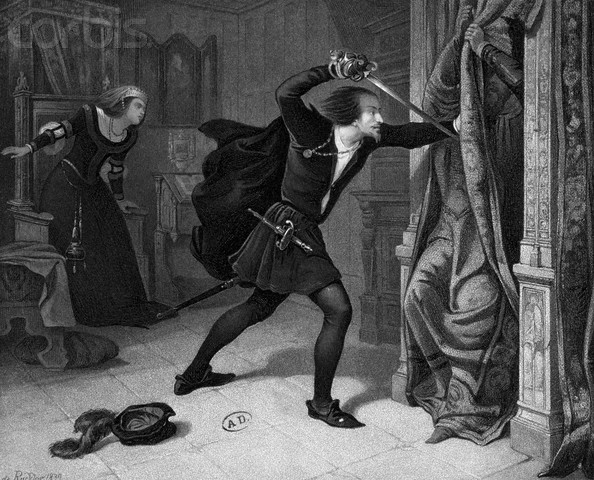
Co-produced by Shakespeare at the Tobacco Factory and Tobacco Factory Theatres, the action unfolds in front of a grimy single set castle interior, with colour coming from convincing Elizabethan costuming, both created by Max Johns. Director Andrew Hilton has assembled a very strong cast. Paul Currier is superb as King Claudius, commanding the stage whenever he appears, Julia Hills, equally convincing as his Queen, particularly in her scenes with Hamlet. Ian Barritt’s Polonius is avuncular, his advice timeless, his unfortunate demise, behind the arras, still shocks. Isabella Marshall’s Ophelia  is a madcap, barefoot delight . Her manic screaming and singing unsettles and engages in equal measure.

Alan Mahon is a fresh faced, youthful, Prince. Initially he adopts the demeanour of a whiny, spoilt, teenager, before developing into a disturbed, bereaved schemer. He handles the soliloquies well, and shows a light touch in the Gravedigger scene, avoiding the schmaltzy cliché which can surround the “Alas, poor Yorrick” skull speech. Yet his realization of the character feels strangely detached, we aren’t cheering for him to put right the wrongs.

The language, rhythm and metre of the script are exceptionally brought to life by the cast who remind us of so many familiar phrases and beautiful sequences as the production proceeds. It succeeds in being sufficiently familiar to please purists, while being sufficiently accessible to appeal to first time theatre goers. As such it is open to the charge that it lacks distinctiveness, but to his credit, Hilton’s focus is on individual performances and the script, rather than attention grabbing diversions. It works well.


I did reflect that if Quentin Tarantino had written the blood soaked finale, critics would be railing against its excess. The duel between Hamlet and Laertes is compelling and gripping, a tribute to fight co-ordinator/director  John Sandeman. Too often staged fights can feel artificial and lame, in this, they looked as though they meant it, the cloak usage significantly adding to the drama of the event.


A fine production, and fitting 400th anniversary of Shakespeare’s death  tribute, the company are also playing “All’s Well That Ends Well” in alternate performances on tour, which finishes in Derby on Saturday 28th May, but continues nationwide until 18th June.

20160527_190545


Gary Longden

This review first appeared in Behind the Arras, abridged, where a comprehensive collection of reviews from the best of Midlands Theatre, from a range of reviewers, is available.

http://www.behindthearras.com/

Posted in Behind the Arras Reviews | Tagged , | 1 Comment

Two – Sutton Arts Theatre

Two
This play, written by Jim  Cartwright in 1989,  is to actors what the Olympic Decathlon is to athletes. It requires two actors to assume fourteen different characters, as a night in a Northern pub unfolds. As such it is hugely demanding of, and wholly dependent upon, the skills of the two actors who take the parts of, initially, the pub landlord and his wife.  In this production Simon Baker and Susie May Lynch assume those roles.

As a veteran of pubs in that era I can confirm the authenticity of the bar room set, accurate and atmospheric. It provided the perfect visual backdrop. The use of audio, utilising excerpts from “Mad World” and “Whole Lotta Love” also perfectly complimented proceedings.

Simon Baker convinces in the landlord role, addressing the audience as if we are pub regulars at the curtain up, drawing us into his world. His no-nonsense, world weary, wit and bonhomie sets the scene for landlady ,Susie May Lynch, flirty, and as nimble on her feet as she is with banter with her customers, in a manner beloved of so many landladies in Coronation Street’s “The Rovers Return”.

Thereafter we are treated to a whirlwind  of  character, costume, accent and age changes as various pub characters reveal themselves. Cartwright is strong on dialogue, but the inevitably brief appearances of the characters mean that the time they have to draw the audience in to relate to them, and their story, is brief.

In this regard the second Act works better than the first. The stand out scene of the evening is when Scottish couple Roy and Leslie lay bare the reality of their abusive relationship. Roy’s verbal, and finally physical, bullying is both compelling and profoundly disturbing, made possible by Leslie’s supine, crushed, bewildered characterisation.

Director Claire Armstrong –Mills ekes much out of a setting which is now a quarter of a century old during which pubs and attitudes have changed much, even if human nature itself remains pretty constant. Simple costume, shoe and wig changes, performed in the blink of an eye as an exit was followed by an entrance, were realised with consummate skill. However I found the decision to eschew real glasses and fluid for imaginary ones a curious one. The manner in which a glass is held, and its contents consumed, is rich in character and dramatic possibility, options not available in this production.

Because of the onerous demands upon the two actors, this play is much loved by drama schools, but is difficult to pull off as mainstream entertainment.

The touching denouement  is sensitively performed by Baker and Lynch as the tragic secret past of the couple surfaces in a play  in which episodic delight features over and beyond a conventional narrative. A well- attended opening night rewarded both actors with deserved, generous applause.

“Two” runs until Sat 14th May

Posted in Behind the Arras Reviews | Leave a comment

Priscilla Queen of the Desert- Wolverhampton Grand Theatre

p8

An unseasonably cold, drab Monday evening in Wolverhampton, metamorphosed into the warmth and colour of the Australian desert drag and transgendered scene, as Priscilla rolled into town as part of a very successful nationwide tour. Spare seats were at a premium.

p3

The story, a road trip from Sidney to Alice Springs, taking three performers to the desert outpost for very different reasons, does not in itself seem remarkable, but the alchemy of this stage production is. Costuming, courtesy of Tim Chappel and Lizzy Gardiner is lavish, colourful and show defining. Its origins lie in the   1994 film, by Stephan Elliott and Allan Scott,  The Adventures of Priscilla, Queen of the Desert, but the musical did not debut until 2006. Legend has it that show Producer Scott can sing the scores of some three dozen musicals, that knowledge , grasp and touch for musical theatre is much in evidence here.

Musically, the songs are culled from the club scene of the eighties. Mathew Loughran, musical director, and Michael Waters, sound design, have  done a fine job  both with song choice and with the arrangements using a live band, orchestrations by Stephen “Spud” Murphy and Charlie Hull.

p6

Duncan James


Star of the show is boy band heartthrob Duncan James, from Blue, who plays Tick, a drag queen who wants to travel to Alice Springs to see his wife and young son aboard a rickety old coach christened Priscilla. James carries the role with ease, and on “I Say a Little Prayer For You” and “Always on my Mind” sings with power and conviction, a trait demonstrated by the entire, substantial cast.

On one level this is a slick, very well produced, jukebox musical. Yet its appeal reaches beyond. The recent news has been dominated by concerns about anti-semitism and migrant flight. Here, in microcosm, we have a minority community following its dreams, giving the show a heart and warmth which transcends its format.

p7

Simon Green as Bernadette


Perhaps the most compelling performance comes from Simon Green as Bernadette, whose ageing   female persona is alluring, tragic but life affirming. Understated in a way his two lead performing companions, Tick and Felicia are not, he anchors the show from drifting off into plain Burlesque.

Adam Bailey has the fun, flouncy part as the irritating Felicia, with the camp button always turned to the maximum. It is only when he is fully dressed, and sings “Hot Stuff” that his natural talent emerges, giving the song, which is often routine, an edge and poignancy rarely apparent in the renditions of other singers.

Special mention should be made of Naomi Slights, who plays Ticks’ wife. In the face of overwhelming competition for the skirts, heels and stockings in the wardrobe she still stands out with sharp dance moves and a figure the boys would die for.

p4

Production values are glitzy and opulent, with the focus on costuming and the bus. The choreography, originally by the late Ross Coleman, and now in the hands of Andrew Hallsworth is snappy and crisp, with an eye for the panorama of the stage, including the airborne divas!

p5

It is pretty much impossible to watch this show without clapping your hands, tapping your feet, and singing along to the club classic score. The energy injected into this opening night from a large talented cast was impressive, as were the smiles and standing ovation at the end from the audience. The show runs till Saturday 7th May and continues on nationwide tour.

Gary Longden

http://www.priscillathemusical.com/uk-tour/home/

This review first appeared in Behind the Arras, abridged, where a comprehensive collection of reviews from the best of Midlands Theatre, from a range of reviewers, is available.

http://www.behindthearras.com/


Posted in Behind the Arras Reviews | Tagged , , , | Leave a comment

All Star Stand Up Tour- Derby Theatre

AllStarStand-UpTour


Derby Theatre’s diverse 2016 took another turn on Sunday night for a one night stop for the biggest comedy tour of the year, the “All Star Stand Up Tour”. Featuring double Sony Award winner and star of Mock The Week Gary Delaney, top comedy trickster and star of BBC 1’s The Magicians Pete Firman, Kiwi compere Jarred Christmas and unbeaten legend, Never Mind The Buzzcocks team captain and one of Channel 4’s 100 Greatest Stand-Ups in the World Sean Hughes, the move paid off with a sold out Sunday night.

20160501_194722

The two hour show was split into two halves with Delaney opening proceedings, Sean Hughes following and Pete Firman closing a first half which  was particularly strong. Delaney was at ease as compere and ice-breaker, testing out which genre of gag was going to work,  pushing the smutometer up a few notches, and ensuring that Nottingham was roundly abused. His fusillade of one liners invariably hit ,rather than missed, and his Wikipedia gags were a safe comic vehicle for him to close on.

Sean Hughes, came on stage with a cracking local gag, and never looked back. Assured, confident and funny, he delivered what was to turn out to be the most competent, and humorous, set of  the night.

Pete Firman presents himself as magician and comic. His opening card tricks lacked impact in a five hundred seater auditorium, yet his relaxed good humour kept the audience onside. We were rewarded with a compelling disappearing £20 note trick from an audience  member that reappeared in seemingly impossible circumstances making for a rousing first half finale.

For the second half Delaney took the stage to build on his earlier material to create the perfect platform for headliner for the night Jarred Christmas to bring it all on home. Unfortunately, after a tentative start, Christmas never seemed to quite find his stride, despite a well worked audience participation slot. Somehow he always seemed to be just behind the pace of the audience.

Nonetheless the ensemble enjoyed a warm reception from an appreciative crowd. The All Star Stand Up tour continues on nationwide tour.

20160501_194800

Gary Longden

This review first appeared in Behind the Arras, abridged, where a comprehensive collection of reviews from the best of Midlands Theatre, from a range of reviewers, is available.

http://www.behindthearras.com/

Posted in Behind the Arras Reviews | Tagged , , , , | Leave a comment

Flare Path- Derby Theatre


fp1

Anyone watching this play can be forgiven for a sense that it should be being performed in black and white as part of a double bill at the local Odeon cinema, such is the impact that the film version, The Way to the Stars” made.

Written, and first performed in 1942, by Terrence Rattigan, it tells the tale of a love triangle set in a hotel by a bomber base in World War Two. Rattigan’s contemporaneous wartime service in the RAF lends the writing an obvious sense of authenticity and immediacy.

The context in which it was written is an integral part of the piece. Remote air force bases in rural locations meant socialising was at a premium, which combined with an appalling death rate for bomber crew, resulted in romance being consummated fast, with tomorrow not necessarily a pressing concern. I have had the privilege of going inside a Lancaster bomber, although large on the outside, inside, it is cramped and claustrophobic. Spending several hours over enemy territory, freezing at 30,000 feet, being shot at, must have been terrifying.

Film and theatre were amongst the few sources of wartime entertainment. Inevitably a film about the war, in order to be successful, needed to be positive about the war effort and uplifting in its sentiment. Flare Path does just that. To modern eyes it may appear a little predictable and hackneyed, at the time it was just what the population needed, enjoying Winston Churchill’s endorsement.

Fp3

Kyle reacquaints himself with Patricia


The love triangle takes in fading film star Peter Kyle, an old lover Patricia Warren, and her husband Teddy. Lynden Edwards is superb as Kyle, louche, smug and determined to win his girl back.  Daniel Fraser is outstanding opposite him as Teddy, brave, vulnerable and unaware of his wife’s past. Hedydd Dylan oozes forties glamour as officers’ wife Warren, tall, elegant and initially flighty, before events force her to reassess her relationship with her new husband.

Fp2

Teddy and Patricia


But this is no downbeat angst riven tearjerker. William Reay has the most fun as a Polish Flying Officer whose English is still basic, Audrey Palmer excels as Mrs Oakes, the formidable, colourful, Hotel Keeper .

Rattigan’s writing is a delight. The RAF slang is perfect, the comedy skilfully interwoven amongst the drama with several laugh out loud moments. The Pole provides not only much of the comedy, he also signally represents those from abroad fighting the Nazi’s, having suffered their own losses to the German war machine. The gunnery sergeant (Jamie Hogarth)  and his wife, enjoyably played by Polly Hughes, provide a slice of working class life in roles which hint at an upstairs/downstairs theme, but which are neatly counterbalanced by a stronger sense that everyone was in this together.

Particular mention should be made of Dominic Bilkey, the sound designer who has the vital role of introducing the distinctive sound of the passing aircraft, a sound which is unusually warm and reassuring. The incidental background music pre show, post- show and at the interval is similarly evocative.

Director Justin Audibert has done a fine job with this Original Theatre Company production which provides an accessible and rewarding entrée  into Rattigan’s work. Everything is understated. The valour of the airmen, the strength of the bonds between the protagonists, and the fortitude of the non- combatants, all pricked with self- effacing humour, or nonchalant asides.


Flare Path runs till  23/4 and continues on tour.

Gary Longden

This review first appeared in Behind the Arras, abridged, where a comprehensive collection of reviews from the best of Midlands Theatre, from a range of reviewers, is available.

http://www.behindthearras.com/

Posted in Behind the Arras Reviews | Tagged , , , , , , | Leave a comment

The Cat in the Hat – Lichfield Garrick Theatre


Cat2JPG

This poem has had pan- generational appeal since it was written in 1957 by Dr Theodore Seuss. Its combination of rhyme, rhythm, fun and mischief captivating children, and their parents.

Adapting the original poem has been a labour of love for Katie Mitchell, who road –tested the project on her four year old daughter, an idea guinea-pig, as the production is aimed at the three to six year old age group. Mitchell enjoys a controversial reputation as both the best director of her generation and cultural vandal, tearing up the works of Handel and Chekhov, then reconstructing them.

Cat3JPG

This new production is directed by Lillie Collier, designed by David Shields and produced by Paul Taylor-Mills Ltd. It is presented through special arrangement with Josef Weinberger Plays Ltd on behalf of Music Theatre International (MTI). Vicki Mortimer’s designs are faithful to the simple original illustrations, and the lively recorded score by Paul Clark adds much to the production.

Mitchell’s approach to the Cat in the Hat has been tempered by the forensically controlling rights holders, Dr Seuss’s Estate, ensuring that the story we all remember, and introduce to our children, is the story brought to the stage. Mitchell bravely produces each page as a self- contained scene. This has the advantage of fleshing out the story as each series of actions is acted out, but the disadvantage that the rhyming narrative rhythm of the story is broken up, occasionally feeling a little disjointed as a consequence

Cat4JPG

The joyful narrative is a delight, performed by six actors, amidst a riot of colour and physical excitement as giant balloons roll around the stage, and fly into the audience. When the Cat and Things 1 and 2 charge into, and in and out, of the audience, the children squealed with delight.

Naturally the Cat is the star, complete with towering, flipperty-flopperty hat, creating mayhem for home- alone Sally and her brother. Thing One and Thing two ably assist the Cat. All the children loved it, laughing along and maintaining concentration throughout a fairly brief show of around forty five  minutes with no interval.

Cat5JPG

The reply to the closing question asking the children whether they would tell their mother of the chaos that had unfolded with the Cats’ visit  if they had been Sally and her brother was a resounding “No!”

A first class, well-produced, and well –acted, children’s  theatre piece. The modest turn out, following a cancelled matinee was a shame. The Garrick now has many one and two- nighters. As a result, promotional space is slight to non-existent in a non-virtuous circle, and no programmes were made available to acknowledge the hard working production team on the day.


 The show runs till 19th April then continues on tour.

This review first appeared in Behind the Arras, abridged, where a comprehensive collection of reviews from the best of Midlands Theatre, from a range of reviewers, is available.

http://www.behindthearras.com/


Posted in Behind the Arras Reviews | Leave a comment

Mary Poppins, Hippodrome, Birmingham


mp4

One of my earliest memories of cinema going as a child is a trip to see Mary Poppins. It was a magical story then, and that magic has endured. The stage show is not a transposition of the film to stage, but instead from book to stage, offering quite marked differences in nuance.

This is a big show; big ticket prices, big set, big effects, big cast and big PR. sometimes these creations become a bloated mess. Not here though.

Lavish from start to finish, the roll call of supporting creatives is pretty much a who’s who of Musical Theatre. All of them deliver. Producer Cameron Mackintosh is the undisputed King of contemporary musicals and his experience, and deft touch, grips the show from start to finish.

Sir Mathew Bourne is the best choreographer working today and the two key big production numbers, “ Supercalifragalisticexpealidotious”  and “Step in Time” are as good as anything that you will see on stage. Curiously, “Chim, chim, Cheroo” never moves to a big chorus, instead being used as a solo, and reprise with backing singing, rather than a full throttle ensemble piece.

Zizi Strallen delivers as the eponymous heroine. Aloof, mysterious, and  a little remote, but loveable and endearing too. She performs to the entire, large auditorium, drawing everyone into her magic, and sings beautifully.

Mp2

For this show, understudy Adam Rhys-Charles  took the part of Bert, and acquitted himself well with no sign of nerves putting to bed the eccentric performance, and accent, of Dick Van Dyke in the film, offering character, enthusiasm and vim.

The show, including interval, runs to two and three quarter hours, with the first half being an unusually long eighty five minutes. This has the advantage of leaving no-one with a sense of feeling short changed, but the disadvantage of being at the limits of the attention span of younger children.

Visually, not only are the set pieces a delight, but the special effects dazzle as well, as Mary Poppins glides over the heads of the audience and Bert scales the walls and ceiling of the auditorium Spiderman- style.

MP1

I found the narrative surrounding Mr Banks, Poppins’ employer, and his banking difficulties, a little clunky, despite hugely impressive banking hall  scenery .The pace slowed to a dawdle and there was little dramatic tension. But fortunately, in this show, you are never far away from a song leaving that reservation soon forgotten.

As a spectacular Mary Poppins delivers in pretty much every category. It may lack the intimacy and personal pull of Annie, but makes up for it in blousey front. It continues at the Hippodrome to 23rd

April and then stays on tour at Edinburgh ,Southampton, and beyond till January 2017.

Posted in Behind the Arras Reviews | Tagged , , , | Leave a comment

Rime of the Staffordshire Hoard

A somewhat belated posting of a commission which was performed last year at the New Vic Stoke.


The Rime of the Staffordshire Hoard


He sat quite quiet, in the Boat,

Supping his pint of beer,

His thread bare coat, dangling loose,

A finger beckoned us near.


Now lonely men are not that rare

In roadside hostelries,

But glimpsing the shape of his sunken eyes

He seemed to want to share


Something, maybe, that he knew

From a long and troubled past,

Of long lost love, intrigue and trysts,

Of vino veritas.


“Come here” he whispered loud but soft,

I have a tale to tell,

That has been handed down to me

From ancestors that fell.


It has never felt the pen,

Just kept to the spoken word,

For this is a tale you cannot read,

It only can be heard.


It has been passed down by mouth,

From father to son and daughter,

From the mothers breast, from fireside hearth,

Stories of wealth and slaughter,


In Mercian times, when war was waged,

With savagery and  steel,

The victors supped from hard won spoils

Stripped bodies in the fields.


Swords were prized above all else,

Their pommels and their hilts,

The metal, the gems, the plate the gold

Fine fashioned and carefully built.


And over time the war chest grew,

From battles far and wide,

The vanquished knelt, prizes seized,

Spoils for the winning side.


From the north , the Northumbrians crossed

The Trent intent on plunder,

But Eckgrith was routed, put to flight,

His army sliced asunder.


From the east King  Anna rose,

With armies wild and true,

Penda took the fight to him,

And at  Bulcamp, the Anglian he slew.


To the west the Welsh were tamed

“The Paradise of Powys” at Pengwern

Wroxeter bled and genuflected

Whilst all around them burned


To the South ,Wessex fell in thrall,

As Cenwealh was defeated.

Mercian land kissed by southern seas,

Success and wealth repeated.


Coelred ruled this mighty land,

But was quick to take.

Revelry and earthly things,

He just could not forsake.


From Tamworth castle edicts flowed,

Charters, and royal decree,

And little by little the people were lost

Defeat by degree.


For centuries Watling Street had borne

Traders, and legions  too.

A highway of wealth and fame and power

Retreat was something new.


As enemies circled, and dangers grew,

His treasure drew attention

Envious eyes and evil plots swirled

At the riches’ mention.


Coelred despatched his aide, Edward,

To find  a hiding place,

His anonymity assured,

By an unknown face.


So Edward rode to seek a spot,

West from the castles gaze,

Where silent ground could hold its tongue

In a quiet restful place.


Riding horseback is thirsty work

The road, uneven laid

Not since Roman Times had care,

Attention, and repair, been paid.


The wagons unmarked, creaked and groaned

On the journey there,

The trusty band of diggers moaned,

Heading out somewhere.


So ,with darkness closing in,

Letocetum came in view,

Very far from in its prime,

But with  a tavern or two.


Just beyond there lay a lea,

WIth trees and grasses lush,

Where a shallow trench, quickly filled,

Would not be noticed much.


So they set to work, with spades and trowels,

With sweat and furrowed brow,

Till the earth absorbed this fabulous hoard,

Disappeared from view for now.


And as reward they headed back

For an ale or four,

And when they had sank the fourth fine ale,

They all went back for more.


Night then spread her dusky wings,

The men consumed by excess,

All thoughts of maps just vanished,

Location would be a guess.


With heads that throbbed,

And hearts that sank,

They scoured all around.

But fruitless was their frantic search

For tell -tale broken ground.


But trees and bushes, stumps and lumps,

They all just look the same, (don’t you think?)

The buried don’t talk, just slumber on,

Like those consumed by drink.


Edward returned to Tamworth town,

Told Coelred the deed was done,

Coelred thanked them all for their pains

Then silenced them one by one.


All bar Edward, who was restrained,

In a castle garret, in solitary.

Kept in food and water,

But never in company.


As time passed and Edward pined

For human company,

He grew unhinged, and lost his mind

For  all around to see.


With great alarm Coelred despatched his man

To recover the buried gold

But his years alone, and hours at the  Inn

Had left his memory cold


Edward was ordered to continue his search

Until his dying day

Which he did, trowel in hand

Seeking where it lay


For many a year, there were reports

Around Hammerwich and of Wall

Of ghostly moans and shovel borne thuds

And desperation calls


He was condemned without respite

To continue his demanded quest

To search each clod of Mercian earth

In this world and the next


Now he rests, the hoard recovered

In the hands of a new protector

Thanks to Edwards guiding spirit

On a metal detector


Then the  stranger, whose eye was bright,


Whose beard with age was hoar,


Was gone: and now I cradled an empty glass


Turned from the lounge bar’s door.


I left  like one that had been stunned,


And is of sense forlorn:


A sadder and a wiser man,


I rose the morrow morn.


Gary Longden


Continue reading

Posted in Poems | 2 Comments

Poems 2016

Salvation

He always made doughnuts
Thousands of them
Alongside doughnut lassies

Sugar, lard, eggs, milk (evaporated)
Water flour, baking powder, salt
Ground nutmeg

Amongst mortars, mines, lead (assorted)
Wire, weapons, water and blood
Ground spirits

For bellies that lay flat on scorched earth
For mouths drained by oaths and fear
Watching as the Pain Cars inched by

While we mother hens and chicks
Wove in Nests, precious care parcels
With eager hands and keen intent

Shirts, pants, socks, chocolate,
Soap, paper, stationery
Home ground

Before exhausted souls staggered
Yellowed munition hands begging
For charity at home

But Beth never ate our doughnuts
She waited for one from the front
Made specially for her.

Abandonment

You deserted us, for You Tube illusions and an easy life
Made by others
You lined the pockets of our tormentors to make them strong
And us weak
You let others do the fighting for you
While you rest, and are fed.
The women who bore you, the old men who taught you
Look on, in despair
As our girls are preyed upon, and the fields lie unplanted
Those too sick to move plead for  our aggressors’ compassion
In the absence of yours
Our dignity, our beliefs are not worth your struggle
Leaving those least able, to do the most.
Our future disappears over the horizon
As you leave us condemned to live the past.
If you had built fences rather than try to scale them
If you had bravely faced the enemy – as you faced the sea
We would be together now, pride intact.
Instead you beg for yourselves there
While the old, the sick, young mothers and children
Lie abandoned here.

The Journey

Uttoxeter

Stoke

Manchester

Liverpool

Bolton

Blackburn

Blackpool

Preston

Lancaster

Kendal

Penrith

Carlisle

Gretna Green

Lockerbie

Hamilton

Glasgow

Cumbernauld

Stirling

Bannochburn

Dunblane

Auchterarder

Perth

Pitlochry

Aviemore

Culloden

Inverness

Cromarty Firth

Cairngorms

Braemar

Ullapool

Stornoway


The Blue Men of the Minch 

Gliding, their lithe forms wait silently

For the foolish and the hapless

Sentinels, guardians of the deep, they be,


When calm, as male mermaids they rest and play

Shadowy shapes, just out of reach, jostling

Jousting, watching, benign and fey.

Some say they were Picts, daubed in that hue

Others that they were Viking slaves in costume blue

But wherever was their place, whatever was their station

They now patrol in eternal damnation.


For their quarry to leave Loch Broom

And the Westerlies to arrive drawn by the Moon

So they can leap from feisty foam

Storm Kelpies rising in the spray

To hunt their prey to have their say

Their price for mercy from the brine

Is , when challenged, for Captains to respond in rhyme

And if  Blue Men do not catch

A couplet whose words just do not match

As the sea horses rear, and the wind doth blow

So their captives, they drag below

From their duty they never flinch

The dreaded Blue Men of the Minch.


For Sheila


You will walk with me no more on these streets which held so much promise

Once. Long ago.

I want to tell you about Stephen, and James

I want you to smile at what I did not appreciate, but do now

I want you to tell me that it is okay to buy that coat- and that you like it.

I want you to say that Portobello has become good again- and aren’t the  garlic breads big?

How I wish you were irritating Sarah by advising her on Stanley’s child care. He’s a bonny boy.

How I wish that fate had not dealt you such a cruel hand

Things are going on as if nothing had happened- it’s the way, isn’t it?

You would have liked Paphos.

I have changed the hall and bedroom

You wouldn’t like it

The Potteries

Made here

Pots and porc’lain

Fashioned by nimble hands

Wedgewood found fame amongst the smoke

In Stoke


Bright glare blazed outside

Patio bricks oozing heat

Our Saturday treat

Dan Yr Coed


Where Red Kites soar

No strings attached

And the Severn turns about face

A place, between


Where earthly things are ruined

In rubble and dry locks

And the hills hover,

Watching, and waiting


Where time is measured in rising falling light

Not the sweep of a second hand

And the rain hesitates

For a moment.


Dave


A politicians peccadilloes  are a wonder to behold

Particularly those from the privileged, Eton and oxford fold

On a night out

Those from the compo’s , might play with a traffic cone or two

Placed on the head, thrown over the hedge, or used as a temporary loo

But the Galveston club, is somewhat more refined

It is where the toffs, and the young gentry, dine

And although Dave likes sleek Sam in high heels, how she totters!

He’s also quite partial to a set of hairy pink trotters

Those big luscious  lips, the fetching curly tail

Makes something in Dave’s libido, start to whine and wail

And if it grunts nicely making him feel the special one

He’ll whip his own sausage out for a bit of porcine tongue

When this was reported it was dismissed as porky pies

But the great British public knows its swine and how to take the rise

He hogged the headlines, all else stopped, even Jeremy became a boar

Whilst facebook and twitter put their snouts in the trough, foraging for more and more

Now his actions may have been ham fisted, but his intentions I am sure were pure

Let us just hope that as PM that his thoughts have now been cured


Le Pen


All that it takes is a brush, rushed


A choice, to find a voice


Or a silencer


At a stroke, a line, bullet straight


Poised, for the noise


Of confusion


Expression and repression


Pouring automatically from the muzzle


Escaping, leaking ink, distorting


Born free, yet chained


This is my truth, tell me yours


Of what you can do instead of what you do do


Arms linked, fingers crossed


Friday Saturday Sunday and Monday Morning


I did not hear of it until Sunday morning

Instead slumbering while explosives murmured and air frame metal  snorted

Tuning in, mid-story, is confusing

Who what where when and why?

A bit like being there

Fragments travelling to the nearest body

Yet reaching far beyond

Moments in motion


I did not hear of it until Saturday morning

Instead slumbering while Kalashnikovs, murmured and bombs snorted

Tuning in, mid-story, is confusing

Who what where when and why?

A bit like being there

Fragments travelling to the nearest body

Yet reaching far beyond

Moments in motion


I did not hear of it until Monday morning

Instead slumbering while Mirages murmured and bombs snorted

Tuning in, mid-story, is confusing

Who what where when and why?

A bit like being there

Fragments travelling to the nearest body

Yet reaching far beyond

Moments in motion


I did not hear of it until Friday afternoon morning

Instead working while Kalashnikovs murmured and bombs snorted

Tuning in, mid-story, is confusing

Who what where when and why?

A bit like being there

Fragments travelling to the nearest body

Yet reaching far beyond

Moments in motion


And I wondered how often this would be repeated


You try your best, but despite it all

Yearning for the time before your fall

When a day could be lived without sharp pain

When a night was measured in hours, not minutes

Again and again

Neighbours come and go, with a wave and a cursory smile

“I like your coat they trill- unaware of your guile

But when the front door closes, when the walls come tumbling in

That is when the fear starts of what the day will bring


Church


I don’t care much for Church

Our Christening Party outnumbered

The congregation many times over

And I wondered who was joining who


His robes older than the pews

The vicar conjured bonhomie and boredom

Unfamiliar hymns blared amplified

As if volume was enough to disguise bland dirge


There were no notices

Perhaps no-one cared anymore


Posted in Poems | Leave a comment

The Damned United – Derby Theatre

20160406_154602
I did not attend this production as a neutral observer. As a teenager I watched Clough manage his great Derby side at the Baseball Ground, then later admired his triumphs with Nottingham Forest, found his television appearances as a pundit unmissable, and was at Portman Road for his final game as a manager. I found David Peace’s book to be amongst the best ever written about football, and the film a very good effort at bringing him to cinema. So it would be fair to say that my expectations were high, my critical faculties sharply tuned. Could the play seal a treble?

This run opened at the West Yorkshire Playhouse, which was brave. Leeds was hostile on his appointment as manager of their club, and it went downhill from there. By contrast, here at Derby, he was on home turf, the tiered seating of the theatre doubling for the Popside. In Derby they named a road after him, in Leeds the players and fans would have liked to have buried him under one.

Clough as a character has all the ingredients of great drama. A promising playing career cut short by injury leaving him with a burning desire to prove himself. Rags to riches success with Derby and Forest. “The Fall” at Leeds. The bromance with Peter Taylor, and the personal demons which both drove, and haunted him.

It is difficult , over forty years on, for those who were not around at the time, to grasp the grip that Clough had on the then contemporary football psyche. “Big ‘Ead”, along with Malcolm Allison, paved the way for the modern celebrity manager of whom Mourinho is the most obvious heir.

popside

The Glory Days


The now levelled Baseball Ground was a cauldron of emotion and noise, the Popside the cheerleaders from the terraces, the upper seated tiers stamping their approbation, Cloughie the conductor to the faithful’s chorus. It was a working class theatre where triumph and failure unfolded, and heroes and villains played their parts. From the age of those in the opening night audience, many had come to relive their long lapsed roles. The ghosts of those now far off football battles returned as Mackay, Nish, Davies, and Hector once more confronted Giles, Bremner, Hunter and Charlton on the pitch, while Sam Longson and Manny Cussins watched from the Directors box, and Don Revie pored over his dossiers. The love of the Ossie Road End, and the disdain of the Gelderd End, was nostalgically evoked.

Anders Lustgarten’s new stage adaptation attempts to convert what has previously worked so well on page and screen, to stage, in this Red Ladder production. As with the book, the drama is of Clough’s fateful 44 days at Leeds and his essential, but flawed working and personal relationship with his assistant, Peter Taylor, played with laconic fortitude by Tony Bell.

Andrew Lancel’s Clough is troubled, brash and vulnerable, slave to his passion for footballing success, and his dependence upon alcohol. Derby County’s players are balletic masked figurines. Leeds United’s are anonymous mannequins. Lustgarten’s production aspires to Shakespearean tragedy for this production, and largely delivers it. Lancel has to carry numerous soliloquy’s, only briefly interspersed by scenes with Peter Taylor, and the Derby and Leeds Boards, in a performance of energy, commitment and intelligence.

The set, comprising four white lines and a table, supported by video backdrop, with soundscapes by Isobel Waller-Bridge and Nina Dunn, is brilliantly realised by designer Signe Beckmann, and lighting director Tim Skelly. A strong multi- role cast provides a fine squad with John Graham Davies as Derby County Chairman Sam Longson/ Syd Owen/ Bolton, Tom Lorcan as McKenzie, and Tony Turner as Manny Cousins/Jack Kirkland. Davies portrayal of Leeds’ Syd Owen is a comic delight and an essential counterpoint to his new manager’s bombast.

Lustgarten’s script is far closer to Peace’s novel than Tom Hooper’s film version, jumping back and forth between the Derby glory days and the black ones at Leeds. To those unfamiliar with the story, this could be occasionally confusing, but so long as you remember that when Taylor is on stage they are in Derby, and when Clough is on his own they are in Leeds, the narrative works.

20160406_154538

The Clough family, most notably represented by locally resident son Nigel, currently managing promotion chasing Burton Albion to join Leeds and Derby in the second tier, has been steadfastly hostile both to Peace’s book, and Hooper’s film. I doubt whether they will be found in the audience for this production. Which is a shame, as the play celebrates Clough’s achievements and portrays his flaws and temporary downfall (he was to spectacularly rise again at Nottingham Forest) in an Everyman sense, not as personal spite. An omnipresent bottle of scotch whiskey is a reminder of his alcoholism, the language is often crude male machismo, but the story is skewed more in favour of his glory days at the Baseball Ground than his Leeds agony. This is no hatchet job.

Clough was an intensely private man behind a brash façade with more front than Buckingham Palace. The latter trait was consummately exploited by Lancel, in a portrayal which eschewed any attempt at mimicry or imitation, in favour of getting to grips with the essence of a man, bereft at the sudden loss of his mother, and obsessed with money, even at the expense of his right hand man Taylor.

Rod Dixon’s lively production falls just short of extra time at 85 minutes, with no half time interval, and is an authentic and compelling sketch of one of football’s greatest characters. In parts, the statistics heavy dialogue, whilst mirroring Peace’s method and intent, is at the expense of the drama. The cognoscenti know the detail, the non-football fan doesn’t care. And the finale is a little awkward. But the passion of the man prevails culminating in the finest moment of the play when Clough and Taylor part for Leeds and Brighton. The unspoken cry from the audience is; “ Don’t!”

Clough leads out a less than enthusiastic Leeds team

Clough leads out a less than enthusiastic Leeds team

As the cast took their bows the applause rolled down the aisles with an intensity more commonly associated with a vital league win, than an opening night. Derby people know their theatre as well as they know their football, as the heightened response to Tony Bell’s bow as Peter Taylor bore testament to. Of course Lancel took the plaudits, not only for his performance but on behalf of a bona fide local legend.
DU cnt

After the curtain calls and an interval, the cast and director took an impromptu question and answer session which was very well attended and provided numerous gossipy titbits. Some Leeds players had attended the West Yorkshire Playhouse performances, including Peter Lorimer and Norman Hunter, at which Don Revie’s name was called out and Clough was  (playfully) booed by some, and Tony Bell had met with Peter Taylor’s daughter who had provided several insights into her father and confirmed that it was Clough’s attitude towards Taylor’s remuneration which had irreparably breached their relationship. The Clough family are still hostile to the project.

Andrew Lancel was particularly interesting and honest during this session, emphasising the scale of learning and performing the part and demonstrating a depth of talent far beyond his enjoyable “Bad boy” role in Coronation Street as Frank Foster. He is also fleet of foot in handling questions. When I asked him to what extent the play was about football, and to what extent it was about personal tragedy, he replied;” What do you think?”

This is a fine attempt to bring the drama of football to the stage, and it is to the credit of both Red Ladder Theatre and Derby Theatre and Sarah Brigham that they have succeeded so admirably in doing so.

The Damned United runs till Saturday 16th April.

Director and cast take questions after the performance

Director and cast take questions after the performance

This review first appeared in Behind the Arras, abridged, where a comprehensive collection of reviews from the best of Midlands Theatre, from a range of reviewers, is available.

http://www.behindthearras.com/

Posted in Behind the Arras Reviews | Tagged , , , , , , | Leave a comment