Homo Reloaded- by Carlos Alberto Bisceglia , book review

**** out of 5

An astonishing book which skilfully weaves science, geology and geography with informed conjecture to reappraise 75000 years of human history

Origin, Evolution, and Transformations of Human Civilization and Earth: Evidence of Cosmic Impacts, Climate Changes, and Ancient Civilization Decline are all pulled into the equation

Bisceglia takes readers on a journey through time, exploring life’s beginnings and the cyclical nature of human civilizations. He presents evidence of catastrophic events, such as cometary bombardments, climate changes, and reductions in genetic diversity that have shaped our past. He challenges conventional theories and presents compelling evidence for the existence of advanced ancient civilizations like Sundaland and Mount Atlas, which have been lost to time.

Life and Universe: “Living” Vs “Dead” Perspective Emergence-

Bisceglia challenges the traditional view that the cosmos is “dead,” presenting a “living” perspective based on evidence of abundant life in the cosmos. He examines different origin theories and delves into the hypotheses of life arising from non-life and being distributed by space dust, exploring evidence for microorganisms across the Universe.

Origin Theories: “Big Bang” and “M-Theory”-

Bisceglia argues that the theory of the Big Bang, while widely accepted, is outdated and proposes that the “M-Theory” provides a more fitting explanation for the Universe’s origin. The “M-Theory” suggests that infinitely small, vibrating strings form an endless number of three-dimensional membranes, each representing a universe. These membranes, existing in eleven dimensions, occasionally collide, creating “collisions” that might have been previously misunderstood as the “Big Bang.” He suggests that our perception of time is merely an illusion and that reality might have no beginning or end.

The Big Bang theory is a simpler explanation for the observable universe, adhering to the principle of Occam’s Razor, which suggests that the simplest explanation is often preferred until more complex theories are proven necessary.

The Big Bang theory has been successful in predicting various phenomena in cosmology, which lends it considerable credibility that M-Theory has yet to achieve.

The concept of “infinitely small, vibrating strings” is a theoretical construct that has not been observed directly, and thus its existence is speculative.

The concept of eleven dimensions is purely theoretical and has not been empirically verified; it remains a mathematical construct without direct physical evidence.

The idea of membranes colliding in higher dimensions is a feature of a specific branch of string theory, which is not universally accepted even within the theoretical physics community.

Psychological studies show that humans and other animals have an innate sense of time, necessary for survival, which suggests that time has a basis in biological reality.

Philosophical and theological perspectives often posit a creation event or a prime mover, implying a specific beginning to reality.

Theories About Life’s Origins: Spontaneous Generation and Panspermia-

Bisceglia examines two contrasting theories about how life began here: the concept of life forming from inorganic substances and panspermia. Abiogenesis, the more accepted theory, proposes that life spontaneously arose from non-living matter, inorganic materials combining by chance within hydrothermal vents. However, Bisceglia highlights the improbability of complex enzymes assembling randomly, citing calculations suggesting a one in 10^40,000 chance.

He then presents panspermia, supported by scientists like Fred Hoyle and Francis Crick, which suggests that microorganisms predate Earth’s ability to generate life, arriving from space. Evidence of microorganisms in ancient meteors and fossils dating back 4.3 billion years strengthen this argument. Bisceglia concludes that life’s existence on Earth predates Earth’s ability to spontaneously generate it, leading to the possibility of extraterrestrial origins.

The hydrothermal vent hypothesis relies on the presence of specific minerals and environmental conditions that may not have been prevalent or stable enough on the early Earth to facilitate abiogenesis.

The improbability argument does not consider the role of natural selection, which can act on small, random changes to gradually increase complexity and function over time.

The discovery of extremophiles on Earth—organisms that can survive in extreme conditions—suggests that life could have originated in harsh environments on Earth without the need for extraterrestrial sources.

Fossils dating back 4.3 billion years may not be definitive evidence of life, as the interpretation of these fossils can be contentious and alternative abiotic explanations for their formation might exist.

The improbability of complex enzymes assembling randomly does not rule out abiogenesis if alternative pathways or mechanisms for the origin of life exist that have not yet been discovered or fully understood.

Life Evidence Across Universe, Including Space Microorganisms

Bisceglia further supports panspermia by showcasing the abundance of life evidence across the Universe, particularly as microorganisms. He cites research indicating Halley’s comet contains biological substances, organic molecules and ethyl alcohol on comet 67P/Churyumov Gerasimenko, and potential bacteria or archaea in 4.5 billion-year-old meteorites. This evidence suggests that existence beyond Earth is not confined to our planet and travels through cosmic bodies. This leads to the notion of a Universe that is alive rather than dead, challenging the traditional physics model where life is merely a “local accident.”

While Bisceglia points to evidence of organic molecules and potential microorganisms in space, the presence of these substances does not necessarily confirm life, as abiotic processes can also produce complex organic compounds.

Homo Reloaded Summary

Mysterious “Reloads,” Civilization Near-Extinctions, Sundaland Disappearance, and “Y-Chromosome Catastrophe” are at the centre of this well researched and simply explained work

Bisceglia dives deeper into several mysterious “restarts” that human civilizations have faced throughout history, focusing on the near-extinction events, examining the factors that contributed to the disappearance of advanced civilizations like Sundaland, and dissecting the “Y-Chromosome Catastrophe” and its potential causes.

Decline in Homo Sapiens Population 75,000 and 12.8 Thousand Years Ago

Bisceglia examines two significant population declines in Homo sapiens history. The first, approximately 75,000 years ago, possibly triggered by the eruption of the Toba supervolcano and a subsequent volcanic winter, significantly reduced the Sapiens population. The second decline happened around 12,800 years ago, coinciding with the comet impacts and the Younger Dryas period. He explores various possible causes for the demographic collapse, including climate change, warfare, and catastrophic events, proposing that these factors might have acted in conjunction.

“Genetic Bottleneck” Reduced Sapiens Population to Low Levels

Bisceglia analyzes the idea of “bottlenecks” and how they affect a species’ genetic diversity. He highlights the severe bottleneck that our specie experienced

Human Civilization Origins: Göbekli Tepe, North Africa, Sahara (E.G., Atlantis)

Bisceglia challenges the conventional view of human civilization origins, exploring evidence of advanced pre-agricultural societies in Göbekli Tepe and North Africa. He examines the possibility of a sophisticated civilization in the Saharan region, potentially linked to Plato’s Atlantis, before its desertification. He analyzes the evidence of advanced construction techniques and sophisticated understanding of astronomy, challenging the traditional narrative of human development.

Göbekli Tepe: Unearthing and Implications of a 12-Millennia-Old Stone Site

Bisceglia examines Göbekli Tepe, a megalithic site in Turkey that’s 12 millennia old, highlighting its significant implications for our understanding of humanity’s civilizational origins. He describes the site’s remarkable stone structures, suggesting it could mean that an advanced pre-agricultural society with sophisticated organizational and construction capabilities existed. The lack of burial evidence at Göbekli Tepe leads Bisceglia to explore alternative theories about its purpose, suggesting it might have served as a ritualistic centre or a site for communal gatherings. The Site’s Stone Structures Suggest Advanced civilistaion

Facilitators of Civilization: Connections Between Akhenaten, Moses, Jesus, and the Turin Shroud

Bisceglia explores the role of people he calls “facilitators,” who significantly influenced how human consciousness and civilization developed. He focuses on the enigmatic Pharaoh Akhenaten, suggesting a connection to Moses and their shared monotheistic beliefs. He then delves into the person of Jesus Christ, examining his origins, features, and possible connections to the Turin Shroud, ultimately questioning whether he was a “revolutionary” from another world.

The Revolutionary Religious and Cultural Changes Under Akhenaten-

Bisceglia examines the reign of Akhenaten, the Egyptian monarch who initiated a radical religious revolution, introducing the worship of Aton, the “one true God” depicted as the solar disk. He describes Akhenaten’s monotheistic beliefs, rejection of traditional Egyptian gods, and the establishment of Akhetaten as a capital city dedicated to Aton. Bisceglia analyzes how these theological shifts includingAkhenaten’s Monotheism and Reverence for Aton in Egypt impacted Egyptian society, leading to conflict with the powerful priesthood and ultimately contributing to Akhenaten’s downfall.

The only flaw in the book is a tendency to over-argue astonishing claims. Sometime raw simplicity is best

,…

Posted in Blog | Tagged , , , , | Leave a comment

I was there- Alan edwards, book review

I Was There by Alan Edwards, book review – the rock gods’ right-hand man

Alan Edwards with Keith Richards in Nice, 1982
Alan Edwards with Keith Richards in Nice, 1982. Photograph: Denis O’Regan/Courtesy of Alan Edwards

This is one of the best insights into the Rock and pop business i have read.

**** out of five

Alan Edwards, founder of public relations company the Outside Organisation has had a client list that reads like the who’s who of modern rock and pop, his clients have included David Bowie (with whom Edwards worked for nearly four decades), the Rolling Stones, Paul McCartney, Led Zeppelin, Blondie, Prince and the Spice Girls.

Pacy. witty, self deprecating and well told the story abounds with energy. His admiration and affectio for Bowie is clear.

Why did he succeed? He was smarter than most of his contemporaries and clients, with the notable exceptions of Bowie, Jagger and McCartney. he also worked phenomenally hard and didn’t succumb to the rock and roll lifestyle, he was too busy for that.

Posted in Blog | Tagged , , | Leave a comment

Paul Gratis – “Worst Crowd Trouble Ever Seen…” (At Major British Football Grounds Revealed: How Britain’s Most Notorious Football Hooligans Wreaked Havoc From The 60’s to 90’s”- A book review

  • *( out of five)

Snappy title for one of the worst books I have read in a very long time.

It is reheated nonsense  scraped from other internet forums with virtually no first person accounts whatsoever.

I can find no biographical details on the author. However his language , Stroller),  sidewalk, and soccer, suggest he is American in a book devoid of authenticity or credibility.

Paul claims to be a Wolves fan but offers precious little first hand evidence or accounts. Thus it becomes a combination of third party anecdote, fantasy, conjecture and embarrassing cod analysis littered with flawed conclusions

He also fails to understand that the highest grade of hooligan is category C, not A.

In all probability this book was written by artificial intelligence.

I could have written better from memory.

Posted in Blog | Tagged , , , , , , , | Leave a comment

Tina- the musical, Birmingham Hippodrome

****

I saw Tina Turner at Portman rd football ground Ipswich thirty five years ago in 1990. At fifty years old, she was fit, energetic and had a magnificent voice.

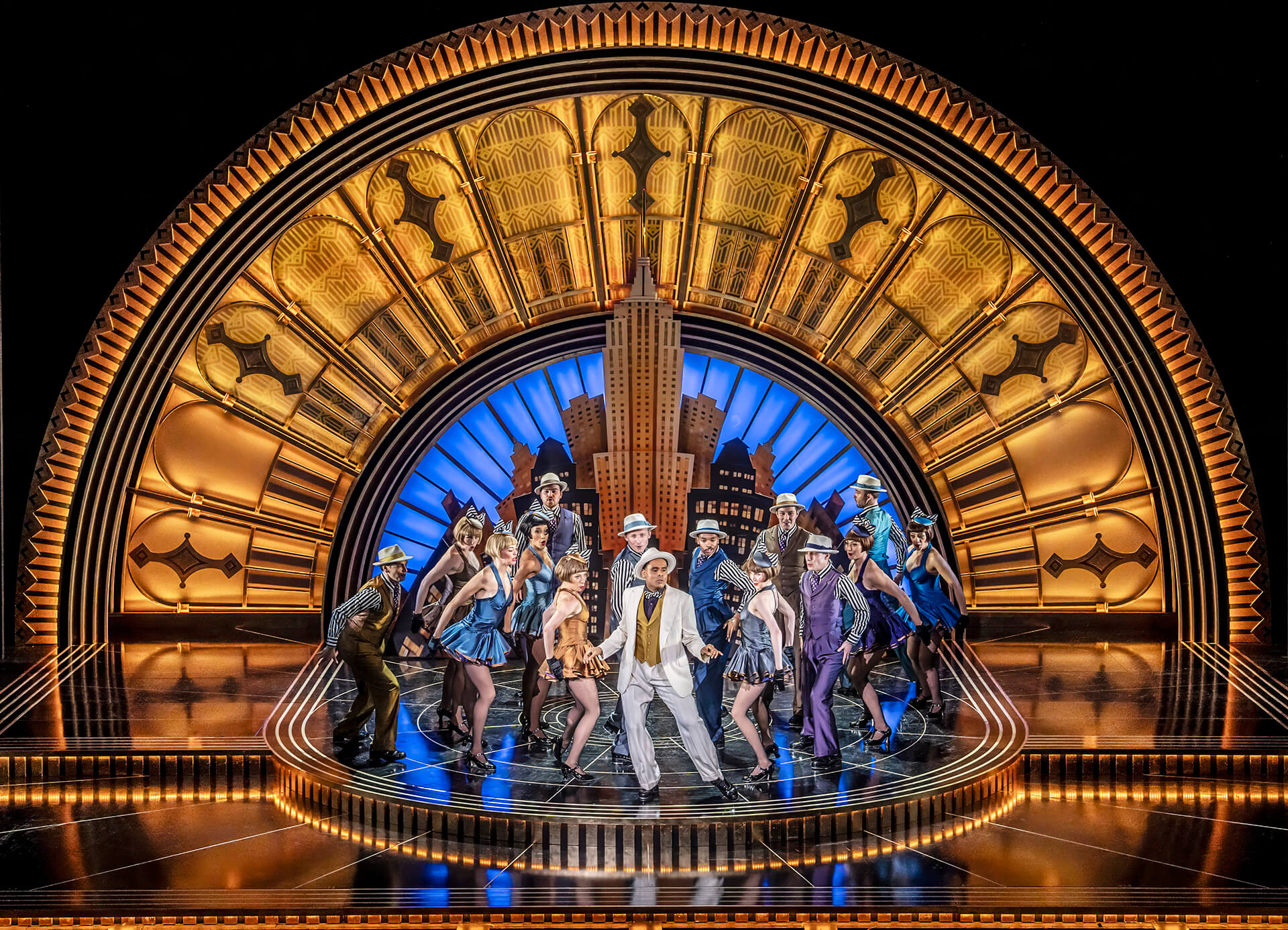
In its seventh year (and the longest-running show) at the West End’s Aldwych Theatre, TINA – The Tina Turner Musical is now embarking on its first UK and Ireland tour in 2025. In a bravura tale of compelling performances, powerhouse vocals, and a story as inspiring and raw, as the woman herself.

This is not  a ‘jukebox’ musical,  playwright   Katori Hall skilfully  weaves the music and  narrative, never afraid to let the latter lead the way. The music is not performed chronologically.

Jochebel Ohene MacCarthy is outstanding  as Tina , uncannily capturing Tina’s body movement and shimmies. Opposite  David King-Yombo  as the violent  but gifted  Ike Turner .

Director brings the best out of Chizaram Ochuba-Okafor shines as Young Tina. Indeed the entire family, including  Alline Bullock, as Tina’s sister and  Rush and Chambers and Letitia Hector, as Tina’s parents, provide vital depth to the proceedings

Mark Thompson’s set, Bruno Poet’s lighting, and Jeff Sugg’s projection design work are a joy and the finale in which a live concert performance is evoked is stunning.

Inevitably Nutbush city limits, Proud Mary and River Deep Mountain High seize the musical moments But private dancer and we don’t need another hero come close. MacCarthy becomes Tina in the same way that Alexandra burke became Whitney in  the bodyguard. Her vocals are faultless, imitating Tina but still breathing her own personality into the songs.

At 75 minutes a half, we are given our money’s worth, yet the ending is a little abrupt. The role that chance and David Bowie played in resurrecting her career is a trifle underplayed but realistically you cannot fault the song choice or narrative arc.

This is a carefully and lavishly crafted musical that pushes at the boundaries of the jukebox musical and tribute forms. A terrific evening’s entertainment

Posted in Behind the Arras Reviews | Tagged , , | Leave a comment

John Wilson’s London Sinfonia- Symphony hall, Birmingham

*****

Often described as a ‘super-orchestra’ , it brings together outstanding musicians from the UK and abroad, including principals and leaders from other orchestras, notable soloists and members of distinguished chamber groups.

‘Sinfonia of London sets the gold standard – an orchestra of generals that takes the unfashionable, the obscure, the overlooked, and makes it unmissable.’ (The Sunday Times)

The orchestra comes together for special projects throughout the year, including concerts and recordings, to create exceptional musical experiences.

  1. Set 1:
  2. Oklahoma! Main Title
  3. Oh! What A Beautful Morning
  4. People Will Say We’re In Love
  5. The Lady Is A Tramp
  6. Why Can’t I?
  7. Falling In Love With Love
  8. The King And I Overture
  9. If I Loved You
  10. The Most Beautiful Girl in the World
  11. To Keep My Love Alive
  12. Slaughter On 10th Avenue
  13. Set 2:
  14. South Pacific Overture
  15. Younger Than Springtime
  16. I’m Gonna Wash That Man Right Out Of My Hair
  17. Little Girl Blue
  18. The Sound Of Music
  19. I Have Confidence
  20. Twin Soliloquies
  21. Some Enchanted Evening
  22. You’ll Never Walk Alone
  23. Encore:
  24. June Is Bustin’ Out All Over

John Wilson and Sinfonia of London performing Rodgers and Hammerstein’s greatest hits at one of the finest Symphomy hall in the world promised to be a musical extravaganza and delivered.

From the opening overture the lush sonic sound bathed us in is magnificence before the special guest soloists Louise Dearman, Nathaniel Hackmann & Scarlett Strallen arrive to work their magic


The concert included music from “South Pacific,” “The Sound of Music,” “Oklahoma!,” “Carousel,” and “The King and I.” The performance showcased a number of popular songs like “Lady and the Tramp”

Louise Dearman was terrific in the comic standard- to keep my love alive

Scarlet Strallen mdd Julie Andrews a distant memory with her take on Sound of Music

There was barely a dry eye in the house for Nathaniel Hackmann’s emotional “You’ll Never walk Alone”

Wilson’s decision to resurrect , reappraise and rearrange and represent Rodgers and Hammerstein’s back catalogue was fully vindicated , my only gripe was that the first half was a full hour, while the second half struggled to surpass the forty minute mark- we wanted more!

Posted in Behind the Arras Reviews | Tagged , , , , , | Leave a comment

Sound of Music – Sutton Arts theatre- Sutton Coldfield

****

This is not a conventional review. Everyone knows the story, most have seen the film. There is an acting cast of upwards of  forty including rotation and a band of several. Director Emily Armstrong has had to morph into Ridley Scott to deal with this enormous cast and crew. I couldn’t possibly name check everyone.

Does she succeed? Yes she does.

As with Annie, Oliver, and the King and I, a large cast of children helps enormously with ticket sales, tonight  the House  was sold out. Yet although a commercial banker, artistically it is a bit of a minefield. The film has mountains and numerous locations, an amateur production does not. But what is present is a catalogue of some of the  best and most loved songs in musical theatre. Armstrong ensures she wrings  every ounce of magic from them. The stage set team opt for a surreal impressionist backdrop.

More challenging is the central theme of the rise of the Far Right, a phenomena emerging in the Uk with reform , and in Europe. The message that acquiescence is not the answer is not dodged. Swastikas fly ominously

Pivotal to the show’s success is the casting of Amy Davies as Maria who channels her inner Julie Andrews to the maximum, but in a 2025 way. Fey, demure, frustrated, unfulfilled, lustful;  all of those emotions are  neatly deployed.

Opposite her  Paul Westood  is a pleasing Captain Von Trapp, initially stiff, then lovelorn.

Star of the supporting cast is Liz Berriman as the Mother Abbess. The first half, on the warmest evening of the year, was a remarkable 95 minutes. Using the railway, it is possible to climb Mount Snowdon in half that time and the Germans would surely have made Paris, Stalingrad  and Warsaw in that time too. Yet just as the heat and time were starting to overwhelm, Liz steps up and gloriously exhorts us to “Climb Every Mountain” and we made it to the interval! And everything is alright.

My other favourite supporting cast actor was, Nick Snowdon  as Quisling Max Detweiler who almost evoked the biggest  laugh of the night when a slip of the tongue meant that he announced that Von Trapp was joining the Royal rather than German navy! The much shorter, 50 minute second half whizzed by. I can be a miserable curmudgeon, but even I had a tear in my eye when the children sang ” So long
Farewell Aufwiedersehn Goodnight”

All in all a hugely enjoyable evening with the band miraculously playing from the cafeteria through lack of space yet still sounding great. The Von Trapps will continue to avoid the Nazis until Saturday  28th June.

Posted in Behind the Arras Reviews | Tagged , , , | Leave a comment

Kiss me Quickstep- Derby Theatre

***

A criticism that could never be levelled at Derby Theatre is that it is predictable and boring. Next year we have the Classic Macbeth,  tonight we had Kiss me Quickstep a contemporaneous tilt at dramatizing the modern media interest in ballroom dancing.

Even better it is in the hands of prolific local playwright and literary polymath Nottingham’s  Amanda Whittington. Her plays tend to focus on a female perspective and there is  plenty  for her to have a go at here with sequins galore, fabulous frocks, fixed smiles, fake tan and the backstage bitching of competitive ballroom dancing.  The wardrobe department  will rarely have been busier.

Three couples take centre stage in a production  sharply directed by Theresa Heskin which has the razzle dazzle to the fore.

The cast feature Russian  Luka Kralj, who has come from Russia to compete in the championships, and his partner Nancy Knight, in training since she was three,  aided and abetted by her rich dad, Mick,  who is determined to bankroll her dreams.

 Jodie and Justin Atherton overcome a car breakdown to stagger in. Lee Hart and Samantha Shaw,  sashay and swagger  as favourites for the title.

There is little to fault the acting in Theresa Heskins’s production. Hannah Edwards is engaging as Nancy, especially when she sticks to her principles. There is tension towards the end when she clashes with her win-at-all-costs dad, played with vigour and credibility by Jack Lord. Isaac Stanmore gives an impressive portrayal of Luka whose focus on perfection is matched by his persuasive  Russian accent.

Abigail Moore and Matt Crosby are arresting as Jodie and Justin, the couple whose motives for taking part in the competition change more times than Jodie swaps her costume. They are probably the finest dancers too, admirably strutting their stuff in both the ballroom and Latin sections.

Amy Barnes is captivating as Samantha, the envied dancer who has appeared twice on the cover of Dancing Times but who swigs vodka as she struggles to find her real self. Ed White shines as Lee who feels his drive and ambition are far more important than Samantha’s self-doubt. As he says, “competitive dancing is not about confidence. It’s the illusion of confidence. And you can create that.”

When members of a community ensemble from the Academy for Theatre Arts take to the floor, there are 11 couples displaying their talents at one time. The dance routines are little short of extraordinary. There’s a winsome waltz, a tingling tango, a sizzling samba and a pulsating paso doble.

The dance routines are dazzling, the script stitches it all together, no-one puts a foot wrong.

Posted in Behind the Arras Reviews | Tagged , , | Leave a comment

‘ Guitar ‘  by Earl Slick- an autobiography book review

Not only is Earl Slick my favourite Bowie guitarist, he is also one of my favourite all time guitarists. So my expectations of this book were high. Fortunately, I was not disappointed.

licks credits read like excerpts from a compendium of contemporary music. from John Lennon to the New York Dolls – but it was his association with David that defined him he  was barely out of his teens when David Bowie hired him to play guitar on the ground-breaking 1974 Diamond Dogs tour.  a relationship that would endure through thick and thin for the next forty years playing on Young Americans, Station to Station and the 2013 comeback, The Next Day, Slick played on the tour that followed Bowie’s  hit Let’s Dance album and was at his side for the epic Glastonbury show in 2000.

Other collaborations read like a roll call of rock ‘n’ roll royalty including Mick Jagger, The Cure, George Harrison, Ringo Starr, Joe Cocker, Buddy Guy, Ian Hunter, David Coverdale and Eric Clapton. And in the ‘80s he became an MTV star in his own right with the success of Phantom, Rocker and Slick. Through it all he lived the rock ‘n’ roll life to the hilt, until it nearly killed him.

The wise decision to use musician and journalist Jeff Slate to write the book with him pays dividends. It is lucid, chronological and insightful  professionally musically   and personally. It does not rely upon salacious gossip, the raw truth is powerful, and interesting enough.

My favourite woman of mystery Coco not only organised auditions, but also sometimes ran them.  Slick overdubbed  Ronson’s lead guitar on the Ziggy Stardust motion picture album on  “Width of a circle” due to technical issues on the original recording. ( check out the versions on “David Live” and  “The motion picture album”.Drug use was so endemic amongst the touring party that Slick was “snowballing” taking cocaine and heroin. He cannot remember  the “Across the universe” session he was so out of it ( most of us are keen to forget it too). He was amongst the mutineers for the recording of the David Live Album when they arrived to find recording equipment and vans- but no payment proposals for the album. Despite several contractual/ financial spats his admiration for, and desire to play with, David never diminished. I could not help but reflect that Ronson could have learned much from Slick in his business dealings.

A fine book and  must for all Bowie fans. Slik closes by saying that his epitaph was written on the liner notes to Station to Station :

Guitar- Earl Slick

Posted in Blog | Tagged , , , | Leave a comment

Burial site for George Heath- the Moorlands poet

St Michaels Church Horton, Staffs

As a past Staffordshire Poet laureate I have always been fascinated by George Heath, the gifted poet who died aged only 25 years old of “Consumption” or what we call Tuberculosis a major killer up until the early 20th century.

Originally, nobody knew what caused the various forms of tuberculosis, so called from tubercle bacillus (usually the offending microbes are specifically Mycobacterium tuberculosis).

The word “tuberculosis” was coined by Johann Lukas Schönle in 1839, from the Latin “tuberculum,” meaning “small, swelling bump or pimple.” However, it wouldn’t be until 1882 when Dr. Robert Koch discovered the tubercle bacillus, for which he won a Nobel Prize in 1905, that the name “tuberculosis” began being exclusively used to refer to the disease formerly popularly known as consumption.

The microbes that cause the disease have been around for at least 15,000-20,000 years with known human deaths being caused by the bacteria dating back at least as far as 5,000 years ago, so the current name is an extremely recent moniker relative to how long the disease has been around.

The much older name originally came from the ancient Greeks who called the disease something meaning “consumption,” “phthisis,” specifically referring to pulmonary tuberculosis, with the earliest references to this being in 460 BC.

The “father of Western medicine,” Hippocrates, estimated that phthisis was the most widespread disease of his age. He further told his students that they shouldn’t attempt to treat patients in the last stages of phthisis, as they were sure to die and it would ruin his protégés’ reputation as healers if they made a practice of attempting to heal such individuals.

The disease seemed to consume the individual, with their weight drastically dropping as the disease progressed.

St Michaels Church Horton is beautifully located even if the building itself is routine. A Parish church built in C15 with C17 alterations and largely internal circa 1864 restoration by Sugden. Coursed sandstone; red tile roof to nave
and chancel, with verge parapets.

The Victorians loved their Church cemetries. This one is atypical.

Serena Trowbridge ( Reader in Victorian Literature, Birmingham City University) writes:

” Victorians ritualised death. Black mourning clothes were worn for set periods of time after bereavement, the length of time depending on the relationship. After this, grey or purple would then be worn. Jewellery was made of the hair of the deceased and photographs were taken of the corpse with their family. Curtains in the house were drawn after a death, and the bell and door-knocker muffled.

The Victorian attitude to death was epitomised by the public mourning of Prince Albert in 1861. Queen Victoria’s consolation, beside the Bible, was the reading of Alfred, Lord Tennyson’s In Memoriam (1849), a long poem which explores the undulating patterns of grief. Victoria’s response to the poem exemplifies the Victorian approach to death, in which the dead are mourned and memorialised rather than seen as lost forever. This Christian approach is also reflected in the graveyards of the period.

From 1832 or 1841, cemeteries were constructed around London to cope with the growing problem of the burial of the dead. Cremation was rare and seen as unacceptable, and existing graveyards were overflowing, with coffins often stacked up.

Perhaps the most famous of these London cemeteries is Highgate, opened in 1839. It became the resting place for many famous figures, including the author George Eliot, the poet Christina Rossetti, and members of Dickens’ family.

Another cemetery, at Brookwood in Surrey, was opened in 1854 after the cholera epidemic of 1848-9 overwhelmed the system. It was served by the London Necropolis Railway, which ran trains from Waterloo carrying mourners and coffins. The Necropolis Railway emphasised the class-bound nature of death and mourning, with carriages and waiting rooms (which doubled as funeral parlours) divided into first, second and third class.

Sacred space

Graveyards offered a sacred space for bereaved families to reflect on their losses. This encounter between the living and the dead provides one of the most famous scenes in Victorian literature, when young orphan Pip visits the graves of his family in the opening pages of Charles Dickens’ Great Expectations (1861).

Pip explains how his images of his family were formed by their tombstones:

The shape of the letters on my father’s, gave me an odd idea that he was a square, stout, dark man, with curly black hair. From the character and turn of the inscription, ‘Also Georgiana Wife of the Above,’ I drew a childish conclusion that my mother was freckled and sickly.

The site of the burial of the dead also proves a turning point for Pip’s future. He is surprised by the appearance of “a fearful man”, Magwitch, who demands Pip’s help. The child’s terrified acquiescence alters the course of his life in ways he does not yet fully understand.

This tendency to situate significant encounters among the dead is widespread in Victorian fiction. In The Woman in White (1860) by Wilkie Collins, a key encounter between the hero and the elusive woman in white takes place in a graveyard:

Under the wan wild evening light, that woman and I were met together again, a grave between us, the dead about us, the lonesome hills closing us round on every side.

As the hero-narrator points out, “the lifelong interests which might hang suspended on the next chance words” make him anxious and add drama to an already tense scene.

As spaces charged with emotion, then, in which one may reflect on one’s own future as well as past, graveyards provide a fruitful literary backdrop. Thomas Hardy uses this concept regularly, notably in Tess of the D’Urbervilles (1891), in which the tombs of the heroine’s supposed ancestors provide uncomfortable settings for several encounters with her past and present, leading to her ultimate downfall.

Death and resurrection

Death was not an end for the majority of Victorians, but the beginning of a new future. As Tennyson wrote in his poem “Crossing the Bar”:

I hope to see my Pilot face to face

When I have crost the Bar.

The conviction in resurrection and ascension to Heaven which sustained the mourners was accompanied by a growing interest in séances and spiritualism as a way to remain in contact with the dead, and of course the graveyard consequently featured in many ghost stories.

Truth is even stranger, however. In 1869, the body of Elizabeth Siddal, painter and poet, was exhumed by firelight in Highgate Cemetery, to recover the manuscripts of poems tossed in with her body by her grieving husband, the Pre-Raphelite artist Dante Gabriel Rossetti. it was said that her body was perfectly preserved, and that her red hair had continued growing and filled the coffin.

The worm-eaten manuscripts are now in the British Library, and it has been suggested that Siddal’s exhumation inspired Bram Stoker in his portrayal of Lucy Westenra in Dracula (1897).

Graveyards are a place where different human concerns meet: sadness, loss, history, tragedy, and uncertainty for the future. Yet these fictional graveyard encounters contain seeds of hope, in which the characters move from loss to a brighter future.

“George Heath was born in the village of Gratton in the Staffordshire Moorlands in 1844.

Educated at the village school, he worked on his father’s farm, then was apprenticed to a builder.

While working on the church in the neighbouring village of Horton, he caught a chill which developed into consumption and he died five years later at the age of 25.

…He was also a poet. During his brief lifetime he achieved little more than local fame as ‘the Moorland Poet’…

He was also a poet. During his brief lifetime he achieved little more than local fame as ‘the Moorland Poet’ and ‘the Invalid Poet’.

He published two slim volumes of verse but after his death his friends produced an edition of his poems and also arranged for a memorial stone to be erected over his grave in Horton churchyard.

Death and the frustration of unfulfilled ambition are the two major themes of his poetry, and the epitaph on his gravestone (quoted above) reveals his own belief that his work would be forgotten. Hopefully he will be proved wrong.”

-Robert Buchanan.

http://www.robertbuchanan.co.uk/georgeheath/index.html – A great website full of information about George Heath and his poems.

George Heath (1844 – 1869)

George Heath’s Poem about Rudyard:

RUDYARD.

SUNSET MUSINGS.

Glorious Rudyard; gorgeous picture,
How I love to gaze on thee,
Ever fraught wtth sunny memories,
Ever beautiful to me!

Whether blushing Spring enwrap thee
In its robe of virgin pride,
Whether golden Summer steep thee
In its mellow gushing tide;

Whether drooping Autumn flood thee
With its dreamy chastened light,
Whether chilling Winter drape thee
In its vest of spotless white;

Whether storms sweep grandly o’er thee,
Light or gloom their charms impart,
Ever grand, sublime, majestic,
Ever beautiful thou art.

And I love to roam in twilight,
From the busy haunts of toil,
From Oppression’s galling fetters,
From Deception’s soulless smile,

Here to sit and gaze upon thee,
As I gaze upon thee now,
With the balmy zephyr playing
On my hot and aching brow.

How sublimely grand the picture
Stretching out before my gaze;
Deluged with the glowing splendour
Of the sun’s declining rays,

Lies the lake in tranquil beauty,
Like a model mimic sea,
Like a brightly polished mirror,
In a frame of ebony;

Like a flood of molten silver,
Froth of gold and sapphire dipped,
Flashing back the efflorescence
Of the summer’s blazing light.

And away, far up the valley,
Rising from the sunlit tide,
Towering hills in stately grandeur,
Bound the view on either side,

Turning, twisting, undulating,
Sinking low or peaking high,
Throwing up a jaggy outline,
Quaintly cut against the sky.

Bulging mounds and blocks of granite
Rise in beauty all around,
Lichen grown, and moss enamelled,
Ivy wreathed, and bilberry crowned.

Rugged cliffs of mouldering sandstone
Break abruptly here and there,
Like a patch of coarsest fustian
On a robe of beauty rare;

In whose fossil-bedded strata,
Like an ancient crypt unsealed,
Lies the bloom of bygone ages,
To the curious eye revealed,

Seeming placed to point this moral
To the thoughtless and the gay,
All that’s fair must fade and perish,
All that’s beautiful, decay.

And above and all around me
Stalwart trees bedeck the scene,
Tendril-twined and ivy-mantled,
All enrobed in richest sheen;

Like a mighty host of giants,
Armed and ready for the fight,
With the lightning’s gleaming falchion,
And the tempest’s awful might;

And the sun in haze of beauty,
Sinks in solemn peace to rest,
’Neath the bright and mystic curtain
Of the crimson-glowing west.

Fleecy mists of gorgeous splendour,
Clouds of shapes and forms untold,
Sail like argosies of tinsel,
O’er a sea of burnished gold;

Softly breaking up and parting,
Gently gliding to and fro,
Mirrored in the glassy bosom
Of the peaceful lake below.

And the mason’s busy hammer,
And the mower’s tinkling scythe,
And the whistle of the teamster,
And the song of milk-maid blithe—

All are hushed, and peaceful Silence
O’er the scene its mantle throws;
Not one sight or sound discordant
Breaks the spell of sweet repose.

And the stilly, dreamy motion
Of the vapours gliding o’er,
And the plashing of the wavelets
As they break upon the shore,

And the calm and saintly murmur
Of the tall and stately trees,
As they chant their thrilling vespers
To the music of the breeze—

All combine to soothe my spirit,
Panting, yearning, sad, and sore;
Waft my thoughts from present sorrows,
To the happy days of yore:

When I met my noble Mary
Oft amid this shady bower,
When the flush of day was fading
In the mystic twilight hour;

When together oft we wandered
Through the flower-enamelled glade,
Sat in silent contemplation
In the cool and leafy shade;

Watched the unsuspecting rabbit
Frisking through the bushy grove,
Heard the rooks in noisy confab
In the giant trees above;

Went in search of curious flowerets,
Climbed the rocks for fern and heath,
And together, for her forehead,
Twined a rainbow-coloured wreath;

Watched the mighty locomotive
Rushing grandly on its way,
And the snow-white wreath of vapour
Softly break and die away;

Sought for shells amid the shingle
On the lakelet’s rugged side,
Watched the ever busy swallow
O’er its shining surface glide;

Launched our skiff upon its bosom,
When the wind was calm and still,
Gazed enraptured on the picture,
And of beauty quaffed our fill.

Then when passion or ambition
Filled my soul with wild unrest,
Or, when sorrow or affliction
Quelled the demon in my breast,

Standing grandly there before me,
With her cool hand on my brow,
Gazing fondly, sadly on me—
Ah! I seem to see her now—

She would breathe the balm of kindness
O’er my sufferings and my wrongs,
Read me thoughts of grand old authors,
Sing me sweetly soothing songs;

Speak in strangely thrilling accents
Of that land beyond the sky,
Where “the weary, heavy laden”
Find eternal rest and joy—

Till my brooding soul, enraptured,
Soared on Fancy’s glowing wings
Far beyond this realm of turmoil,
Up to brighter, nobler things.

But those days of halcyon glory
Like a vision passed away,
Like a fitful gleam of sunshine
On a dreary winter’s day;

Leaving nought behind to cheer me
Through this world of storm and blight,
But the sweetly soothing memory
Of their evanescent light;

For the summer waned and deepened,
Softer grew the twilight’s hush,
Meeker grew the morning’s dawning,
More subdued the noontide flush;

And disease, like deadly night-shade,
O’er my Mary cast its blight,
Paler grew her cheeks of beauty,
Grew her eyes more large and bright.

Whiter grew her brow of marble,
Softer grew her hand of snow,
Fainter came her voice’s music,
Feeble fell her steps and slow.

Then we wandered here but seldom,
For it only seemed to cast
O’er our lives a deeper shadow—
We were dreaming of the past—

And the tender, chastened aspect
Of its beauty, seemed to say,
“All that’s fair, alas! must wither,
All that’s beautiful decay.”

But we never spoke of parting,
Though we knew that we must part,
Either strove to hide that knowledge,
From the other’s bleeding heart.

But the Summer passed, and Autumn,
Meek-eyed Autumn, came again,
With its wreath of faded flowerets,
And its wealth of golden grain.

’Twas the solemn hour of midnight,
And the moon shone clear and bright,
Silvering o’er the silent landscape,
With its weird mysterious light,

When I stood among her kindred,
Gazing on her features fair,
Stroking back the silken tresses
Of her wavy ebon hair.

And she looked so like an angel,
In her mute and dreamless sleep—
All the past came flooding o’er me,
And I turned away to weep.

Came her voice serene and saint-like,
“Do not leave me yet awhile;“
Then I looked, her eyes were brilliant,
And her features wore a smile

As she gazed around upon us,
Pointing with her snow-white hand,
Through the vista of the future,
To that brighter, better land.

Softly whispering “Loved ones meet me,
On that far celestial shore,
Where the noble faithful-hearted
Meet again to part no more.”

Then her hand dropped down beside her,
O’er her features passed a change,
Pallid grew her lips and rigid,
Glassy grew her eyes and strange.

And I knew, though almost frantic,
As the dear white hand I pressed,
That the worn and weary spirit,
Had at last gone home to rest.

Time passed on, and sunny summer
Came again to deck our bowers,
With its robe of gold and emerald,
And its wreath of ferns and flowers.

All around was love and beauty,
All seemed happy as of yore,
But the bliss of vanished moments
Came to cheer my heart no more.

And a weary, weeping wanderer,
O’er this wilderness I roam,
Till the summons come—“’Tis finished!
Leave thy toil and hasten home.”

Posted in Blog | Tagged , , | Leave a comment

Me and Mr Jones – Suzi Ronson ( book review)

I have previously mentioned a new book by veteran British music PR Alan Edwards   ( I was there) which sheds light on his life with some of the biggest names in music, including David Bowie, the Spice Girls and Amy Winehouse.

I invariably find that books not exclusively about David can be amongst the most informative. I was impressed by how David stood shoulder to shoulder alongside the best artists he had worked with .I also had no idea how knowledgeable David was about the Press in general and his skill in getting what he wanted. Curiously Coco gets a free pass. Not a bad word said. I highly recommend it.

This time around it was the turn of Suzi Ronson and her book “Me and Mr Jones”. Although I review professionally I bought the book with my own money!

I approached Suzi’ Ronson’s “Me and Mr Jones” with some trepidation. There were obvious elephant traps galore but overall I was pleasantly surprised.

Firstly, it is sharp and well written, I suspect a testament to the editing team at Faber. The reality is that she only knew David for a brief period of time, firstly as part of his broader social set with Angie, and then intimately on tour with him for Ziggy.

I was not that interested in, or bothered about her unremarkable, atypical home life or nascent career as a hairdresser. I did enjoy her tales of the louche, bohemian, dissolute lifestyle at Hadon Hall. Her admission that she had slept with David felt designed to give her story credibility, and she was at pains to point out that it was ok with Angie.  So she “had” the lead guitarist and singer with the band…, she has to work hard to steer this away from being a groupie’s  tale. And yet her good fortune is told humbly. One good haircut creates Ziggy for David and the band, and soon she is their stylist and hold of the backstage to onstage torch from which she swears to keep confidences untold. And yet there is a pretty unedifying  explicit tale of David rapaciously devouring a young man whom she had been instructed to lure out of the crowd in the back seat of his limo n she presents his time with rhe LA “Baby squad” as a matter of record.

Curiously, underpinning all of this is Tony Defries’ managerial brilliance, and any idea that David was living a life of penury patently untrue.

Obviously she has the inside track on the firing of the Spiders via an overheard conversation.

Once Mick is fired, there is no more “Me and Mr Jones” but several interesting lines of exploration are squandered. The Hunter/ Ronson nexus  is defined by how much she liked Ian and his wife, the premature abandonment of the project blamed on the management deal that Mick had signed with Defries. The musical background is pretty much ignored- perhaps she didn’t know?

She is stronger on the background  to Mick and Dylan’s  Rolling Thunder tour, however her gripe that she was not invited on the first part of the tour seems churlish. The musical and ephemeral anecdotes are strong, engaging ,and well told and worth the purchase in their own right including a great story about the two tour bus caravan  and Bobs’ Winnebago in  which he inadvertently left his dog tied to a tree a hundred miles back and had to send a biker to recover the dog.

Shockingly she reveals that Mick ended up owing Mainman money for the Rolling thunder tour he spent so much on drink, drugs gambling and assorted expenses. Is this DeFries at his worst? Or were Mick and Suzi, both grown ups, hopeless at managing their financial affairs?

Overall a good read, well written. The book ends abruptly with a cursory mention of Mick’s passing which disappointed me, Bowie fans are Ronson fans. No mention of Lisa Ronson  ( recently of Holy Holy Fame) either and she is such a talent. Loved hearing her sing “Lady Stardust”, and friends I believe with Morgan Visconti. Mick’s farewell on the big stage at the Freddie Mercury tribute when he played , majestically , with Bowie and Hunter on “Dudes” is not mentioned. It appears that post the Spiders schism, she hasn’t heard from David at all. But the book is billed to be about her and David- so it meets its objectives.

Posted in Blog | Tagged , , , , , , , , | Leave a comment