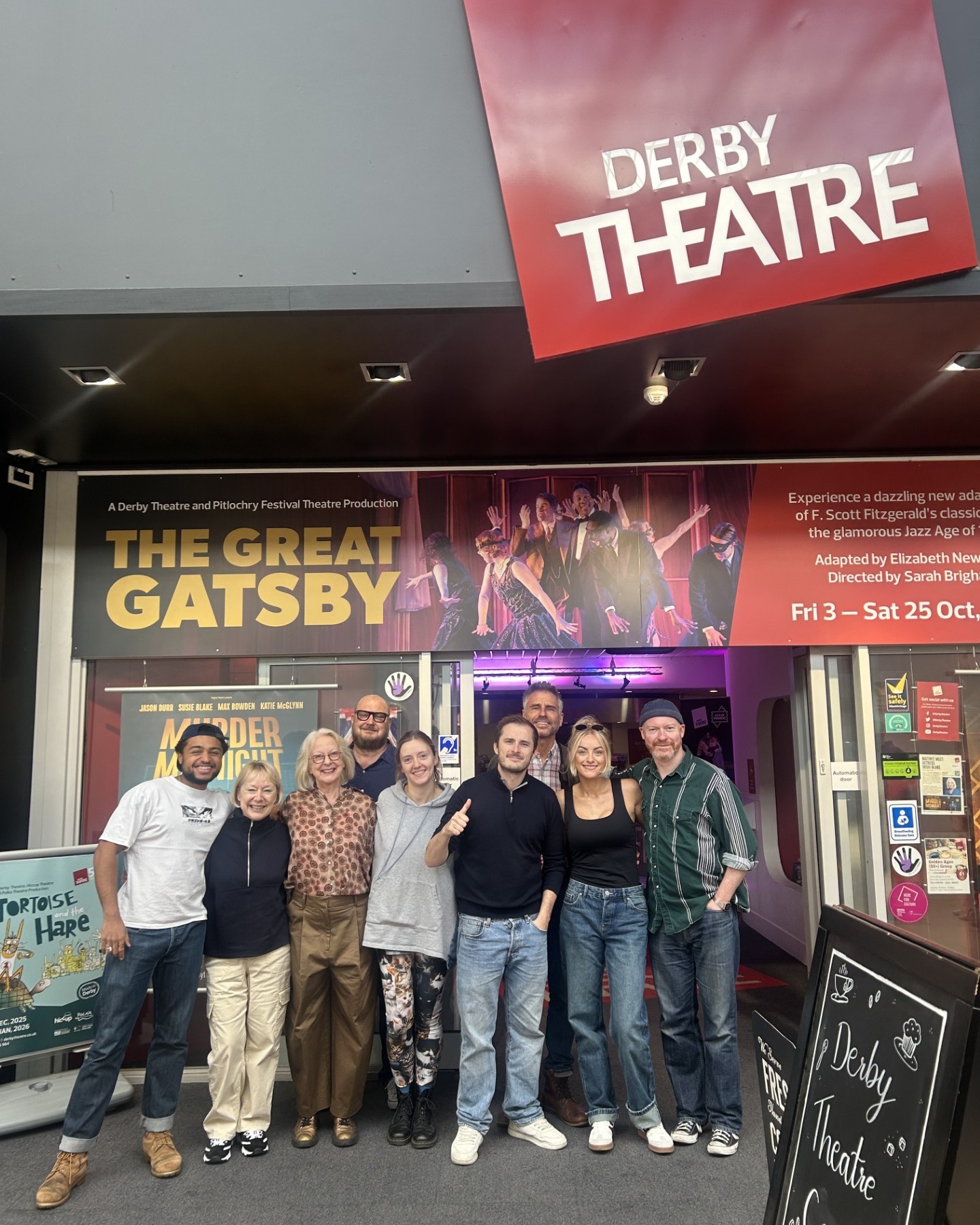
It is September , the children are back at school, temperatures are falling and Derby Theatre has a scorching world premier tour from leading contemporary playwright Torben Betts to open the autumn season.
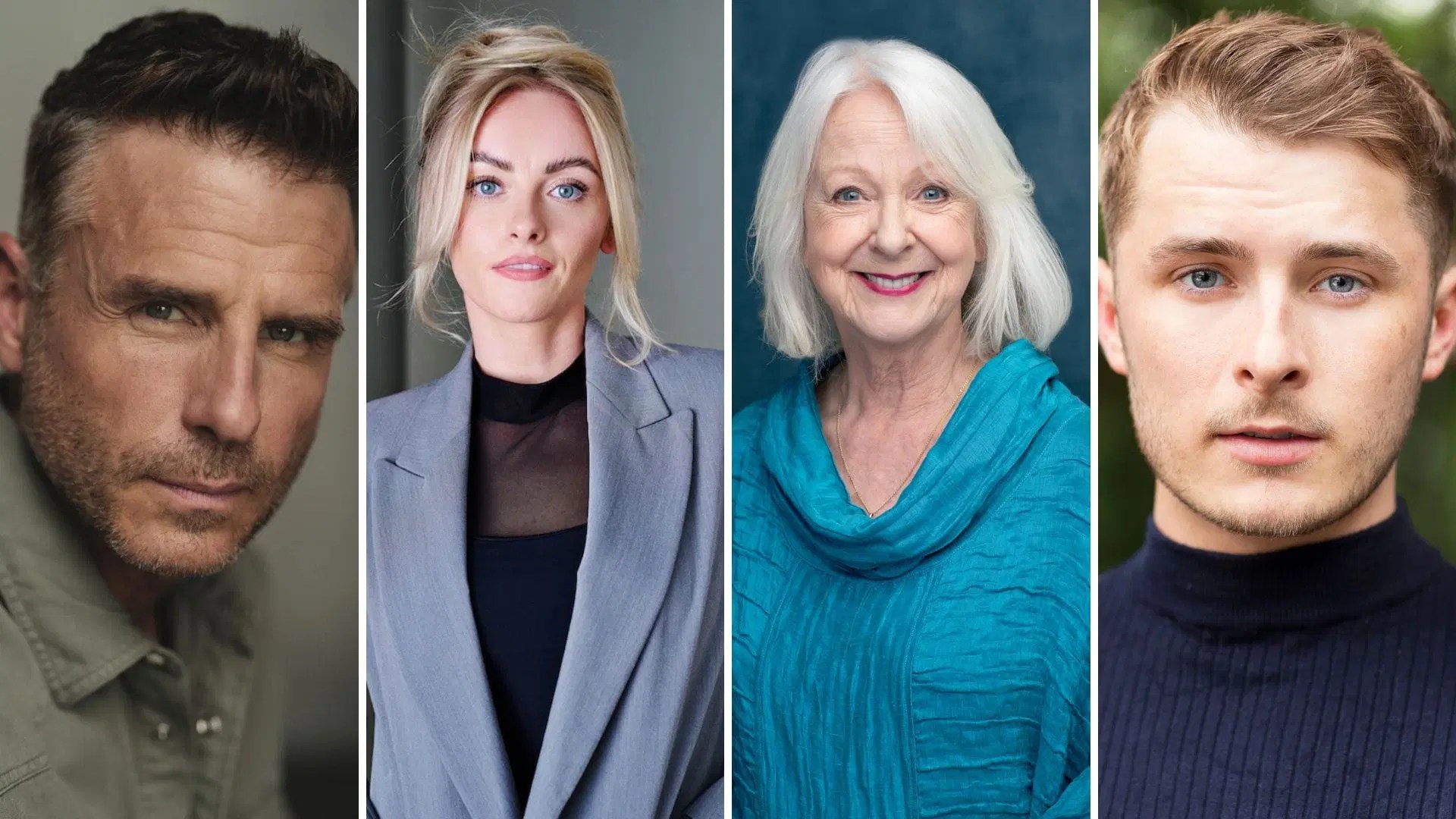
A strong cast of television veterans includes Jason Durr (Heartbeat, Casualty) as Jonny the Cyclpos, Susie Blake ( Coronation Street) as Shirley, Max Bowden, ( Ben Mitchell in EastEnders) as Paul , and Katie McGlynn (Waterloo Road, Coronation Street, Hollyoaks) as Lisa
Performed by the Original theatre company , Murder at Midnight is a cross-genre piece incorporating, crime, comedy, thriller, murder mystery and madcap farce set on New Year’s Eve in a quiet corner of Kent. There is a killer on the loose. Within are gangster Jonny ‘ Cyclops’, his glamorous girlfriend Lisa , his emotionally volatile sidekick Trainwreck, his clairvoyant mum—who’s seeing things, her very skittish foreign born carer, plus an undercover detective, – and a burglar dressed as a clown. That is quite some New Years Eve gathering.
A safe full of cash and drugs, a stash of deadly weapons, and one unsolved murder spice the evening up.
One house. Seven suspects and a Murder at Midnight…
Philip Franks’ direction is pacy, brisk and energetic. The two hour long halves never outstay their welcome. A split-level single set ( by Colin Falconer, lighting by Jason Taylor) incorporating an open plan lounge/kitchen, study, bedroom and back alley works well, Sound by Max Paapenheim majors on Jonny’s favourite artist Robbie Williams and mercifully eschews Coldplay, the latter of whom are the butt of a very funny series of running gags.
After the success of Invincible, Caroline’s Kitchen, and Murder in the Dark this is Betts’s fourth play at Derby. It is also his best. It borrows from Jacobean revenge drama in the mould of Webster or Middleton. Director Franks has described it as Feydeau meets Tarantino which is particularly apposite for a modern audience.
The dialogue is snappy . The one -liners are whiplash fast and laugh out loud funny. I dare you to wear a Coldplay t shirt to the show. The body count is high, the stage drenched in blood for the brilliant finale. It isn’t just people who meet their maker- Rocjk DJ tragically is despatched to the great kennels in the sky too, where hopefully he will be better fed.
The principal cast are terrific. Betts has created a classic villain in Cyclops for Jason Durr to inhabit. Lisa his girlfriend, sassily played by McGlynn is much more than a dumb blonde. Susie Blake plays the psychotic mother with a wicked gleam in her eye, sometime demotic villainess in a winceyette nightie, sometime forgetful granny.
Betts is a master at teasing wit the motivations for his character’s actions, sometimes we find out, sometimes we don’t. He never seeks to explain why some people like Coldplay.
Cast also includes Callum Balmforth, Peter Moreton, Iryna Poplavska, Bella Farr and Andy McLeod.
Murder at Midnight plays until Sat 13th before continuing on nationwide tour at Birmingham, Cheltenham, Guildford, Malvern, Southend, York, Eastbourne, Cardiff, Fareham, and Bromley and in 2026 Salford, Blackpool, Ipswich, Northampton, New Brighton, Coventry, Salisbury, Bath and Darlington, with further dates to be announced.
My fifth cruise, my third transatlantic repositioning cruise from the Caribbean to the mediterranean on Voyager, my first journey on her.
Once again we were starting from Barbados, a long haul flight from Birmingham Uk and finishing with a relatively short hop from Palma Majorca to home.
Bridgetown Barbados is a curious mix of the ramshackle old town with an obvious drive to reinvent the waterfront as a trendy modern area, basking in the late April summer sun. The only shame is that an afternoon was not nearly enough time to do it justice
Next up was the beautiful island of St Lucia,, my third visit and this time we partook of some whale and dolphin watching which was excellent
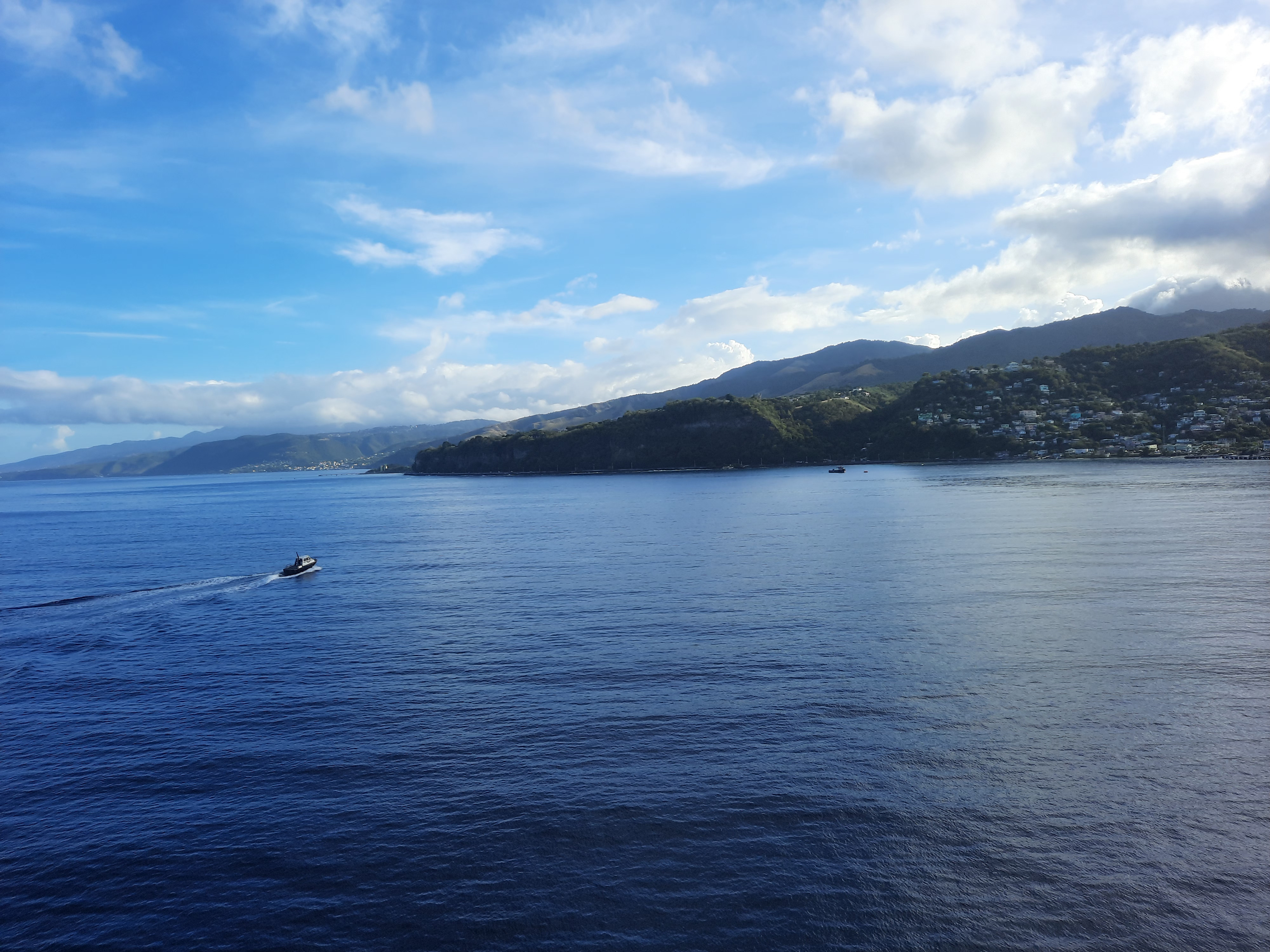
the following day was the island of Dominica, not to be confused with the much larger Dominican republic, small, underdeveloped poor and a set for the film “Pirates of the Caribbean”- there was no sign of Johhny Depp.
our final Caribbean stop was a favourite, Antigua at which we island hopped from beach to beautiful beach on a small boat
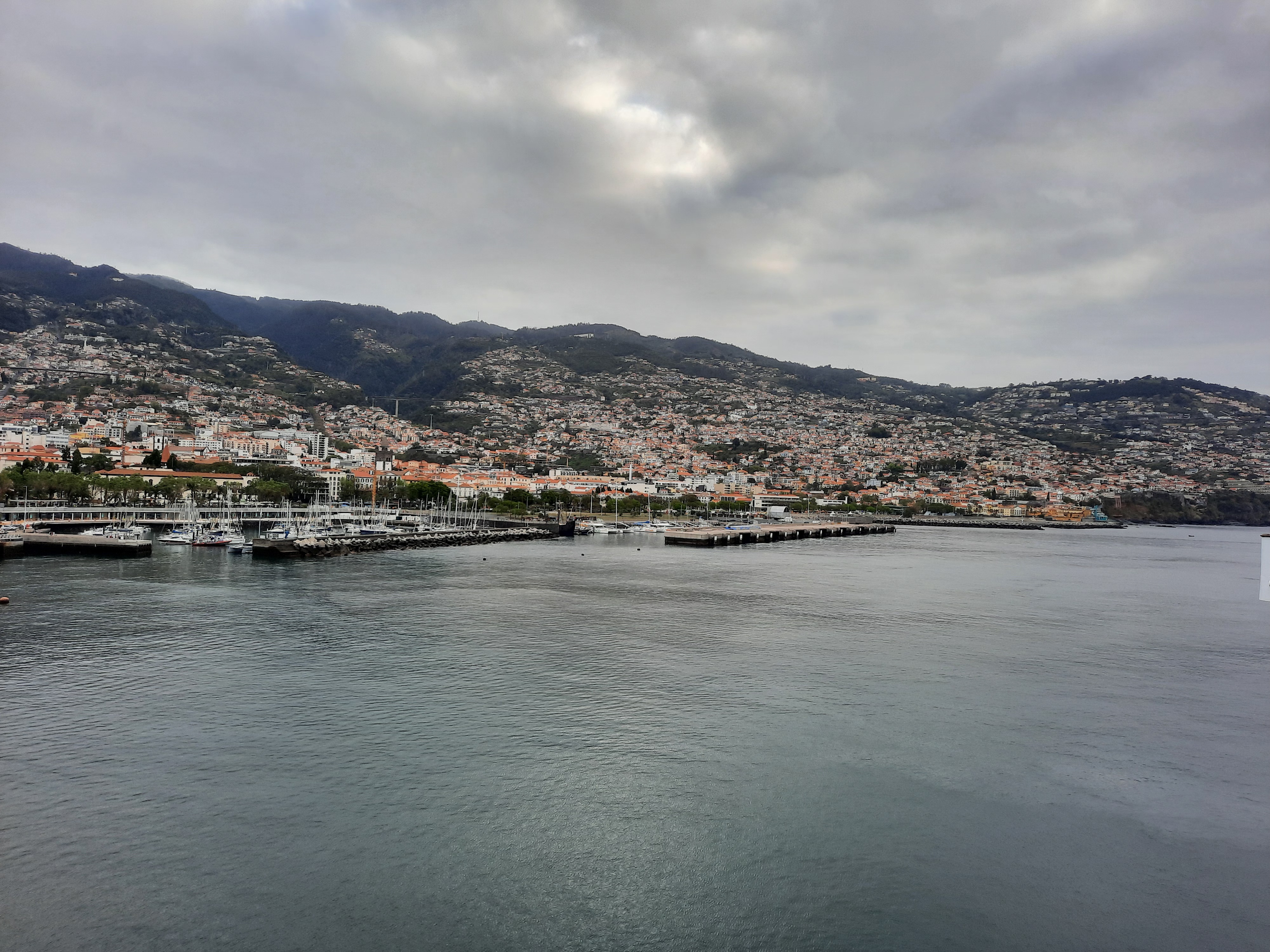
Seven full sea days then took us to the big surprise of the holiday for m, the glorious island of Maderira, great cake, great wined, great seafoof. Reids Hotel where Winston Churchill and Margaret Thatcher have stayed ( not at the same time) was superb
I had been to Cadiz before, it remains a wonderful city
Concluding in palma- it was a memorable cruise with madeira the highlight
This is my fourth visit to the show, the first being over two decades ago. In 1975 Jon Landau proclaimed Bruce Springsteen as the future of rock n roll. In 1958 Buddy Holly was the progenitor of the genre. Buddy himself played Birmingham Town hall in 1959.
As a musical theatre production, the statistics underscore the hyperbole for a show which celebrates the songs of an artist whose recording career lasted barely two years, but whose music endures. A jukebox musical, the two halves mainly comprise his rise to fame and studio work in the first half, and an extended concert sequence in the second. Total performances to 2024: 22,124
Number of people up and dancing at the end… 22,979,566
Buddy – the original ‘jukebox’ musical – has enjoyed phenomenal success, playing a record-breaking 4,900 performances over 614 weeks on tour in the UK and Ireland, as well as 5,822 performances over 728 weeks in London’s West End.
The backstory is fascinating.Buddy’s mum said “Charles Hardin was just too long a name for such a little boy”, so nicknamed him ‘Buddy’
Buddy Holly’s first instrument was the piano
Hank Williams was Buddy Holly’s earliest musical influence
The oldest known recording of Buddy is from about 1949, singing ‘My Two Timin’ Woman’ at around the age of 13, before his voice broke!
Buddy and his best friend Bob Montgomery opened for Elvis Presley in February 1955, at the Fair Park Coliseum in Lubbock, Buddy borrowing Presley’s guitar for the show
Buddy’s professional music career lasted just over three years, but he left behind almost 200 recordings made during that span
The original Crickets were Buddy Holly (lead guitar and vocals), Jerry Allison (drums), Niki Sullivan (rhythm guitar), and Joe Mauldin (bass) – their first hit was ‘That’ll Be The Day’
Buddy and the Crickets wrote most of their own material, which was unique at the time. Before Buddy, pop music performance and song-writing were mostly separate endeavours, where composers wrote songs and performers recorded and played them in concert
Buddy and the Crickets played on Ed Sullivan’s popular variety show twice, but refused to appear a third time due to a previous disagreement with Sullivan about what they could play
Buddy used a loan from his brother Larry to buy a $600 Fender Stratocaster, which he would use on his records and in concerts
Buddy recorded seven songs that Elvis Presley also recorded, including ‘Ready Teddy’, ‘Rip It Up’ and ‘Bo Diddley’
Buddy and the Crickets toured Hawaii, Australia and England in early 1958 – the tour of England in March was compered by Des O’Connor
Paul McCartney watched Buddy at home in Liverpool on TV’s Sunday Night at the London Palladium to find out exactly which chords he used
The Crickets appeared on the 100th show of Sunday Night at the London Palladium – Bob Hope was top of the bill
Paul McCartney once said: “If it weren’t for the Crickets, there wouldn’t be any Beatles”
The ‘Chirping’ Crickets was the only group LP with Buddy to be issued in his lifetime. The iconic cover photo was somewhat hurriedly taken on a theatre roof in Brooklyn, before a concert
Buddy played his last concert at the Surf Ballroom, Clear Lake, Iowa, on February 2nd, 1959, along with fellow rock & roll stars Ritchie Valens and J.P. ‘the Big Bopper’ Richardson
Legendary country superstar Waylon Jennings had his first record produced by Buddy Holly
According to the song credits on ‘Not Fade Away’ and ‘Baby I Don’t Care’ Jerry Allison’s instrument was the ‘cardboard box’! On ‘Everyday’ he is credited with ‘knee slapping’!
One of Buddy’s most famous hits, ‘Peggy Sue’, was originally called ‘Cindy Lou’, but he changed it at the request of Jerry Allison, who wanted the song to be named after his girlfriend
Buddy proposed to Maria Elena Santiago on their first date – they were married just weeks later on August 15th, 1958, in a private ceremony in the Holley’s house in Lubbock
The Quarrymen (later to become The Beatles) covered ‘That’ll Be The Day’ in their first recording. John Lennon, Paul McCartney, George Harrison, and Stuart Sutcliffe (the Beatles’ original bass guitarist) were all huge Buddy Holly fans, and came up with the name The Beatles in homage to Buddy’s band the Crickets
Buddy’s ‘Not Fade Away’ was covered by the Rolling Stones in 1964, and became the band’s first top 10 hit in Britain, reaching number three
Two major films have been made about Buddy Holly; Gary Busey received an Oscar nomination for his portrayal of Buddy in The Buddy Holly Story in 1979, then in 1987 lifelong fan Paul McCartney narrated The Real Buddy Holly Story documentary
Don McLean’s 1971 classic ‘American Pie’ is all about the fateful plane crash which claimed the lives of Buddy, Ritchie Valens, the Big Bopper, and pilot Roger Peterson. In the third verse McLean sings, “I can’t remember if I cried, when I read about his widowed bride.” The bride was Maria Elena Holly (née Santiago)
Waylon Jennings gave the Big Bopper his seat on the plane, while Ritchie Valens beat Tommy Allsup in a coin toss for a seat – Ritchie called heads and won
On 1st July 1976 Paul McCartney purchased the rights to Buddy Holly’s entire song catalogue
In 1980 the citizens of Lubbock, Texas, Buddy’s home town, unveiled a heroic bronze statue of their most famous son
Rolling Stone magazine ranked Buddy 13th in its list of ‘100 Greatest Artists of All-Time’ in 2011 — not bad considering Buddy died at the age of just 22!
The musical Buddy has run in London’s West End for many years. Opening in October 1989, it has played at the Victoria Palace, Strand (now Novello), and Duchess Theatres.
A J Jenks takes the eponymous role in this performance ,Angular and enthusiastic, Jenks is credible and lively, . In all Joseph has ten supporting musicians and singers, including a three piece brass section, a luxury which Buddy Holly never had, providing a full, sumptuous and authentic sound.
The plot, such as it is , joins the dots between the musical numbers, but does not shirk the casual misogyny and more pernicious racism which was abroad at the time. The Hippodrome is a magnificent theatre and provides a fitting showcase for a talented cast who gave this matinee performance their all
Amongst numerous satisfying cameos, Marta Miranda shone as Maria Elena who shimmies and strolls in a gorgeous cream pleated skirt as Buddy’s girlfriend then sports a stunning black evening gown as auxiliary saxophonist with the band. Miguel Angel is Ritchie Valens and choreographer. Unsurprisingly he moves well. Josh Barton Bops as the big bopper with “Chantilly Lace”. Matt Salisbury Directs with vim and vigour.
The Hippodrome’s voluminous stage is well suited to a set which incorporates recording studios, concert halls, radio stations, and living space and provides a sense of occasion as the theatre stage becomes a concert stage.
There is no secret to this show’s success and longevity, the songs are very strong. A stripped down “Everyday” is the highlight of the first half, “Rave On” the raucous star of the second. Contemporary hits “Shout” , “ La Bamba” and “Johnny B Goode” flesh out the musical numbers offering variety, shade and musical context. Unfortunately the glorious “La Bamba” is squandered by a poor arrangement and sound mix. The iconic guitar chimes are lost, subsumed in a muddy bass and keyboard murk. Such a waste. I also found the ubiqitous use of the call ad respone ” I cant hear you” irritating.
A fine second performance at the Hippodrome it plays till saturday and then continues its nationwide tour.
In the morning I had been playing in the woods with pre school age grandchildren. I was booked into the hospital for the afternoon for a routine echo sound in response to a feeling of general malaise. An unremarkable day.
The nurse ran the echo sounder over my stomach- the same procedure as millions of pregnant women experience. Suddenly I was overcome by a sense of nausea and stomach cramps. I abruptly informed the nurse that I needed to visit the toilet and left the side room to find it.
The corridor floor felt cold and hard against my back. The ceiling lights were bright. As my vision focussed, I realised that I was surrounded by at least three nurses, two green garbed doctors and three casually dressed consultants. It was quite a crowd.
“oops, sorry about that, I’m feeling better now and want to go home” I imparted.
They smiled as if I had told a rather good joke. “You are coming with us into accident and emergency, now ” they replied.
You need an aortic valve replacement was the verdict
Glenfield Hospital had a specialist heart unit. The surgeon explained the procedure and the risks- 5% mortality risk on the table, 4% stroke risk. I would be dead in two years with decreasing interim health without the operation. The risks seemed to be dwarfed by the rewards.
The day before one of the surgical doctor theatre team came into see how I was. Could I sign the consent form? 10% mortality risk, 4% stroke risk. I could hardly bail out now.
The morning of the operation the anaesthetist came to see me.
“You do realise that there is a 20% mortality risk and a 4% stroke risk?”
Another form to sign- the anaesthetist is only interested in who dies on the table or not. I didn’t even ask about the stroke risk-all of a sudden I wanted to keep the mortality risk at 20%.
Thery had warned me that the operation could take seven hours and that they might put me in an induced coma. Heavily sedated I came to with a young female intensive care nurse asking how I was feeling. Frankly I had felt better. I asked for some water and rewarded her with vomiting all over her. She hasn’t been in touch since.
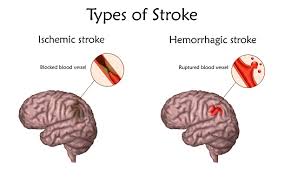
I tried to come to terms with my surroundings, to make sense of them, and the pain. Out of the ether the nurse intoned :“Gary, we think you are having a stroke”. This was news to me. “How can you tell?” a disembodied voice slurred in reply. Slowly I comprehended that the voice I could hear was mine.
On reflection, if you are going to have a stroke have it in an intensive care ward with your own personal nurse and a team of acute care doctors and consultants on hand.
The following day I woke up in a ward. I couldn’t speak and had no feeling or physical control on my left side nor could I swallow. I was totally unprepared. Hospital affords much time to think. The other recovering patients are gravely ill and have no time for witty badinage. The nurses have no time.
I took stock. My droopy dropped face was the least of my problems- I was not that good looking to start with. My speech was the biggest issue. My voice is my best bit. Getting around was then second- it was useful. Every waking second was then spent on those two things. It was a cold late winter. My covers had slipped off my left side. I was freezing. An auxiliary nurse breezed by.
“Excuse me, nurse could you pick up my covers for me?” I asked.
“Can’t you do it yourself?”
“No”.
I lost (and have still lost all sensation in my left torso, arms, hands, legs and feet) and could not, and cannot, distinguish between hot and cold, A distinct disadvantage when bathing. Compounded by the savage impact on my body of open heart surgery, I resolved to go home an announced my decision to a ward doctor. Strokes wreak havoc on our capacity to understand information, and make decisions.
The Doctor was female, tall and Afro Caribbean . She bore a remarkable resemblance to Tina Turner in the film “ Mad Max beyond Thunderdome”.
” You can, if you want to” she shrugged – “but you will die” before moving on with calculated nonchalance.
On balance I decided to give it a few more days.
The final test was the patient’s kitchen. A room designed to prove that I could pour boiling water for tea, and use a knife to butter toast. Easy.
After a week’s practice, and a month after the stroke, I was out.
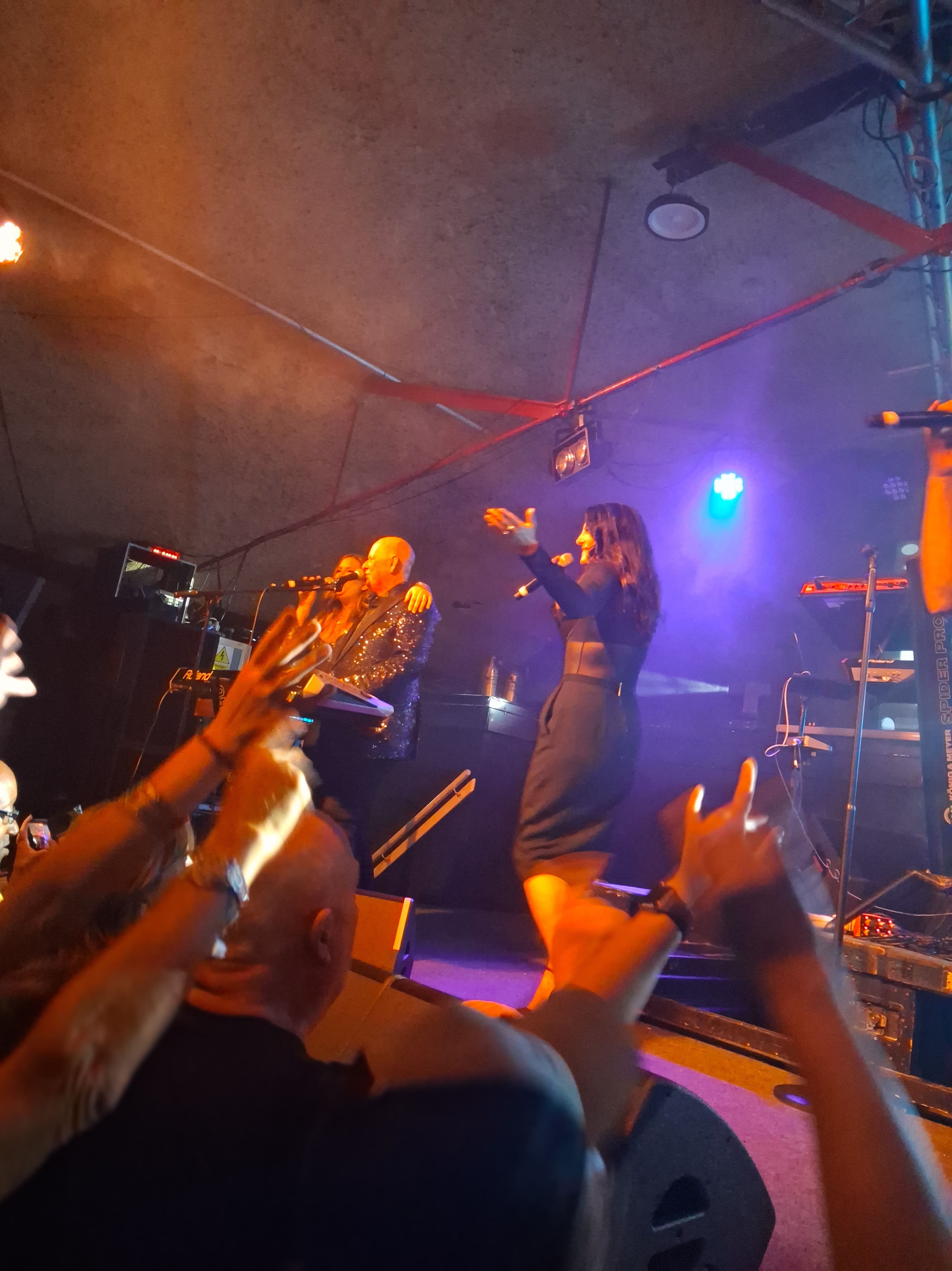
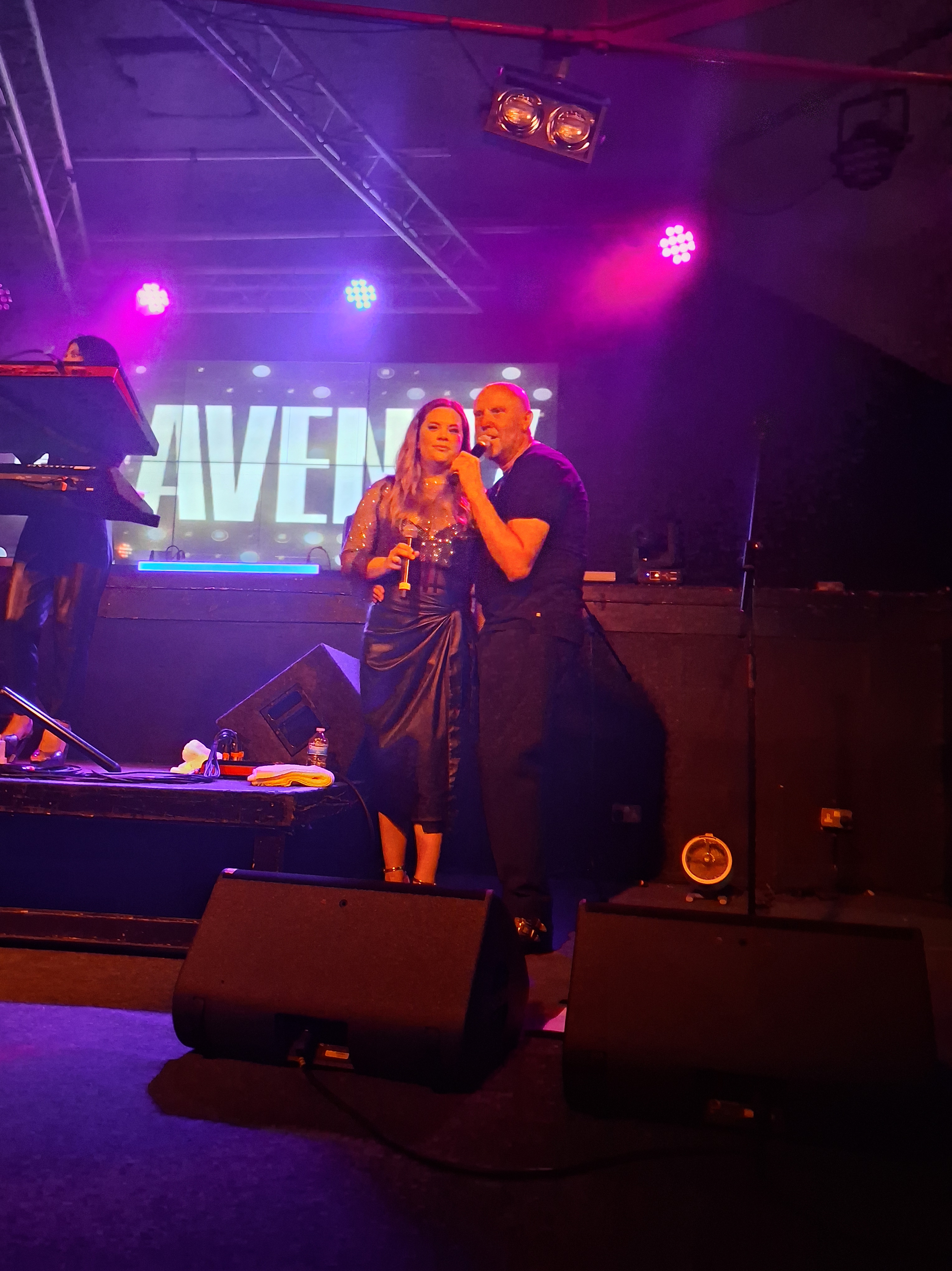
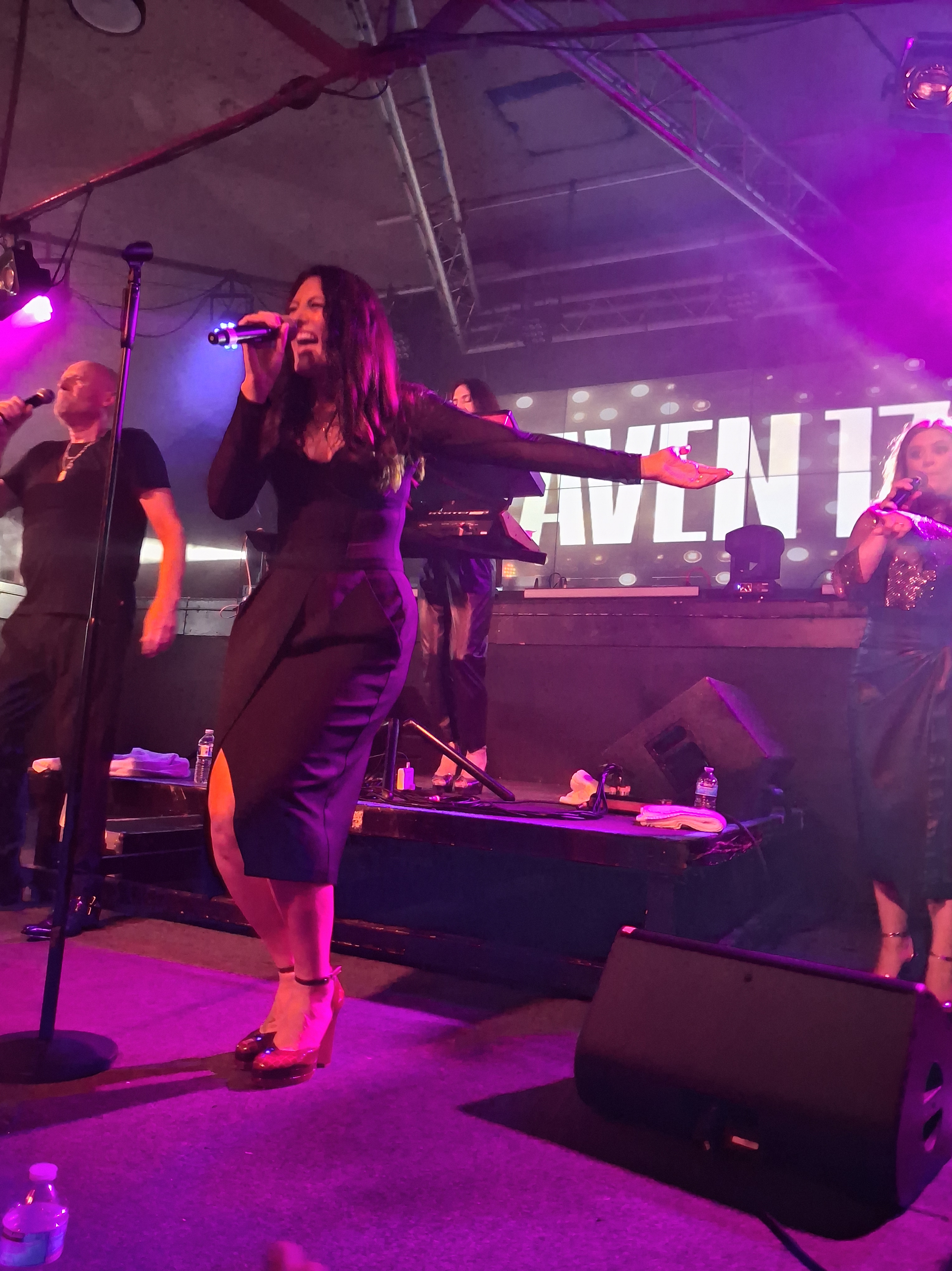
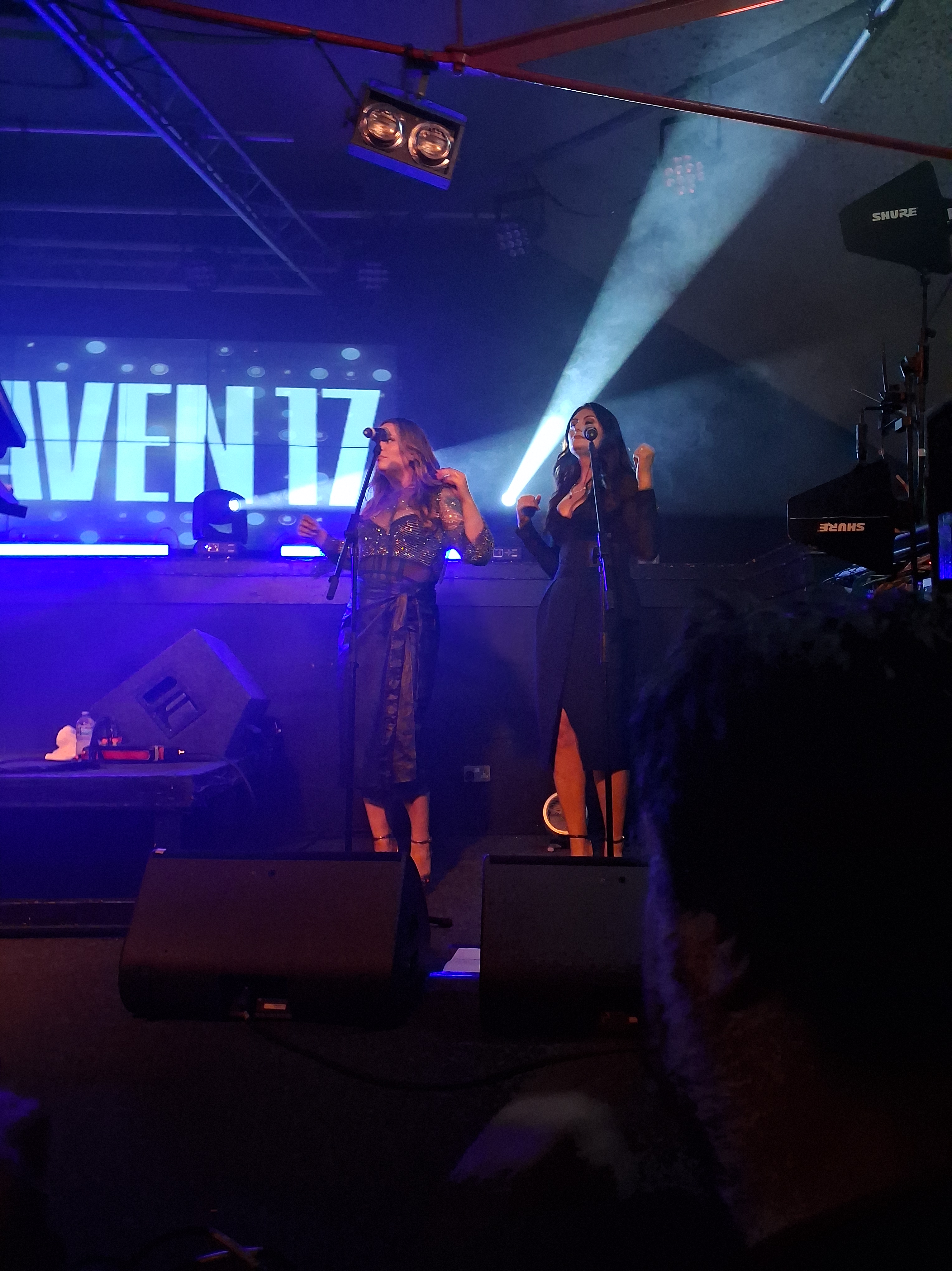
A gig almost exactly a year on from the last time, on very hot summer night, a warm up show for the festival season before their full autumn tour. The venue was once agin packed, a place they clearly enjoy playing.
The band was identical to before. As was the setlist:
I have been following the band since the Siouxsie and the Banshees support slot at the Rainbow London in 79 as the Human league. They still play Being Boiled and “You’ve lost that loving feeling”
Stand out songs tonight were “Let Me Go”, Come live with me” and of course “Temptation”.
Great songs transcend their immediate space and morph into something grander, greater and immortal. “Somewhere Over the rainbow” and “My Way” are obvious examples of music standards that have enjoyed that rite of passage. “Heroes” is edging its way into that rarified space.
On the album it was a straightforward love song, but his performance live on “Isolar2” added a reflective, plaintiff longeur quality which I liked very much, a reading which endured until it was popularised again during the 9/11 tribute concert and reinvented as a tribute to the heroes of the hour. I do not particularly like this adaptation- but it has worked.
It happened to Springsteen with “Born in the usa” woody Guthrie with “This Land is your land” and Clapton with “Wonderful tonight”. Sometimes a song takes on a life of its own.
Bowie was unusually adept at picking subjects and song titles and writing music and lyrics which could be reinvented- think “”Space oddity”, “Life on Mars”, Fashion, Lets dance, and Fame.
Thus we all have our own versions of the song in our heads and hearts. The refrain of “we can be heroes- just for one day” is genius as is Fripp’s guitar.
This was my fourth time over the years that I have seen Rocky Horror. Like a fine wine it improves with age
Jason Donovan slips on the heels as Frank N Furter, supported by Lauren Chia as Janet, Connor Carson as Brad, Nathan Caton as The Narrator, Job Greuter as Riff Raff, Natasha Hoeberigs as Magenta / Usherette, Jayme-Lee Zanoncelli as Columbia, Morgan Jackson as Rocky, Edward Bullingham as Eddie / Dr Scott.
50 years on Rocky Horror continues to tell the tale of two innocent college students, Brad and his fiancée Janet. When their car breaks down near a mysterious castle en route to visit their former professor they encounter Frank N Furter,- all of the audience know what happens next
The show audaciously opens with its best song “Science Fiction, double feature” ( natasha as the usherette and magenta) and never lets up seamlessly linked by Nathan Caton as The Narrator who is superb and unafraid to talk about his afro Caribbean heritage, As a stand up comedian the heckles are meat and drink to him- his put downs very funny
Jason Donovan is unrecognisable and superb. Channelling the spirit of a fading rock star or Holly wood Beauty as in “Sunset Boulevard..”I.m coming home” was sung with genuine pathos
Christopher Luscombe’s direction is energetic but it sags in the second half. The first half curiously is only forty minute before a twenty minute break and a one hour second half. Lods of fun aznd a wortwhile reboot.
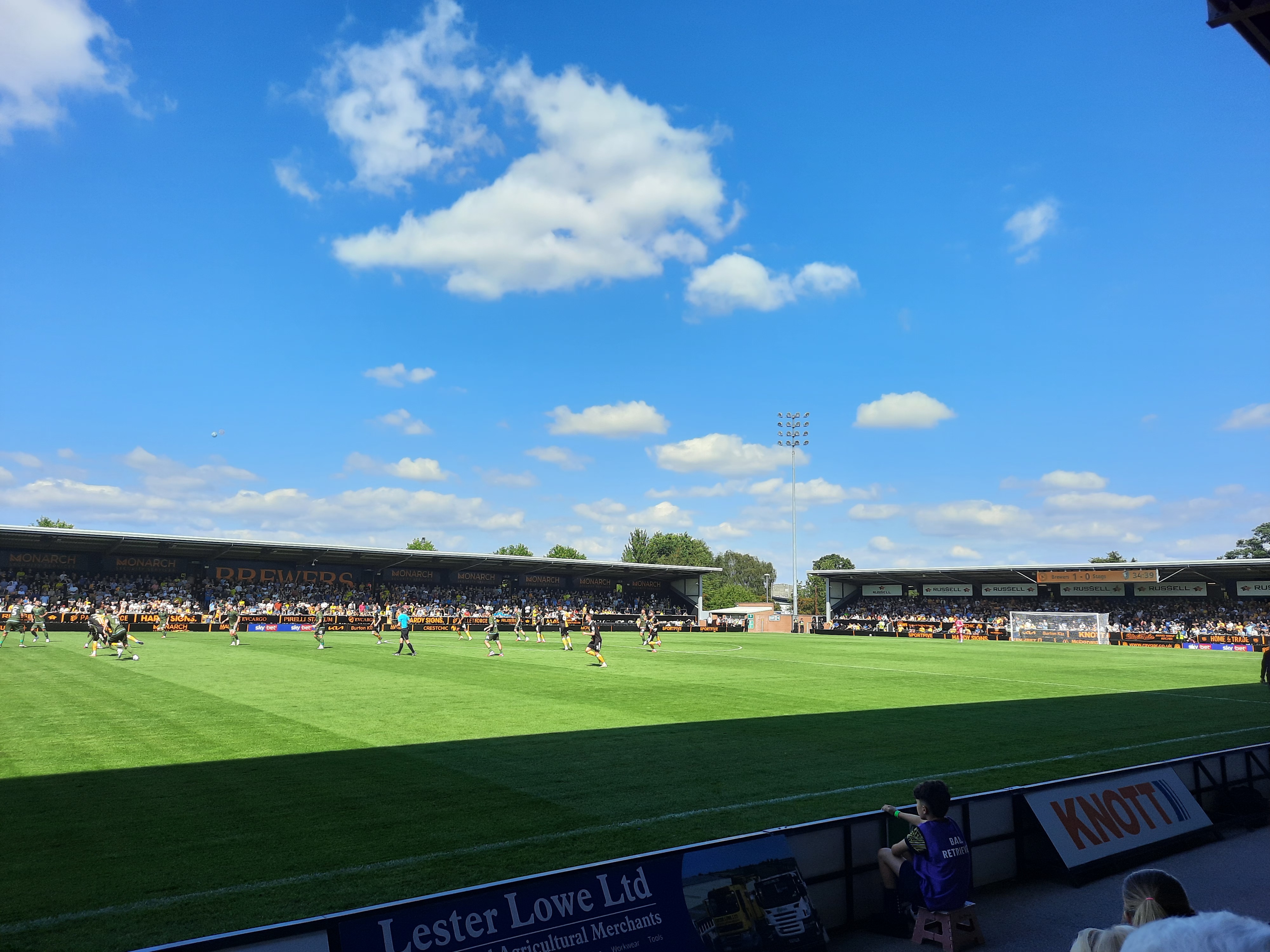
This is the third successive season that I have seen Mansfield’s opening game, First at Crewe, then at Barnsley. Mansfield are always well supported away from home, and a crowd of 5170 which may prove to be Burton’s highest home gate at the end of the season showed up to watch them win 2-1 courtesy of two excellent long range efforts.
A warm summers day, a well contested match and an enthusiastic crowd- a good day out
Oldham v Colchester
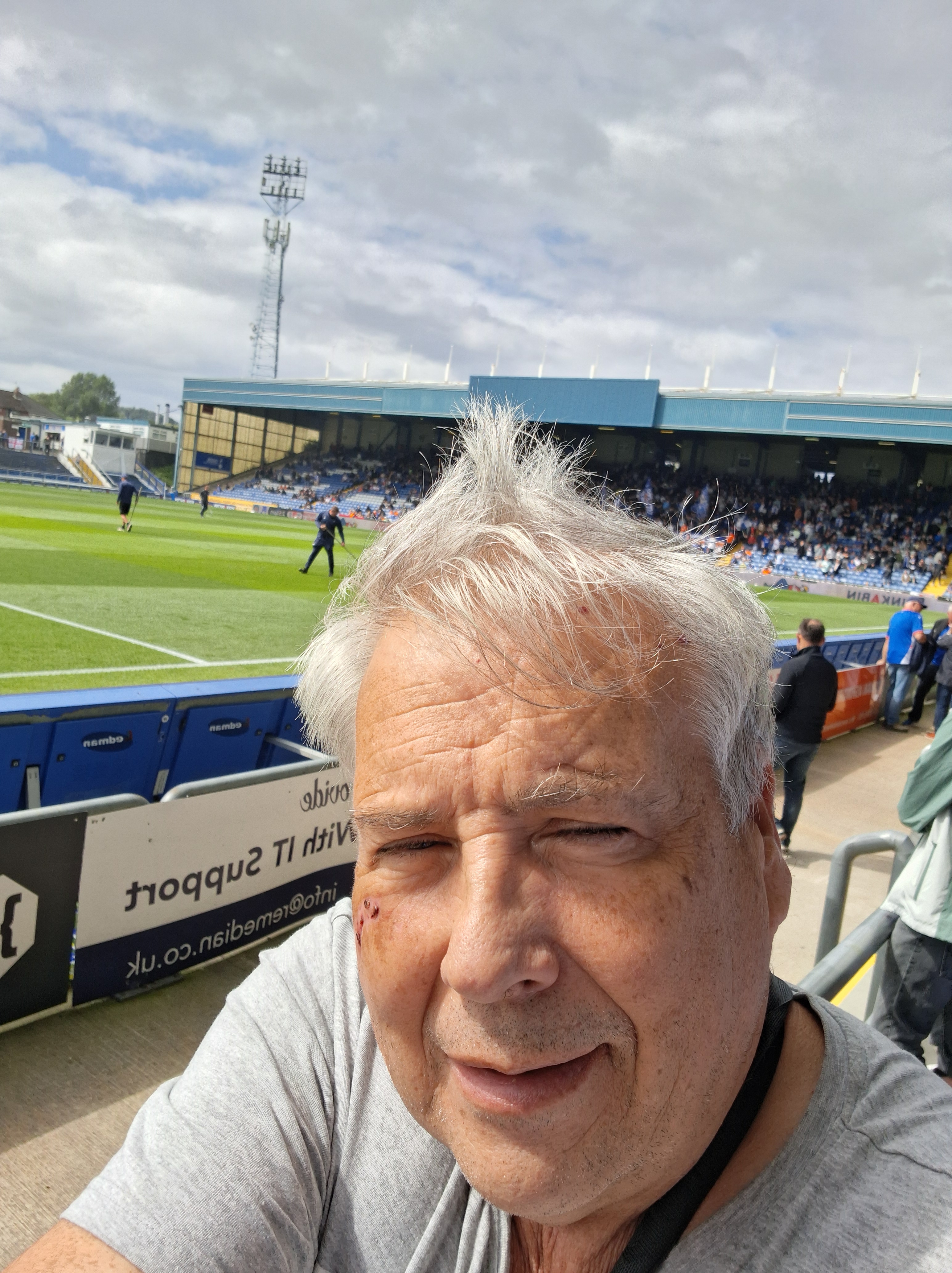
A mad 200 mile round trip for a a groundhop. This was Oldham’s frost home game in the EFL since promotion from the National League the previous season. The second highest ground in england after the hawthorns it is knows as Ice Station Zebra for its froideur.It once held 50,000,in the days of mass industrialisation and the Avro lancaster/ Vulcan factories close by providing a walk up, now around 13500.
Northampton V Mansfield
A new ground, number 66, and a feminder of wehy i had not been before even though it is comparatively close to Both Bedford and Birmingham where I lived for extended periods. A soul less, lego, matchbox style stadium which reminded me of Colchester united’s new home, or Chesterfields’ but smaller. i shall not be back. And you have to walk up a hill to the car park
Lovely contrived schmaltz. I watched this knowing that the real life protagonists were fraudulent grifters and enjoyed it far more as a result.
Every device that you can think of is wheeled out, Gillian Anderson as dodgy Wyn and Jason Isaac as Moth are magnificent, squeezing the maximum out of every situation. A dominated young woman is rescued from a coercive boyfriend. A waitress provides free food. Young children gambol in the fields like lambs while the itinerant adults smoke dope . Crowds gather to listen to Moth read from a book and throw money at him.
The “just walk it off” message for serious illness is an insult. It amounts to another contrived story about how reconnecting with nature is good for the soul” as Anderson listens to birdsong
The scenery is magnificent . A reassuring fantasy.

















 Garyswordz