A Letter on America


map

I have always felt a relationship with America. As a child I lived in the USA, as an adult I have holidayed there. As an Englishman living in the United Kingdom, the effect of America culturally and politically has been omnipresent. While living there, and for many years after, we used to listen to Alistair Cooke’s Letter from America radio programme. Contemporaneously my parents would compare his reflections, on our experiences, after our return it was a good way of keeping in touch. Some fifty years after I first arrived to live there, this is my letter on America.

I was only six when we arrived, almost ten when we left. Yet a sense of displacement sharpened my senses. With no extended family, or established friends, around, I found myself eager to soak in everything around me. We arrived  in New York on the Queen Mary, the towering skyscraper skyline even more impressive after five days crossing a grey , grumbling November Atlantic ocean. The quayside was still busy then, a working port, and we were greeted by a brass band on docking, as we had been serenaded from Southampton, streamers, horns and all. The twenty odd tea crates contained all of our worldly possessions, but Customs still insisted on opening a few – because they could. Charmless US customs has not improved over the years.

qm


My impression of New York was not favourable, dirty, busy, noisy, fume filled, and daylight starved, as the skyscrapers reached upwards. The cavernous, capacious Amtrak train, which dwarfed the boat train we had taken from Waterloo to Southampton, offered welcome relief as we eased into the countryside going south.

We were heading to Arlington, Alexandria, Virginia where we were to live as  my father worked at Arlington Hall, an RAF attache to the Defense Intelligence Agency (DIA), whose security was ahead of that of Mission Impossible. I went to school at the local Elementary School in Arlington where I was treated with great kindness by staff and pupils alike.

 One instant curiosity was that there was no morning assembly, like I had been used to in London. Instead, each day would start with the national anthem, broadcast over a loudspeaker system from the Principal’s office , to each classroom, followed by the pledge of allegiance which required each pupil to put their right hand over their heart as they declared: “I pledge allegiance to the Flag of the United States of America, and to the Republic for which it stands, one Nation under God, indivisible, with liberty and justice for all.” The teachers made it clear that I was not required to pledge the oath, as I was not American. But I was the only non- American in the class so joined in and learned it anyway – I can still recite it today!

I was taught handwriting using a musical stave, a brilliant device to create neat uniform script, we also all had to learn a musical instrument, I chose the violin. Sport I found frustrating. Baseball seemed an unnecessary complication of rounders, but nonetheless I found myself playing  “peewee” baseball ( don’t ask). American football seemed to be ludicrously complicated, but again we were taught the basics of some of the moves. Football really is much easier to learn, and better to play, America.

My childhood there was idyllic. I ill-advisedly explored storm drains with local children that were notoriously inhabited by venomous snakes. It always snowed in winter, proper snow, three feet deep that you could sledge in and down till dusk ,and exasperated parents called you in. The summers were hot and humid, a “crew cut” was pretty much essential. And the long summer break was enlivened by summer camps, residential camps  in the cooler mountains that parents sent their children to in order to give themselves a break and provide some welcome adventure for their children. And of course there was the ubiquitous yellow American school bus which picked us up from the end of the road, a cultural icon every bit as great as the red public double- deckers in London.

Washington DC, or DC, as everyone called it was odd. The centre was small, an administrative district only. The Lincoln memorial was impressive, as was the Washington memorial and Mall, particularly when the cherry blossom was out. On the opposite bank of the Potomac to the Lincoln memorial  lies the Arlington National Cemetery, which was magnificent, and busy, as the war dead from Vietnam waited to be buried.

The Vietnam war dominated the news, with the day’s GI body count on every bulletin. Even as a child, you could not help but be aware, with graphic combat footage regularly shown. The effect was corrosive on US public opinion. I can still recall the protests being broadcast on television with the slogan, “ Hey, hey LBJ, how many kids have you killed today” ringing out. The view amongst my Dad’s co -workers as we relaxed at wonderful Arlington Hall barbecue and picnics , the senior of whom were Korean war veterans, was that the war was lost.

There were no black children in my class. Outside of the DC centre lay the so-called black ghetto, it was a place, a dangerous place, spoken of in hushed terms, but never visited. I did sometimes see black people, mainly packing groceries, in an unusual system at some supermarkets where you shopped, your groceries were bagged up and tagged, then you collected them in your car from a delivery point. I recall being on holiday in Montgomery Alabama at the time of George Wallace and, as a precocious nine year old, asking an American mounted policeman what the bullwhip on his saddle was for? “To whip niggers” came the reply.

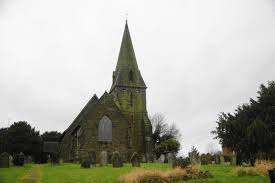
We also went to Church in Fairfax, everyone went to Church, and I was struck by how prominent God seemed to be in America, politicians routinely intoned “God bless America”, the pledge of allegiance declared “One nation under God” and God seemed to be on “our” side in Vietnam. I was curious as to how he seemed to have overlooked England. Sunday school was less an opportunity to avoid the main boring service and play and instead was a rigorous exploration of bible stories. The sense that God was on the side of America was very strong. But for me, Sunday was the day that having endured Church service, I was rewarded by a Hershey Bar or Slurpy flavoured ice drink in the summer.
elizabeth-as-samantha-bewitched-elizabeth-montgomery-7324102-331-414

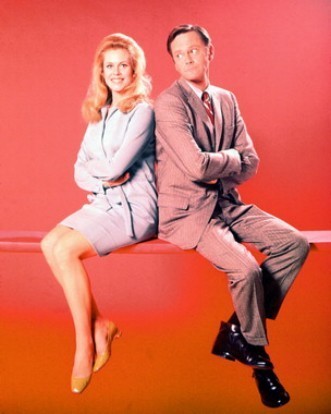
The best thing about America for an English child in the late 60’s was undoubtedly the television. In England it was black and white transmission  from 4pm to 5.55pm ( Herge’s Adventures of Tin Tin to close), then shut down! In America it was colour TV ! The cartoons I loved were Popeye, Tom and Jerry, Yogi Bear, Road Runner and Top Cat. The TV series I watched were the Beverley Hillbillies, The Munsters, Bewitched ( I adored Elizabeth Montgomery and wanted her to by my mom), Daktari, Flipper, Lassie, Time Tunnel, Batman and the Monkees.

barnum

As a treat we would be taken to the Barnum and Bailey three ringed circus at Christmas. Before modern zoos and safari parks, before colour tv, before wildlife documentaries and specialist nature and geography tv channels it was still a place of wonder, where what you had only seen in Tarzan films was brought before your eyes. I accept that its time has passed. I also accept now  that unnecessary cruelty was central to the show. But at the time, it really was “The greatest show on earth”.

When it was time to come home to England I was sad. It felt like America was home. The material, and emotional, generosity of our American friends resonated, as did their wisdom, although I accept that we were moving in a wholly unrepresentative social bubble. But America seemed to have a fix on God and good, and bad and evil, it also had a “can do” positive outlook, where kindness and good deeds were a virtue, and public duty.  Upon mentioning to our host on stopping at Quantico, the US Marines HQ and Training base that we liked fishing, “Red” insisted on taking the day off and taking us fishing on a lake in what must be the most secure fishing in America! I recall stopping for gas at a gas station in the Everglades Florida. Upon hearing our English accents, the attendant , who also turned out to be the Towns Sheriff and Mayor ( it was a very small town) insisted on taking our family out on a swamp boat into the Everglades there and them closing down his gas station to do so.

That fundamental goodness resurfaced when I returned some thirty years later with my own family to Florida. We arrived late and the seven eleven store was closed, unsurprisingly as it was past eleven. But the owner was inside sorting some stock. He came to the door and asked me what I wanted, I explained that I was a visitor wanting some basic groceries for my family for tomorrow. Not only did he open the door for me to shop, he refused payment as the electronic tills were closed, insisting I pay the next day. You can guess where we shopped for the rest of the holiday!

Yet there is a sting in the tail. On the wall of the 7/11 was a firearms arsenal substantial enough to arm an army platoon, pistols, rifles and semi- automatic rifles. Despite my affection for America, its fatal love affair with guns is such a weakness.

america

America fixes its history against guns. An armed militia drove the British out of the Colonies. The Winchester rifle was “the gun that won the west”. Al Capone’s Thompson sub-machine gun enforced his criminal empire. . All of this is part of American folklore. In the first half of the 20th century Hollywood reinforced and glamorised the gun in Westerns, in the latter part of the 20th Century Hollywood glamorised the gun in the hands of police, criminals and vigilantes. For Rambo and Charles Bronson, the gun was an agent of peoples’ justice.

the-gun


There can be no justification for legislation which allows an armed population to engage in annual mass slaughter, and forces an embattled Police force to shoot first, and ask questions later. Yet America, via the National Rifle Association remains committed  to confronting the evil that men do with guns by arming the population further. It is a madness from which there is no escape.

A country so rich in resources, can be very introverted and paranoid in its outlook. A country which has dominated world affairs for over half a century now, post WW2, still possesses a homestead mentality. Over half the population has never travelled abroad – they don’t need to, America is a vast continent. They have little interest in world affairs, they don’t need to in a country with five time zones where local news, is the world news. In the UK, America is seen as an urban country, mainly because the news is reported from New York, Washington and LA, and films tack on Boston and Chicago. But beyond the urban centres the majority of America is rural, or semi rural, quiet unassuming towns, with family values and a warmth which is rarely represented in the media. The  friendliness and climate of Florida, and the awesome scenery of the Smokey Mountains is just as emblematic of America as the subway in NYC or the beltway around DC.

But there is one thing that connects my childhood there with the present, American music. My earliest memories are from the radio, in the mid to late sixties, the close harmonies of 5th Dimension’s “Up Up and Away”, the Mama’s and the Papa’s “Monday, Monday”, Nancy Sinatra’s These Boots Were Made for Walking”.

bruce

As I was hitting my teens back in the UK, Jimi Hendrix, Crosby Stills Nash and Young and the Doobie Bros were always on the turntable, as was the black  sound of Motown and Philadelphia. What teenager could not instantly empathise with Alice Cooper’s “Schools Out”? Then, as my late teenage tastes matured, Lynyrd Skynyrd, the Allman Bros,, Springsteen, and Tom Petty and the Heartbreakers found their place- and have never left. Some American Rock is preposterous, see Kiss, Boston, Foreigner, Aerosmith, but the best is amongst the very best of the genre.

trump

And tomorrow we have the inauguration of Donald Trump, the least qualified man politically to assume the role of President in modern times. My heart tell me that disaster awaits, my head tells me that the Office is so great, that the sheer enormity of the job will curb his worst excesses. I hope so.

Posted in Blog | Tagged , , , | 3 Comments

Holmes for the Holidays – Grange Players, Grange Playhouse, Walsall

holmes-pic

**** 

Holmes for the Holidays, aka The Games Afoot, is written by Ken Ludwig, an American anglophile whose education takes in both Harvard , and Trinity College Cambridge. Ludwig likes English literature. He has written  about Shakespeare,  Gilbert and Sullivan, Dickens,  and Robert Louis Stevenson and adapted Farquar’s Beaux Stratagem. Unsurprisingly he is also a devotee of Sherlock Holmes.

There are two excellent directors of comedy working in North Birmingham and its surrounds, Barrie Aitchison and Christopher Waters. It is the latter who has taken on the task of realising this show, along with producer Louise Farmer. Ludwig is seldom performed on these shores, whilst being widely played Stateside, winning numerous accolades, prizes and awards in the process. Sherlock Holmes is a perennial audience favourite in England so tackling a rarely performed play by a lesser known playwright was not quite the risk that it could have been.

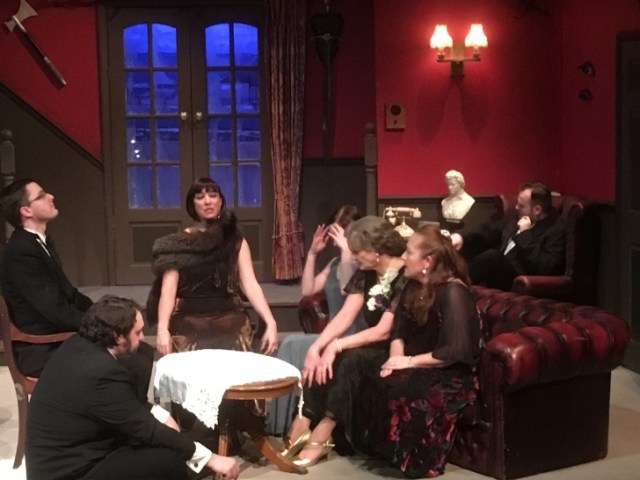
A six hander, the curtain rises to offer that Shakespearean favourite device, a play within a play, ending with a shocking denouement. Thereafter, the company retreats, out of costume, to Holmes’ country mansion for the main event. We are presented with an American author, writing about an English literary hero, who perform on stage in English accents, then at home in American accents as the action is set in America, a curiosity that subsides as the play progresses.

holmescast Waters has assembled an excellent character driven cast. Robert Meehan takes the part of William Gillette, renowned for his Holmes parts, and whose mannerisms he happily mimics. Wisely he allows the checked cloak, deerstalker and pipe to do a lot of the work, while his fellow cast members ham things up uproariously. Sam Evans plays Felix Gisel playing Moriarty. Sam is fabulous. A big man, he physically imposes himself on stage and dominates the scenes he is in, the perfect visceral foil to Meehan’s more cerebral Gillette. Lorraine Samantha Allen similarly is well cast as Madge, Felix’s wife and enjoys her featured moment memorably. Indeed a feature of this play is that each character is effectively given their “solo”, a scene in which to shine. No-one fluffs their opportunity.

Julie Lomas plays Williams’ mother in a part more complex than at first  appears, reflective, timid, murderous  and batty by different plot turns. The young couple are played by Rod Bissett as Simon Bright, funny, engaging and self -effacing, but quick witted when he needs to be. His widowed new wife is consummately performed by Leanne Brown who offers an assured understated performance carrying a beautiful elegant gown with some style.

The investigating officer is Suzy Donnelly who makes the most of her latter second act appearance, whilst leaving the stage clear for  Gillette to make his elementary deductions.

But the  star of the show is Liz Webster as theatre critic Daria Chase. No barb is too sharp, no put down too hurtful, no aside too cutting for her. Even before she has spoken, an upturned lip, a dismissive eyebrow, a glowering look portends what is to come in a fine character performance. Obviously the homicide of a theatre critic is to be regretted, as is her revelation that sleeping with the critic is the key to good reviews, but her ebullient first act performance, and her stiff second act performance, really is a treat too good to miss.

Waters squeezes the most out of the production with an impressive set featuring revolving rooms, more weapons on the wall than any psychopath could realistically dream of, and numerous sound cues which are utilised faultlessly- well done Stan Vigurs and  Colin Mears. The physical comedy is very well handled both by Waters’ direction, and Webster, and Evans’ acting execution. They deliver a five star performance.

My four stars overall is not for the production, but the play itself. Well written, and neatly plotted though it is, to these eyes and ears some of the literary jokes are a little ham-fisted for my tastes, an American trying to get Englishness – but not quite making it.

Nonetheless this is a funny, entertaining and rewarding production that drew uniformly warm vox pops from the departing full house on Wednesday night- and deservedly so. “Holmes for the Holiday” runs till Saturday 21st January. https://grangeplayers.co.uk/

Gary Longden

Posted in Behind the Arras Reviews | Tagged | Leave a comment

The 40th Anniversary of David Bowie’s “Low”


low

Today is the 40th anniversary of the release of an album now regarded as being seminal in the popular music cannon, but which was divided opinion on its release. I thought it deserved a reflection. 

I remember well purchasing it in release. It had received indifferent, and sometimes hostile, reviews from the music press, not least from Charles Chaar Murray at NME. 

You have to remember that this period was one of very rapid change for Bowie, with each release attracting, and losing, fans. Pin Ups, which I loved, was widely reviled. Diamond Dogs, the bastard child of the 1984 project swung between the conventional rock of the title track and Rebel Rebel and music theatre, Young Americans was his soul album, Station to Station veered back towards conventional rock and then there was Low…. 

I didn’t know quite what to make of it. It didn’t sound like anything else that he, or anyone else, had ever done. Sound and Vision was the only coherent commercial hook, but Warzawa did have a instant grandeur. 

I liked it, but I was unsure. Contemporaneously it was also amongst a tide of incredibly innovative punk and new wave releases which were equally as different, but three minutes long. There wasn’t time to assimilate it. It was also self- consciously serious, in a way that the new wave wasn’t, Nick Lowe’s “I love the Sound of Breaking Glass” was such a joyful antidote to Bowie’s Breaking Glass”. However it was clear that there was Something Important going on. Marlene Dietrich liked it too. 

A measure of how low profile he became at the time was that he was able to tour on keyboards for Iggy Pop on the “Idiot” tour playing the likes of the Rainbow in London to little fuss. 

The success of the album, and crucially title track, Heroes undoubtedly helped with some retrospective reassessment at the time, but by then there were so many great innovative new wave albums being released that it did become a little lost. 

Ironically Lets Dance, the greatest commercial success for Bowie, was also the point at which many of his die hard fans, myself included, parked our fandom, and started to look backwards. It was at that point that Low started to grow in stature and its influence on the new wave, from Gary Numan’s “Cars” to magazines “Real Life” ,and the rest, become apparent. 

Its place as an “album” began to harden. In the same way that Mike Oldfield’s “Tubular bells”, Pink Floyd’s “Dark Side” , Beatles “ Sgt Pepper” and Beach Boys “Pet Sounds” were about the whole, not individual tracks, so “Low”  started to make sense. And it works on vinyl in a way that it does not on CD or download. Having to get up and flip over the vinyl from side one to side two is as important as any track.

Side two is a mini symphony, side one seems like a soundtrack, with an instrumental intro in “Speed of Life” and outro in “New Career”. In between we have cinematic snapshots. “Breaking Glass” evokes Cavani’s “Night Porter”, “Sound and Vision” is a moment in a room, “Always Crashing in the same Car” a nightmarish vision, and the one line romanticism of “Be My Wife” and “What in the World”. 

“Low” is not an album of great songs. It is an album of fragments, which when assembled as an entity, assume greatness.


Posted in Blog | Tagged , , , | Leave a comment

Poems 2017


Skinhead


Ben Sherman’s, buttoned down

Levi’s turned up, braces locked tight

Doc Martins laced high

Harrington’s for fight, or flight.


Heads bristling

Legs loping

Fists clenching


Richard Allen

Pulp fiction

Barely 200 pages


Finished in a session

A blinding whirl

Of boots and girls


Knuckles and rucks

Birds and fucks

Chancing your luck


Woodbines and beer

A snarl and a sneer

What are you doing here?


They linger and hover

Awaiting some bovver

Some gnarling and gnashing

Some fun Paki-bashing


While tranny radios play

Infectious reggae tunes

To dance to in rooms

Of tight terraced houses

In Party Seven carouses

skinhead

——————–

Stripped

To a place
Where there is nothing
Everything is beyond

Coarse rocks groan
Under the weight
Of my abandonment

Somewhere flotsam floats
Mocking my suspension
In the darkness

Deaf, blind, mute
Only a salty taste
And the tides caress

Safe at last
Lost
Within an ocean’s vastness


Church

I don’t care much for Church

Our Christening Party outnumbered

The congregation many times over

And I wondered who was joining who


His robes older than the pews

The vicar conjured bonhomie and boredom

Unfamiliar hymns blared amplified

As if volume was enough to disguise bland dirge


There were no notices

Perhaps no-one cared anymore

hixon


Hiraeth

I yearn, my body aches

To return

To a place which

Is no longer

There

A longing

For something

To assuage my soul

A soul

Which has been

Rent asunder


Orange E Mail – An Epitaph

Orange e mail stops today
Wednesday the thirty first of May
They’ve had enough, they didn’t ask
They just decided they could no longer be arsed


The Akashic Records
Suspended in a place,
Beyond earthly reach,
In a store of infinite space.

Where everything is known,
From east, south, north and west.
Where everything is shown

To those who wish to look,
Before now and after,
Recorded in a book.

Past Life Fragment
It was as if I had always been there
That I had known them all my life
My untaught hands knew what to do
I did not need to learn these things anew


Travel
We journey to experience,
To discover.

To learn, to taste new foods,
To hear new sounds, to see new sights,
To touch for the first time.

Yet however far we travel,
The past is never far behind

Goose Fair Nottingham

Amidst the tumult, I grasped her slight hand, tightly,
Cheers, laughter, song and wild gasps
Filled my soul, filled her soul, I knew
A dizzy euphoria, an intoxication, I sensed
Such rapture transcended our temporal happiness
It gathered all the joy that surrounded us,
And had ever surrounded us, and had ever been,
And was yet to come.
It gathered it all in a celebration of what was now,
What had been, and what was to come
In a moment

Ophelia
You promised, you threatened , you left
Without saying goodbye
Girding your skirts in crumpled dark clouds
Yet holding onto your tears
”God has given you one face, and you make yourself another”
Midday morphing into a ghostly orange hue
Daytime and night time maddeningly askew
Great huffs and puffs scatter boughs and branches
Strewn like discarded flowers tossed aside by a disinterested lover
You said we should call you Ophelia
We know what you are, but know not what you may be
Passing momentarily

Ruby
A silent world of fear
Where to say nothing
Is better than to say something
I did all the talking
She nodded, and smiled
I almost heard a giggle
As I teased her
I called her puppet spot
Walking to the park
She clung tight to my shadow
Afraid of the bright light
Of the world beyond
As we raced to climb the grappling ropes
Her frenzy to reach the top first a soundless scream
Exchanging exhausted gasps
She gleefully looked down
I asked whether she knew what stoic meant
Of course she did not
An innocent beauty
Incarcerated in a brutal cage
Struck dumb in a cacophonous world
She could not say goodbye
Nor could I


Posted in Poems | 2 Comments

Planet Earth

Run Iguana run,

Dance the tango with devils

Over hot sand,

Sprint with lightning Bolt speed,

Swerve and sway like Ronaldo,

Keep ballerina balance

As death slithers and slides

In awful choreographed symmetry,

Wrestle and writhe,

Strive against  mortal foes

With head aloft,

Never lose sight of your goal

Until you reach higher ground.


Posted in Poems | Leave a comment

Holding Baby – Birmingham University

holding baby.png

This production, on the afternoon of 15th October, was part of the University of Birmingham’s, “Book to the future” festival. Its milieu, the swathe of middle aged, and pensionable aged, folk, increasingly responsible for raising children cross-generationally.

Ostensibly, that  might be regarded as dry, its appeal niche, and those present overwhelmingly reflected those most likely to be left “Holding Baby”. But Director, and author, Jan Watts’ piece, has loftier ambitions, and those ambitions are emphatically realised. 


jan-watts

Jan Watts


It is estimated that some 300,000 children are being raised by grandparents, close family members, or friends, a tenth of whom are in the West Midlands. If you then allow for the immediate families of those “kinship parents”, who might typically number around ten, the target audience of those directly affected grows to some three million. Niche? Maybe. Significant and under-represented? Certainly.

Watts is smarter than to restrict herself to a single issue polemic. Instead she weaves a tale incorporating, dementia, immigration, serious illness, the NHS, social services, drug addiction, painful choices – and how annoying doctor’s receptionists can be.

Yes, the focus is serious, but  the treatment is deft, pacey, and tinged with laugh out loud  moments.

The two acts are presented on  a single stage set at the Mandela Surgery, Balaclava Rd, in Birmingham, an address fellow playwright John Sullivan would have approved of. In the first Act, Barbara (Diane Ellis) is there for her flu jab , Gracie (Jenny Stokes) , her mother, is there because carer DG  (Toni Midlane) is awaiting a diagnosis and has had to bring her along, Dr Abdullah (Elaine Ward) is present because it is her surgery, receptionist Maeve  (Laura Judges) is there to confront the rabble who have the effrontery to want to see a doctor, and Tia Maria , a new born baby ( a roll of carpet), is there because she has been abandoned by her junkie mother Eva ( Ashleigh Aston).

The set is minimalistic, one table, enough chairs, two spotlights and sound effects, with all other props improvised. This places a disproportionate burden on the actors. Fortunately, they rise to the occasion magnificently. Each one has minimal formal costume, but do sport a tee shirt with their first name emblazoned on it. Superficially this is initially useful to ascertain who is who, but as the play progresses, a more subtle message of identity emerges.

What delights throughout is the dialogue. Easy on the ear, sharp in observation, and softened by gentle humour.

Diane Ellis plays a bewildered, confused, and overwhelmed  grandmother, admirably, as her trip  to a doctors surgery for a flu jab unravels into a choice between taking in her granddaughter, or condemning her to care. Notwithstanding the life changing consequences of her decision, the minutiae of life is not overlooked. As any grandparent undertaking emergency babysitting duties will testify, the question of what formula  a new born baby takes is not easily answered.  Those same grandparents will also  instantly recognise the references to the ubiquitous Silver Cross pram.


 Dramatic serendipity demands that her mother in turn also turns up. The vastly experienced Jenny Stokes delivers a masterclass in characterisation, in turns lucid, confused, warm and detached, a tender exploration of dementia. Her carer DG is no less warm and caring, working for the “Comfort at Sunset” care home. Prepared to “deal with shit”, Toni Midlane’s Latin timbre is mellifluous,  her acting energetic, and nuanced, hiding her own health and family secrets, working in a job below her capability, to finance her own children far away. It is a powerful, and poignant exposition of the motivation of immigrants working in this country.

Doctor’s receptionists are a safe target for public opprobrium. Initially, Maura Judges is happy to portray Maeve as a pantomime villain with some great lines; “ Don’t take any notice of the shouty woman- she’s just the baby’s grandmother”. Yet as the plot unfolds, it transpires that she too has home care arrangements to keep, and plays a key role in  defusing an incendiary situation utilising the same skills which originally seemed so irksome.

Even Elaine Ward’s Dr Abdullah, a vision of calm amidst the emotional mayhem, has her own family time  to protect, but  author Watts doesn’t fawn unreservedly at the altar of hard-pressed GP’s. Whilst happy to make an easy gag at  the expense of social workers :  “You know they’re social workers because of their silly earrings”, she also shines a light on Surgery hierarchy as the doctor bales out some patients by ordering taxis on the surgery account ,leaving the equally deserving receptionist to catch the bus home.

In Act two, the versatile Toni Midlane reappears as DG’s daughter, this time sporting a less soothing, but character differentiating American accent, playing a pivotal and heart wrenching part in an unexpected, and powerful, plot twist. However, for me, the defining performance comes from Ashleigh Aston as junkie mother Eva. She blasts in , supercharged, into the deceptively languid first scene of the second Act. Frenetic, irrational, and disruptive, she careers, through the second half, spitting venom and lies everywhere, in thrall to her all -consuming drug addiction.

There is not a weak link in the cast in this vibrant, poignant, drama. Although the characters are all female, there is not a feminist diatribe to be heard, indeed there is barely a reference made to men at all.  What makes this play so satisfying is Watts’ versatile writing. Eva’s  visceral, venal despair, labelling her mother  Barbara as “the baby snatcher”, combines vulnerability with casual spite. By contrast Barbara, confronted by a situation which she neither welcomes nor particularly enjoys , approaches her own lot with a quiet stoicism and whimsical reflections – why do people abuse parent and child parking spaces? “If parking is that important to you why don’t you get yourself a child.”

A fundamental response to any drama should be “why?” In this instance the answer is a fine piece of writing on a largely untouched subject, with contemporary relevance, which illuminates, entertains and engages in equal measure. This performance in the round added to the intimacy and emotional intensity of the occasion. Although the events of this drama are extraordinary, whilst mingling with members of the audience, I heard stories even more extraordinary, all welcoming the chance to see something which spoke to them.


Gary Longden


The following link may help those who are, or who are affected by, kinship caring.

http://www.corambaaf.org.uk/info/kinship-care-and-special-guardianship


Posted in Behind the Arras Reviews | Tagged , , , , , , , | Leave a comment

A Poem for Aberfan

aberfan

The Ballad of the Aberfan Disaster


A junior school called Pantglas

Where miners’ children went to class

Learning sums, and history, and English lit

Then you headed on down to the pit


Where all the men toiled underground

That was where the work was to be  found

Digging and sweating their daily toil

With coal the prize, and slurry the spoil


A man’s work, then home to welcome instant slumber

Producing the tonnage, it all  was  but a number

Day shifts, night shifts, relentless, you see

To meet the targets of the NCB


And as the coal flowed out, so the slag heap high grew

Towering over the hillside, a part of the view

Buts as the spoil burgeoned, as the edifice soared

Warnings of danger were resolutely ignored


For underneath the slopes, their sides strangely bowed

Underwater springs burrowed and  trickled and flowed

Eating away at man’s unnatural dump

To undermine this transient hump


Such that on the day of 21st of October ninty sixty six

The dice fell just wrong for this noxious mix

Just as the children had morning enrolled

The deadly consequences of negligence would unfold


With a roar that dwarfed a jet engines’s sound

The water shook loose the unstable ground

Becoming slurry all dirty and pungent and brown

The viscous gurgling load unburdened itself down


Into the valley a devils morass

Hurtling, inexorable towards Pantglas

Spitting, and spewing and venting its wrath

With hundreds of children in its monstrous path


Growling and scouring, roaring like thunder

Everything in its path disintegrating asunder

Relentless, and blind, all about, it devours

Including one hundred and sixteen young flowers


A further twenty six felt its dull blow

A forty foot torrent , with nowhere to go

News of the massacre spread just as fast

With all converging on the school at Panglas


They came from Metrhyr,  the Taffs and the Deep

To dig them out to awaken their sleep

With axes and shovels and pick axes too

To do whatever it was possible to do


Yet nature is savage, even when you do what you oughta

Nothing can temper a natural slaughter

And although they dug fast, they did what they could

Almost all of the victims died where they stood


A village, a nation, a country assembled

In grief, while the NCB lied and dissembled

As children’s bodies were prepared for cold ground

Chairman Robben stayed away to take a silk gown

The honour of Chancellor of Surrey University

As a hundred and forty- four lay still, for the world to see.


He claimed he knew nothing, that nought could have been foreseen

The reports saying different simply could not have been

A human disaster, an apocalyptic catastrophe

Of which men in striped suits denied all responsibility


But the world rallied around donating in hoards

To lighten the load of the devils rewards

The Coal Board gave nothing, conceding no ground

Yet took from the fund 150,000 pounds


To level the heap, to make good their mistakes

Stolen from money donated for wakes

Resenting the intrusion, regretting the fuss

No lives on their conscience- “our fault ? No, not us”


And for months after, young children could not play outside

Instead being forced indoors to stay and hide

By parents not wishing to pain the other bereaved

Who  suffered such anguish and silently grieved


Fifty years on, an entire generation is missing

Oblivious to today’s mournful reminiscing

But remembering still, from where the death poured

T’was from the offices, of Roben’s National Coal Board


Posted in Poems | Tagged , , , | 1 Comment

Books

books

I love books. I also have far too many. School books, student books, novels, poetry, travel, biographies, histories, historical fiction, sports and sundry unclassified, or unclassifiable.

Far too many lie unread. Some are on display for effect, some have been on display for effect for so long that their effect is the opposite of what was originally intended – see Tony Blair’s biography.

I tend to go on book reading binges, Tom Sharpe, Evelyn Waugh, Tom Clancy, Tony Parsons, Simon Scarrow, then starve for several months despite the plethora of reading options available to me.

So, confession now committed, I shall henceforth publicly commit to the books I shall now commit to read, or give to charity shops, in a determined effort to denude my collection of the unread by reading or disposal

My first public oath? To consume “SPQR” Mary Beard, history of Rome.

Meanwhile, I wrote a poem about this once:


J’Accuse


You fancied me once

Fingering me lovingly

Running your hands down my spine

Stroking me

You wanted me so much

That you bought me

Now I lie discarded

Your interest has moved on

Abandoned amongst the rest

Your expressions of intent unfulfilled

Left on the shelf

Sometimes you shouldn’t judge a book by its cover.

Posted in Poems | 1 Comment

Simon Scarrow

scarrow-three

As a schoolboy I was very fortunate to study Latin to O level. Even then, in the 1970’s, as a subject it was on the edge of the curriculum, with a reputation for being arcane, and dry. The caricature of a Latin teacher was of  an old man, with grey hair, a bit batty, as marginally relevant as the subject he was teaching. Fortunately, our Latin teacher was nothing like that.

Dennis Dunkley  (Double D to his students) was a big, burly, good looking man, who had served in the British Army in the  intelligence corps as an officer. Not only was he a Classics linguist, he also lived and breathed Roman history. He had an all -consuming interest in the Emperors, and the Roman army. With some teachers, you could have a laugh and a joke, with others you could play them up. Not DD. He welcomed his fledgling Latin scholars as a Centurion would have greeted new recruits. Discipline, and instant obedience came first. Summary justice (often injustice) ensured compliance. And once his recruits were broken, then the learning began.

Although strict and uncompromising, his passion for Latin, and Rome, was infectious. His admiration for Domitian was voluble, and he aped the Emperor’s contradictory attributes of tyrant, and intellectual aesthete. When in his lessons, the sense of Rome as a place, society and civilization was as important as the language. As you learned the grammar and syntax of Latin, so you learned the culture of Rome and the Roman army.

That lingering interest in the Classics has endured in  working out Latin inscriptions on monuments, and visits to Italy. Then one day I chanced upon a Simon Scarrow novel in a bookstore, “Gladiator”, lured by the prospect of revisiting my student studies. I took a chance and bought it. I have never looked back, and am busy devouring his published works.

The settings are authentic in terms of place and known historical events, the detail is faction, as Scarrow weaves his fiction within that framework. Dialogue however is coarse, and contemporary, no attempt is made at cod classicization  of the way the characters, mainly soldiers, speak. Therein lies some of the appeal. Scarrow’s picture  of the life of a Roman soldier is also the universal, timeless reality of foot soldiering.

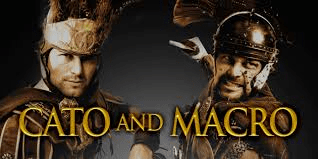
The scale of the Roman Empire provides plenty of opportunity for the protagonists, the cerebral young Cato, and the gnarled visceral veteran Macro. Predominantly the action takes place in Britain, affording many opportunities to reconcile landscapes, places, and ruins with the action. It is here that Scarrow is at his best, as the noble sophisticated brutal Empire subjugates the brave , less sophisticated, less organised, British tribesman. Being British myself, there are plenty of moments of emotional conflict. Should I be cheering on Cato and Macro as they cut the British  tribesmen  down to size, both literally, and figuratively? Scarrow offers us little opportunity to cheer on the underdog.

 scarrow-too

 Which is not to say that the locals don’t have their moments. Tribal King Caratacus leads a pretty charmed life, however his character is developed only enough to advance the plot, his lieutenants are anonymous factotums, which is a symptom of the only real weakness in the series. The concentration on Macro and Cato is so great that the drama of worthy, fully written, adversaries is largely absent. Emperors’ advisor and fixer Narcissus is the most prominent figure in the series after  Macro and Cato, but still, outside of his interaction with our protagonists, we know little, which is both a shame, and an opportunity.


The series opens in Germany with “Under the Eagle” but moves to England before the book ends. Not only is it a convincing scene setter, it also only touches on the opportunities offered by the province, a matter which Scarrow will surely redress in the future. And so for five sequential books the British campaign is covered with Boudica and Caratacus prominent in a land of conflicting loyalties, and shifting alliances. The sixth “Eagles Prophecy” has our boys in the navy, and is amongst the least convincing in the series. Although the detail of Roman naval warfare is scrupulously covered, the premise of recovering some prophetic scrolls at all costs feel artificial and forced.

Thereafter we move to the Eastern Provinces. “The Eagle in the Sand” varies wildly from unconvincing sketches of early Christianity to powerful and compelling raiders on caravan routes, but in the following “Centurion” Scarrow finds his groove, set in Syria around Palmyra, in a tale of geographical influence and conflict which is still being played out today. In the Parthians there are worthy, and skilful adversaries. The geo-political stakes are stark. “Centurion” is amongst the very best in the series, rivalled by the following “Gladiator” in which a slave rebellion, led by Ajax, has to be crushed. From the drama of an opening ship wreck , to the uncertainties of incarceration in the hands of the enemy, the story never lets up.

Unsurprisingly, Scarrow finds the drama of Ajax too good to leave and in the following “Legion” Ajax has to be hunted down in Egypt as he terrorises the province on land and sea. Scarrow’s skill lies in battle scenes and a fast moving narrative, so when he sets an entire novel in Rome, in “Praetorian”, the proposition is somewhat different.

 The intrigue and duplicity weaves and winds admirably, but as in the “Eagles Prophecy” which Scarrow uses as a platform to write about the navy, so this sometimes feels as though his desire to impart his knowledge of ancient Rome is greater than his desire for a convincing story as Macro and Cato become involved in action which seems above their station, joining the Praetorian Guard as spies. His description of a Naumachia is panoramic and informative but feels artificially bolted on to add zest to a story which otherwise is one of Court intrigue.

Having deserted our shores, Scarrow returns to Britain for three instalments, with the first the  best book of the series, “Blood Crows”. Its plot echoes  Conrad’s “Heart of Darkness” and  Coppola’s  “Apocalypse Now” as a Legion and its commander go native in Wales, trading excess with excess, creating their own fiefdom. Heading north in “Blood Brothers” the pursuit of Caratacus engages, the associated intrigue annoys.

Ending the series as of the summer of 2016 is “Britannia”, a tale of a vainglorious attempt by the Romans to eliminate the Druids in mountainous North Wales and Anglesea, the story works well, the campaign doesn’t!

“Invictus” is due out in November 2016 , finding our heroes in Spain.

Why has Scarrow been so successful? His books revel in battle, blood, guts and glory. Heroism reigns, the weak are crushed, but not without reflection. Empire might wins, but the price is acknowledged. The poor bloody infantry pay whether doing their duty for a noble cause, or acting as the fall guys for the ambition of their officers. Battle and death are forensically pored over, torture is touched upon, sexual violence largely ignored. As Sven Hassell exploited the Third Reich and Nazi’s in the 1970’s, so Scarrow explores the base reality of Roman conquest, with the sophistication and skill that makes it possible, but in slightly more sanitised form. The voyeuristic violence is always tempered by an objectivity, enabled  through  the character of Cato, which seeks to offer something greater than the transient impact of blood.

The adverse impact of invasion and colony is not ignored. The problems of conquest and occupation exposing lines of communication were as problematic in Britain for the Romans as they were for the Americans in Vietnam. Asymmetric warfare  guerrilla  style has been the response to superior forces ever since. The British paid the local militia not to attack them and protect them in Mosul, Iraq as the Romans did in England to loyal tribes. Scarrow’s understanding of both the historic practices and mores of the Roman military is matched by a sound sense of the broader truths of military strategy which transcend the ages seamlessly combining meticulous, authoritative research with rip-roaring adventure.


scarrow

Author Simon Scarrow


Simon is touring bookshops to promote “Invictus” in Novemeber including an appearance at Waterstones in Birmingham on Friday 18th – see you there.


http://simonscarrow.co.uk/book/invictus/


Posted in Blog | Tagged , | Leave a comment

Smelling a Rat – Grange Players, Walsall

rat


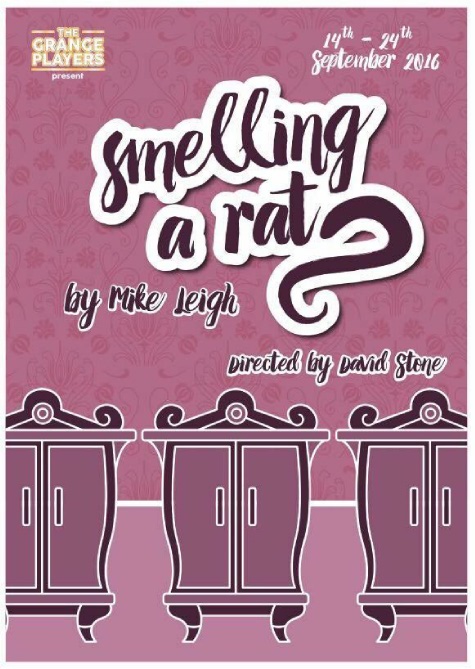
Playwright  Mike Leigh is best known for the television production of his play “ Abigail’s Party” and the film “Secrets and Lies”. His oeuvre is of making an art form out of the ordinary, ordinary conversations from ordinary people, and creating something extraordinary from them.

“Smelling a Rat” is not one of the better known of Leigh’s pieces and the decision to stage it almost thirty years after its 1988 debut was bold and brave by Director David Stone.

A five hander, the cast comprises Rex Weasel, owner of the Vermination Pest Control in whose flat events unfold, his employees Vic and Charmane Weasel, and his estranged son, Rock and his girlfriend  Melanie -Jane.

A single bedroom set painfully accurate in its depiction of a gauche, expensive apartment neatly offers the doors essential to farce via wardrobe doors, the musical overture of “Rat in the Kitchen” neatly captures the spirit of the age, and the play.

Rarely have I heard an audience as stirred, and divided, by a play as I did on Monday night. Some hated it, dismissing it as lightweight nonsense, others defended its surreal use of language and satire of English customs.

rat2

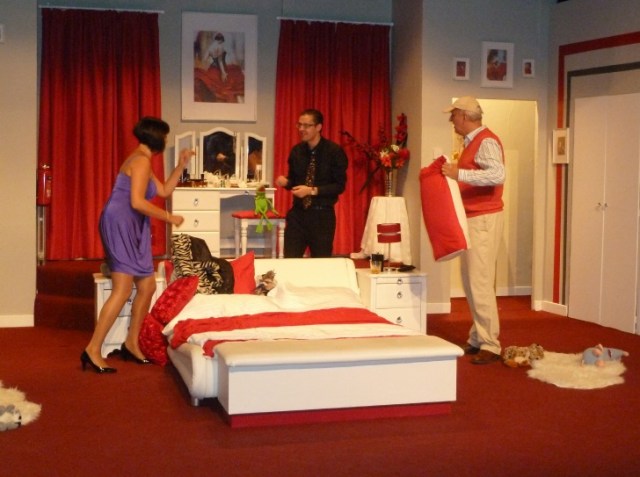
Liz Webster ( Charmane), Rod Bissett ( Vic) and David Waller ( Rex) engage in a little pillow talk.


Weasel, confidently played by David Weller, is a neurotic failed husband and failed father, good at bedroom putting, hopeless as a parent to his son, Rock. Rod Bissett’s Vic is energetic, dynamic, streetwise, wise cracking and happy go lucky, Harry Enfield’s “Loadsamoney” with a fit bird. Opposite him, Liz Webster as his wife, is a joy, mouthy, tipsy, and a specialist in saying a lot of not very much. For much of the production, emotionally damaged Rock, the brooding Sam Evans, stares as blankly as some members of the audience stared back. Repressed Melanie-Jane, played by Rachel Homes, spends much of her time either locked away in the bathroom, or unleashing her sexual frustrations on her boyfriend. All the characters share a struggle to express inexpressible feelings. Their words are important, but rarely enough. They evade, they hide rather than properly communicate.

The cast is excellent, the direction adroit, the material teeters on simply being banal, rather than banal to illustrate a point. Weasel’s gun seems like a forced device to inject dramatic tension rather than a bona fide plot development.

The device of one bedroom, five characters and six wardrobes is set up to taunt the audience into expecting something that never happens. Everybody keeps their clothes on, the doors stay shut tight, there is no reveal, no shock denouement. Unsurprisingly this is not to everyone’s taste. Aficionados of Leigh’s work will leave satisfied, fulfilled, and intrigued, casual theatre goers less so. a production and play which polarises opinion – Mike Leigh would approve.

“Smelling a Rat” runs until 24th September.

PS. How I would have loved it if, when Rod hides in a wardrobe, Rex had wandered round to the soundtrack of Department S performing “Is Vic there?”

Posted in Behind the Arras Reviews | Leave a comment