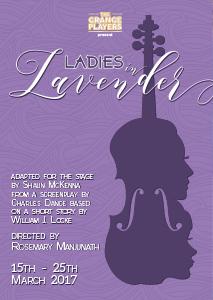
Ladies in Lavender – Grange Players, Walsall

ladiesinlav

*****


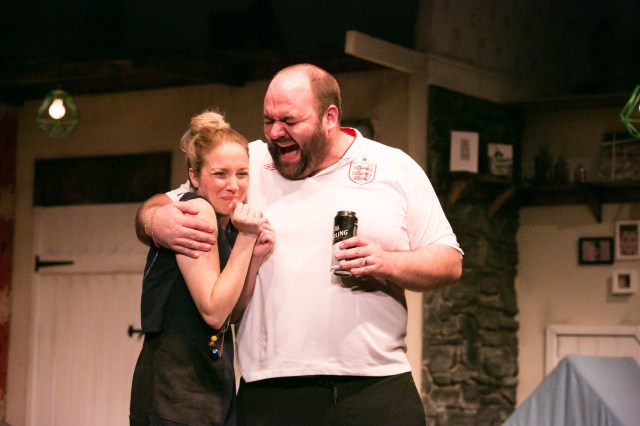
Although a successful film release at the cinema in 2004, the stage adaptation is recent (2012) . This has the disadvantage that it is unfamiliar, but  the advantage that it provides a pretty blank canvas for a Director.

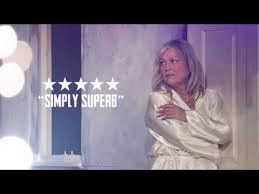
The plot is simple enough. Set in isolated  Cornwall a storm disrupts the home shared by two elderly sisters and their housekeeper. As the storm abates, a mysterious young man is found washed up on the beach.  They take him in to convalesce, his musical talent emerges, and a love story unfolds until he moves on. Fairly inconsequential stuff. But in the hands of Grange Players, and Director Rosemary Manjunath, the sparsely placed dots are gloriously connected, and the empty spaces filled, by a raft of fine character performances.

In coastal Cornwall, a crisis is when a decision has to be made as to whether biscuits may be taken mid-week, drama centres around whether a Vaughan Williams movement was played a little fast, and conflict resolution is effected by an extra sugar in a cup of tea. Character development is vital, and Manjunath has been skilled, and fortunate, in her choice of cast.

The stage adaptation and script is by Shaun McKenna. Good dialogue is always a premium commodity in the theatre, McKenna is a skilled practitioner. On stage he has written for Lord of the Rings and adapted work by Terry Pratchet and Henry James, on the radio his work includes Home Front, and Le Carre, and Winston Graham adaptations. It shows. Easy on the ear, amusing, entertaining and engaging, the laconic, languid soundscape is never allowed to drag, the character pieces never outstay their welcome.


lavender6

Photo: Alastair Barnsley


Set just before the outbreak of World War Two, the sceptre of Hitler, and distrust of foreigners in general, and Germans in particular, strikes a chord in post Brexit Britain that McKenna could not have anticipated, giving the script an unexpected, and not unwelcome, edge in parts.

Mary Whitehouse (Ursula) and Sandra Haynes (Janet) star as the hospitable sisters, neither of whom have been lucky in love. They bicker, and fuss, and circle their patient with sincere but awkward, enthusiasm. I recall as a teenager my octogenarian grandmother being hospitalised after a fall. A frail, slip of a woman, I was incredulous when she remarked to me that although on the outside she knew she was a decrepit wreck, on the inside she still felt as she did when she was eighteen years old. It is that sense of youth which McKenna taps into with the sisters, as he does with the elderly Dr Mead, superbly played by Paul Viles.

David Smith gives an assured performance as the shipwrecked Andrea Marowski, childlike as he recovers and learns English, before leaving to seek his fortune with equally mysterious Olga Danilov, confidently played by Leah Solmaz. Mary Whitehouse opposite Smith, and Paul Viles opposite Solmaz produce touching vignettes of cross-generational love and attraction which cannot be. Lightening the tone, Jill Simkin’s housekeeper Dorcas is a delight, always on hand to bring everyone down to earth, bake a cake, or make a cup of tea, and  with a very creditable West Country accent. The crystal- clear diction from all of the cast was much appreciated too.

A nostalgic, elegiac feel results, and is all enveloping, warm , soft and comforting, just like Ursula’s bedside storytelling of the prescient “ Little Mermaid”. The dulcet tones of the shipping forecast, the simple pleasures of listening to the radio, a good sandwich, somehow these seem to be all you need for a few hours.

Manjunath’s vision for this production has been satisfyingly realised with the help of a fine company. A sold- out house offered  well-deserved rousing applause at the final curtain, with excellent word of mouth ensuring that only a handful of tickets are available for the remaining shows to Saturday 25th March.


Posted in Blog | Tagged , , , | Leave a comment

A Streetcar Named Desire – Sutton Arts Theatre

****

streetcar poster


This multiple prize winning drama from Tennessee Williams rightly remains a favourite with audiences and theatrical companies alike. It is also hugely challenging. Its reputation guarantees a good house, but the roster of actors who have taken parts, including Jessica Tandy, Marlon Brando, Vivien Leigh ( directed by Sir Lawrence Olivier), Alec Baldwin , Jessica Lange, and more recently Gillian Anderson, sets an acting standard of the highest order.

Seventy years old this year, its visceral nature and smouldering sexual tension scandalised a contemporary theatre going public and was too much for the film censors in 1951 who insisted on numerous cuts. The compact , bijou, Sutton Arts theatre physically is an ideal cockpit for the claustrophobic drama that unfolds. I should make it clear that this review is not under the Behind the Arras banner, and is not a paid for “puff piece”, just my own call.

Bringing the production to stage had generated a drama of its own as original Director Claire Armstrong Mills dramatically withdrew from the role, leaving Debbie Loweth to bring the show to stage amidst a whirl of intrigue which probably deserves its own play. Claire had previously directed Emily Armstrong  and Debbie Loweth in “Steaming”, a production which trumped the professional production which had recently toured, and in which Emily had shone. It was a shame that  Claire’s vision of the show was not to be tested.

I was expectant to discover how this production would shape up. The film was seductive and intense. Benedict Andrews’ magnificent stage revival a few years ago , which I was privileged to see, had Gillian Anderson as a bird of prey, smouldering, in a contemporary setting. Loweth opts for the original period, taking no chances with audience expectation.

Upon entering, the audience is greeted by an open stage set, a dry ice induced heat haze, and players already on stage. There are no closed walls, everything is open, any secrets must out. Set designer Mark Nattrass should feel immensely proud of the space he created, even if his set building team were numerous enough to rebuild the entire theatre, let alone a stage set.

Stanley Kowalski’s role is pivotal to the success of the show, and in Robbie Newton we had a man, and a physique, up to the task. Gore Vidal memorably claimed that Kowalski was the first erotic male role written in an American drama. Newton’s Kowalski is brutish, basic, and primeval, his guttural drawl oozing menace and threat in a fine characterisation.

Phebe Jackson is outstanding as Kowalski’s wife Stella. An emotional foil to sister Blanche, and physical foil to husband Stanley, she convincingly portrays the paradox of the beaten wife who still loves her man, without sentimentality or melodrama.

Dexter Whitehead offers a thoughtful and nuanced dimension to Stanley’s poker buddy Mitch, a beacon of decency amongst the brawling, mewling poker players. Originally the play was to be called “Poker Night”, only to be pulled by the agent who thought the name too closely resembled the Western genre, even though its association of bluff and deception is perfectly apposite.

However any production of “Streetcar” hinges on the role of Blanche Dubois, taken by Emily Armstrong. Emily tears into the role with energy, commitment and swagger in an emotionally draining interpretation ( she looked shattered at the curtain call). My friend and colleague, Critic Roger Clarke, called it a “dream performance”.

streetcar photo


I had a few quibbles. The first act came at a frantic pace. The deep south American accent is a slow, languid drawl, Emily’s  quicker, staccato , North Eastern seaboard delivery meant that some great lines became rushed, or lost. Early on, Stan takes off his shirt in a display which should be one of tense, drawn out eroticism. It was rushed. When Blanche asks him to zip up her dress, and he ham-fistedly obliges it should be a case study in feminine seduction versus male force. It was rushed. When Blanche toys with a young door collector,  we need to believe she could do it, it is what caused her to lose job at school. It was rushed. In short, on occasion, desire was in shorter supply than I would have liked. I was surprised that the coquettish grand entrance through the audience was not reprised by a similar exit at the end . But that is what makes this play so demanding, the unwritten acting demands are as great as those of the words themselves.

Loweth cleverly presents  the characters in such a way that it is difficult for the audience to take sides. Blanche mixes attitude and front, with deception and despair. Stanley mixes thuggery and insight in equal measure. Mitch is self -effacing, but a bit of a dupe.  Stella tries to help everyone but herself.  All the main characters deceive, yet all offer truth at various times.

Sutton Arts succeed in presenting  a credible interpretation of this most demanding of shows, bringing alive writing which still shines after all these years. “ A Street Car Named Desire” runs til Saturday 18th march. Hop on board.

Gary Longden


Posted in Blog | Tagged , , , | Leave a comment

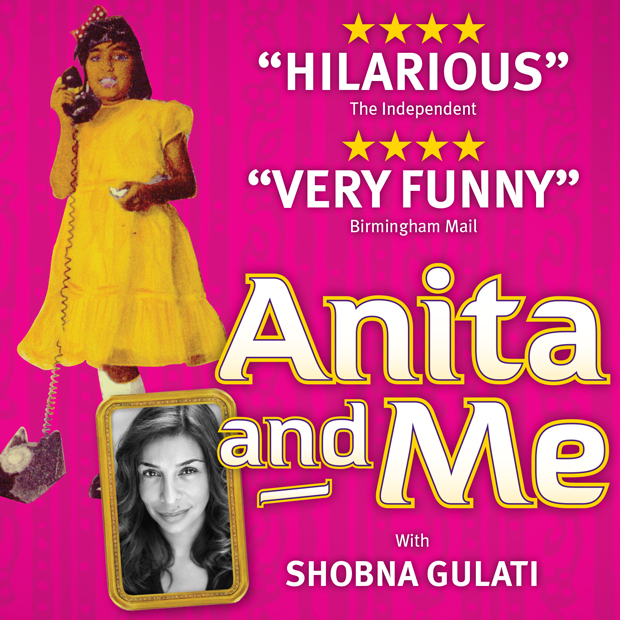
Anita and Me – Wolverhampton Grand Theatre

anita-and-me

****

There were two home fixtures in Wolverhampton on Tuesday night. The first was at Molineux, where Wolverhampton Wanderers were at home. The second was at the Grand, where Meera Syal’s play was opening for the first night of its 2017 tour.

Set in the fictional Tollington, based just outside of Wolverhampton, an unusually, and welcome, ethnically diverse audience turned out to support a production that tells the tale of a young Sikh, Punjabi girl, Meena,  and her family, growing up in the West Midlands in the 1970’s.Black Country accents were going to be under unusually intense scrutiny.

Syal’s story has flourished as a book, film and stage show. Its ingredients are nostalgia, xenophobia and humour, racism and song, family, growing up and love. Although the reality of the problems faced by the immigrant community are never dodged, this is no didactic polemic, instead a joyful celebration of the human spirit.

The outdoor set, depicting terraced houses tightly packed, crouches around the stage as a community has to deal with economic uncertainty, a new transport link, and a school closure, all depressingly familiar forty years later. Seventies references abound, not least with the ubiquitous chopper bicycle, and Jackie, the magazine for teenage girls, which sold over half a million copies a week, with its rabidly read ” Cathy and Clare” problems page, essential reading for dealing with  life’s  challenges for young girls.

Set and costume designer Bob Bailey has done a wonderful job in creating the stage and vibrantly coloured costume , as have Ann Yee and Sara Green in bringing the movement and dance alive. Inevitably  Coronation Street and Loose Women star, Shobna Gulati, attracts the most interest as Daljit, Meena’s mother, but it is Rina Fatania as grandmother Namima who grabs the limelight with her larger than life characterisation and comedy.

anita-and-me-2

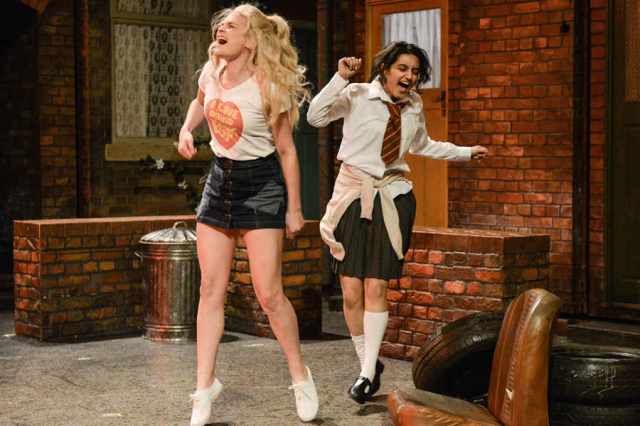
The mini -skirted Laura Anamayo shines as the eponymous Anita, unlikely and sometimes unsuitable friend to Meena (Aasiya Shah), her boyfriend Sam ( Sam Lowbridge) brings a realistic dark edge to proceedings with his anti-immigrant views and behaviour. Inevitably a stage adaptation of a book has to precis and simplify , Tanika Gupta is up to the task. the show will not disappoint those familiar with the book and film. Anita is rough, her backstory an explanation for, but not an excuse for, her actions. The violence meted out by her and her boyfriend is mirrored by the violence her mother is experiencing at home. Gupta has quite a lot to cram in.

Director Roxana Silbert has skilfully balanced  competing themes to produce a feel good show which transcends age, gender and race. The impromptu song and dance numbers always entertain, and are sometimes unexpected. Yet the fact that the show is neither a  full blown musical, nor straight play, is part of its charm. An enthusiastic audience offered a rousing reception at the final curtain, something I suspect will become routine as this show, which runs till Sat 18th , continues its tour to Cheltenham, Blackpool, Nottingham, Bradford and Edinburgh.

Gary Longden

Posted in Behind the Arras Reviews | Leave a comment

Monstersaurus – Derby Theatre

****

m1

A stage adaptation of this hugely popular story , written by Claire Freedman, can only be judged by the reaction of the children in the audience. They loved it.

Featuring Monty, his Mum, and invented monsters, the performance culminates with the appearance of  the large but not too scary, Monstersaurus himself. A simple set, bright monsters, and easy to follow story,  work well for youngsters  around 3 to 5 years old. Audience members are invited to contribute ingredients into Monty’s monster making machine, and there are song and dance routines to entertain, engage; and delight. When a toaster walks, the children roared with delight, as they did at a rogue robot, and sausages.

m2.png

The Big Wooden Horse Theatre Company had previously produced the successful Aliens Love Underpants, they certainly know how to keep young children entertained. At fifty minutes, with no interval, every child’s attention was held, the performance did not outstay its welcome.

m3


Pantomime is the traditional introduction for children to theatre, this show is complimentary to that experience with its audience participation sections, silly songs, and dances, to have even mums and dads, grans and grand dads dancing in the aisles in an almost sold out main auditorium.

Monstersaurus, finishes on Tuesday 14th February and continues on tour nationwide.


Posted in Behind the Arras Reviews | Tagged , | 2 Comments

What Do Serious Poets Do?

I am fortunate. I have been Staffordshire Poet Laureate, I curate the long running Poetry Alight in Lichfield and my poetry has taken me from  Malvern to Stornoway, from Shrewsbury to Leicester. Along the way I have met some fabulous poets, some fabulous people, from manual workers to senior academics, from bedroom scribblers to nationally, and internationally famous, published poets.

I am often asked what you have to do to be published, mainly dewy eyed enthusiasts who believe that a published book is the route to fame and fortune. hand the notebook over and someone else will do the rest. It doesn’t work like that. To demonstrate the hard yards which need to be put in I would like to use a recent news item, on an old school friend.

In those first days of secondary education, when your class has had an influx of new pupils, it takes time to get to know the new kids. One instantly stood out for me, slight in nature and with a shock of tousled, tangled, curly black hair. He was bookish, reserved, and had another worldly quality about him. I resolved to find out more. Over time I discovered that he had read the complete works of Alexander Pope by the age of eleven, his uncle was Robert Bolt who had written “A Man for All Seasons”, his aunt was Sarah Miles, the actress. I subsequently discovered that his father was a Professor at Cambridge University. I guess it is no surprise that he has gone on to be an ward winning playwright, a specialist in French and Classics translations into English for which he was awarded the OBE, and a rather good poet. His name is Ranjit Bolt.

ranjit

Despite his august literary credentials, he rediscovered the joy of humorous verse- and the limerick. In an interview with the Guardian he revealed what happened next:  With a growing body of work, Bolt did what poets have always done: he published himself in handmade editions. Taking photocopies of his latest limericks, he stapled them together and bound them in pink or green cardboard from Ryman. From 2014, armed with a pedlar’s licence and a certain poetic chutzpah, he began to sell his poems in Cambridge market square. On a good day, at £1 a throw, he would trade 10 copies an hour. Selling your own work, he says, “is quite a nice way to spend the time. I became just another Cambridge eccentric.” 

Bolt says his handmade books “sold like hot cakes”. New media kicked in. It wasn’t long before a London publisher, Martin Rynja of Gibson Square, found Bolt’s limericks on Facebook. “I fell in love with his limericks,” says Rynja. “They always make me laugh, and I got in touch to see whether he might have more.” He did, and A Lion Was Learning to Ski became the title poem:

A lion was learning to ski

In the Alps just outside Chamonix.

But he ruined his hopes

Of mastering the slopes

When he had his instructor for tea.

Word-of-mouth has sustained the latest edition of Bolt’s work. This “most dexterous of wordsmiths,” says Simon Callow, can “make anapaests do headstands.”

In these dark times, the poet has a message for his readers. “Escape through anarchy into a surreal world. The joy of the verse is the contrast between the discipline of the form and the ludicrous nature of what’s being described. Funny poems can be seriously ludic.”

There are a few morals to this story. Firstly, if your believe in your work, do something about it, no-one will do it for you. Secondly, there is no shame in self-publishing. Thirdly, if it is good enough, it will be discovered anyway.

https://www.theguardian.com/books/2015/nov/22/limericks-ranjit-bolt-literary-success


Posted in Blog | Tagged | 1 Comment

The Problem With Poetry

I like poetry. I like it best read aloud, maybe in a pub or café. Sometimes I enjoy reading it when I am alone. Yet I hear, and read, much poetry that I do not care for much. I don’t mind not liking “bad poetry”. However when I do not enjoy poetry others deem good, I feel bad. I feel that my intellect is not up to it, or judgement is poor, or both. I feel inadequate.

Recently I had an exchange on Social Media with someone who declared that any such judgement of good and bad on poetry was subjective, and therefore worthless. I understood her point. But I know good poetry when I see it,  read it, hear it. At a live performance those poems which enrich, delight, entertain, challenge stand out. They do not have to be funny to shine. I do not even necessarily have to “like” a poem to appreciate its value, if I see that value in it. So when others eulogise about the work of someone, and I do not appreciate that which they appreciate, I am wracked with doubt, every time. Have my critical faculties deserted me?

Poets who stand up and read their own work are brave. The words are their own. There is no character to inhabit, nor costume to don. They are not offering or interpreting the work of a third party. It is them. I heard an eminent psychologist once offer the view  that nothing that we say is neutral. It all has a purpose. She was right.

As a poet I want you to like what I write, to appreciate the gravitas, insight and skill of my work. But I crave a response. With a witty, humorous, poem, that feedback is instant. You can see the attentiveness, the smiles, hopefully the laughter, the swelling applause at the end of the poem an instant hit. That does not happen with serious blank verse, the response id more nuanced. Of course you still see attentiveness, but sometimes the silence can be a sign of great reflection and appreciation, a post coital lull, or, it can mean complete indifference.

And so I give in. Too often falling back on humour, light rhyming ,and contemporaneous satire, to secure my quick fix. Too uncertain to gamble with the silence. To continue the post coital imagery, are they thinking “Wow, I am speechless”  ? Or ” Thank God that’s over, whatever you do don’t encourage him”.!

Which is not to say that serious poetry cannot be powerful, compelling and capable of evoking immediate reaction. One of my favourite practitioners is Fatima Al Matar, a Kuwaiti, poet who performs in a hijab. Controlled, soft, mesmerising. her trick is to lower, not raise her voice so that the entire audience strains forwards to catch every last syllable. Helen Mort and Liz Lefroy are similarly strong. But I think the task is much tougher, the safe laugh and smile easier – so I capitulate


uc-in

Inside the Unity Chapel where we held our Peace Vigil at Coventry Cathedral


ucout

Outside of the Unity Chapel

Last  weekend I was flattered to be asked by the  formidable Coventry War Poet ,Antony R  Owen to read some of my poems at Coventry Cathedral as part of an all day  Peace Vigil. Panic set in. “Six hours of blood torment and anguish – I won’t be able to compete with the best of that” I thought to myself. So I went light, obtuse, and a poem about words and truth  went down really well, so well I proudly performed it at Poetry Alight a couple of days later, and I read it awfully, from the heights of satisfaction to the depths of despair in three days. To compound the issue I gave a non-humorous, but fey, poem of mine, Café Blend, to a young woman, Emily Galvin, to read out. She did so beautifully imbuing it with qualities which I had not found myself.

That is the problem with poetry.

Posted in Blog | Tagged , , , , | 1 Comment

“Invincible”, by Torben Betts, the Original Theatre Company, Derby Theatre

****

invincible

Derby Theatre is to be commended on bringing this relatively new play (2014) by the highly acclaimed playwright Torben Betts, produced by the Original Theatre Company, to the city. A strong first night house augurs well for the rest of the run, reaffirming the appetite of the Derby theatre going public to give something new a chance.

Of late, I have lamented the lack of strong modern comedy in theatre. Ayckbourn and Benfield penned productions still endure, albeit to an ageing audience , drawn on themes which are forty to fifty years old, and feel it. Even the odd Brian Rix farce still surfaces from time to time. In  1999, Torben Betts’s was invited to be resident dramatist at Scarborough’s Stephen Joseph Theatre by Alan Ayckbourn. Ayckbourn in turn had worked as an actor under Brian Rix’s direction. Betts’ dramatic lineage is a credible one, and he studied in Liverpool, home of the best social dramatist of the eighties, Alan Bleasdale. Betts’ writing combines those former influences in comic farce, with the latter’s dark social satire.

“Invincible” is multi layered. It presents a middle- class couple, laid-off civil servant Oliver and his partner Emily, a Marxist/Buddhist painter (Alastair Whatley and Emily Bowker) down-sizing and recapitalizing by moving to the north of England, and the culture clash that provokes as they invite their new neighbours, Graham Brookes’ portly postman Alan ,and Elizabeth Boag’s busty  dental receptionist Dawn, around for drinks. Olives and anchovies versus a case of beer. I suspect that the sympathies of the audience may shift depending upon where in the country the production is playing. In Derby, the audience was on the side of Alan and Dawn.

Emily is an Islington Socialist who doesn’t really like the “worker” bit in Socialist Worker, with an unflinching commitment to her view of what honesty and truth mean.  Oliver’s Liberal values are in a constant state of reassessment, his patience constantly tested by his wife. Betts skilfully weaves traditional farce material, in this case in the guise of a dead cat, with contemporary political debate . The comic potential of the North/South divide is ruthlessly exploited, having fun with the stereotypes as they are deconstructed, before a more sombre, reflective finale.

Invincible-Production-049-Graeme-Brookes-Emily-Bowker.jpg

Alan ( Graham Brookes) shares some Northern neighbourly cheer with Emily ( Emily Bowker)

The motor mouth, socially awkward, but benevolent, Alan has to deal with the brassy, taciturn, but quiet Dawn, in a relationship whose weaknesses, and strengths, emerge as the story unfolds.  Oliver, in turn, has to deal with his tactless, self-centred, myopic, emotionally high maintenance, wife. And as  social moral matters of the day are dissected, so is the matter of what abstract art loving Emily thinks of  Alan’s cat paintings. The paintings of his cat “Vince”, named after HMS Invincible, giving the play its title, may lack polish, but  his instincts are true and sure, unlike those of his  hosts.

When Emily piously attacks politicians who send “misguided, ignorant” soldiers to war, the play turns on a sixpence, and in a dramatic gear-shift, their guest’s personal stake in the issue is revealed, grounding her esoteric deliberations in an instant.

The play opens revealing Victoria Spearing’s single set with toys scattered around the stage and a remotely controlled toy train skirting the stage’s perimeter, yet no children. “Das Kapital” sits on the bookshelf, Emily’s abstract art garnishes the walls.

Stephen Darcy’s direction, after Christopher Harper’s original direction, is pacey, fluid, and imaginative. Max Pappenheim’s music choice is eclectic and assured- from William Byrd, through Parry/Blake’s “Jerusalem”, to David Bowie’s “Heroes”. Scenes are divided by surreal dance sequences which work surprisingly well.

Written pre-Brexit, it now shines a post -Brexit light on Southern liberal values versus Northern realism. Trump’s visceral populist zeitgeist also surfaces in Alan’s simple, genuine, nationalism. It is Graeme Brookes characterisation of Alan which creates the greatest impression, from bumbling buffoon, through honest nationalist, to bewildered husband and father. A wonderful performance. Elizabeth Boag undertakes an equally significant, but diverging path, as his comely wife. Starting as a voluptuous, lady in red, scarlet woman, her broken second half persona is equally as compelling, and touchingly poignant.

elizabeth-boag-as-dawn-and-alastair-whatley-as-oliver-in-invincible-credit-manuel-harlan-e1485403770210

Dawn (Elizabeth Boag) shows Oliver ( Alastair Whatley)  one of the better Northern sights

“Invincible” combines a comedy of manners, borrowing from the modern tradition established by Mike Leigh in “Abigail’s Party”, with knock- about humour, and hoary jokes. It drags traditional late 20th century social comedy into the 21st century without abandoning its antecedents. It was reassuring to see the veteran Ayckbourn element in the audience well counter-balanced by a younger crowd too.  Together we laughed out loud, offered spontaneous applause, and hushed silence for the dramatic twists, for a well written script and fine ensemble performance.

Playing till Saturday 4th February at Derby, then continuing on nationwide tour until 5th April

http://www.originaltheatre.com/

Gary Longden

Posted in Behind the Arras Reviews | Tagged , , , , , , , , , , , , , , , | Leave a comment

North Birmingham Amdram Preview – What’s Hot, and What’s Not! Spring 2017

sneak preview.jpg

Many theatregoers, and play Directors, have mentioned to me that although productions are well covered at the time of performance, previews are confined to often cursory summaries in brief advance publicity material. As a consequence, punters can find themselves making decisions to attend, or not attend, productions on fairly skimpy information, and Directors can find that by the time positive reviews bite, valuable performances have come and gone. This is an attempt to redress that.

The following is neither a comprehensive, nor exhaustive, list of upcoming shows, simply ones that have caught my eye. My assessments of the proposed productions are wholly subjective, and cannot anticipate how they will shape up on opening nights. Fine plays can be mangled, indifferent material made to shine by inspired acting and direction – that’s showbiz! But you will have a little more to go on in deciding which shows to back with your hard earned cash.

Sutton Arts

The Vortex  26/1 -4/2, running now. https://garylongden.wordpress.com/2017/01/27/the-vortex-sutton-arts-theatre/

http://behindthearras.com/reviewsam/2017/ReviewsAMJan-Mar2017/the-vortex-review-sutton-SAT01-17.html


A Streetcar Named Desire, 9/3 – 18/3.  –  A home banker of a choice. It won a Pulitzer prize, is rightly regarded as being Tennessee Williams best work, and often features in lists of the finest plays written in the 20th Century. Its mixture of taut family tension, conflicting social standing, sexual desire, and domestic violence cannot leave you bored.

Marlon Brando and Vivien Leigh have played parts in the past, this will have had local amateur thespians desperate to be involved. Sutton Arts tends to be able to pull the best actors for the best productions. Claire Armstrong- Mills  was directing, Debbie “Dial M for Murder” Loweth replaces her.  . I am looking forwards to this – and so should you.

Anyone For Breakfast?  4/5- 13/5 A Derek Benfield farce. If you like doors opening and closing, women in their underwear and men without their trousers, people hiding and narrowly missing each other, and a funny foreigner, this should not disappoint. Benfield was directed by Brian Rix as a young actor whose style he emulated. If you like Rix, you will like this.

This style of fare was hugely popular in the 1970’s, and has carried that audience with it ever since. Elena Serafinas directs.

Hello Dolly 15/6-24/6 Another home banker for Sutton Arts who consistently overcome the limitations of a modest stage by finding a way of putting on a big  musical production anyway. Matchmaker socialite Dolly finds pairing couples in hometown New York, but hits problems when she becomes inadvertently embroiled in the process. Some great music and songs in addition to the eponymous showstopper. Expect big dresses, and a show with a warm heart. Premiered in 1964, it was based on a  successful 1938 farce, so expect an above average libretto.

Husband and wife Directing team Mr and Mrs Whitehead are becoming old hands at musicals. This will be well worth seeing.

Grange Players Walsall

Ladies in Lavender  15/3- 28/3  from a short story by William Locke and screenplay by Charles Dance,  adapted for stage by Shaun McKenna. This is a drama/romance, set in 1930’s Cornwall as two elderly sisters find a mysterious man washed up on the beach. Amongst his qualities are those of a gifted violinist.

Although the film dates from 2004, the play premiered in 2012. Not established in amateur rep, this will be new to most people, and offers lead roles to two older women. Expect a gentle, fey evening, and it will be interesting to see how  Director Rosemary Manjunath  manages  the pivotal musical demands of the show.

Heroes, 17/5- 27/5  A  gentle comedy, written in French by Gerald Sybleyras in 2003, but translated by Tom Stoppard, and premiered in 2005 starring Richard Griffiths, John Hurt and Ken Stott. Its lineage is strong. My old school friend, Ranjit Bolt OBE, is the leading contemporary translator of French to English drama, and rates the script very highly. The title was  an arbitrary choice after the French title, directly translated as “Wind in the Poplars” was deemed too close to “Wind in the Willows”. Ratty is nowhere to be seen here.

Seldom performed, this will be new to pretty much everyone. With three male leads, anticipate  character studies rather than a linear narrative. The three WW1 veterans  are seeing out their time  within a French Military hospital. Expect a “Last of the Summer Wine” ambience. Rosemary Manjunath and Dexter Whitehead co-direct an intriguing left field choice.

Touch and Go   12/7-22/7   A Derek Benfield farce, see my comments on “Anyone for Breakfast” for a flavour of what that entails. Benfield is a versatile talent, he starred in Coronation St for eight years as Walter Greenhalgh, and found fame as Riley in “The Brothers” drama serial. Touch and Go  itself was translated into French by Marc Camoletti and ran for a year in his theatre in Paris. My view is that the French, particularly Feydeau, are better at farce than we are, so that was quite a coup.

Of course trousers come off, and there is a running gag in this five hander as Brian uses jogging as a pretext to get out of the house from his wife Hillary for extra marital trysts with Wendy, courtesy of Brian’s friend George, who is having an affair with Hillary. Brian’s pretence of jogging is not the only thing which exhausts him. The reliable Louise Farmer directs. It will be interesting to see whether she injects any Gallic flair into this archetypal British fare.

Highbury Theatre

I Ought To Be In Pictures  24/1- 4/2 – running now, http://behindthearras.com/reviewsam/2017/ReviewsAMJan-Mar2017/i-ought-to-be-in-pictures-review-HT01-17.html


The Thrill of Love 14/3-25/3  Amanda Whittington’s play on the life, and death, of Ruth Ellis, the last woman to be hanged in Britain. It premiered as recently as 2013 at the New Vic, Newcastle under Lyme and has not been widely performed, despite receiving very positive press.

Whittington is an ex journalist, and is quite prolific having written  fourteen stage plays and five radio plays in nineteen years. Expect  a tight script, and a tale of contrasts, the dowdy Ellis chasing the bright lights, and  her relationship with her perfidious boyfriend juxtaposed with her friendship with the club char lady. Expect also a tale of love, obsession and betrayal, from dreams of Hollywood to the condemned cell of Holloway.

Although a little known play, I am anticipating much from this production.

Dangerous Corner 2/5 13/5   By JB Priestley, this is their home banker of the first half of the year. The phenomena that is “An Inspector Calls” carries an audience with it. But this is his first play, and is not as well- crafted as those that followed.

The plot is sound enough; the  Caplan’s are entertaining guests at their country retreat. A chance remark by one of the guests ignites a series of devastating revelations, revealing a hitherto undiscovered tangle of clandestine relationships and dark secrets, the disclosures of which have tragic consequences. The play ends with time slipping back to the beginning of the evening and the chance remark not being made, the secrets remaining hidden and the “dangerous corner” avoided.

It is the mix of a gay relationship, drug abuse , adultery, firearms and death which sustained its uncertain opening production. Now, the play works best hammed up, and with the melodrama quotient turned to ten.

Lilies on the Land 20/6 – 1/7 A recently premiered  (2010), so comparatively new, play about the Land Girls of WW2. Compiled from contemporaneous reminiscences, it focusses on the lives of four land girls in a feel-good  exploration of girl power which will evoke warm nostalgia from the elderly, and admiration from the young in a show of cross-generational appeal.

Expect frank, humorous and inspiring tales and an evocation of the British Spirit, so often  casually alluded to in contemporary writing, but here it is given some substance. It is written so that four women, doubling, can present it, or offer parts to as many as eleven. Will the production go small or large?

Amateur Musical Theatre

The Sutton Coldfield Musical Theatre Company and Lichfield Operatic Society dominate in this , with their productions at the Lichfield Garrick a match for professional shows. They are well financed, long established companies able to draw upon the best of regional amateur talent, rehearse for longer than pro companies, put more actors on stage, and often put more money into production values than their professional peers. If you want to see tomorrow’s stars today check out Lichfield Garrick Youth Theatre, who despite of necessity having  a performing membership that constantly changes ,miraculously attract the best of local young  talent maintaining an impossibly high standard, a credit to the long standing management and production team

Made in Dagenham – SCMTC, 28/3- 1/4   A bold choice. The 2010 film was fabulous, the 2014 musical  stage show lasted only six months, closing in 2015, despite generally positive critical feedback. SCMTC will be hoping that the memories of the hugely satisfying film will be enough to lure the punters, despite the absence of a familiar score. The very limited number of previous nights also ensures that very few people will already have seen the show giving minimal opportunity for comparison with the professional production.

As far as I am aware this may be only the fourth run of this show beyond the opening at the Adelphi in London, after Ipswich and Hornchurch last year, and Oxford this year. The bad news is that it has a named cast of some thirty, the good news is that SCMTC have even more performing members! There are also two interesting character parts, Harold Wilson and Barbara Castle. Will they use newsreel footage or cast them?

The stage show does differ from the film with characters omitted and added. What remains is its humour, Englishness, “girl power”, women’s and worker’s rights themes, as the women of the Ford Dagenham car factory strike for equal pay with the men.. The company will be hoping that the closing number “Stand Up” will compel the audience to do just that. SCMTC have the members, loyal audience, expertise, and enthusiasm to pull this off. It will be worth checking out to see how they fare.

Annie –  Lichfield Operatic.  18/4- 22/4 Their choice  of show could not be greater in contrast with that of the SCMTC. Annie will be a cast iron, guaranteed, copper bottomed box office success. Like the other AmOpsoc favourite “The King and I”, it has lots of children, requiring teams of children with lots of friends, parents, grandparents, aunts and uncles who invariably take a chunk of tickets with multiple visits. The ticket manager’s dream show.

LO have performed this before, and have the money, and expertise, to match the expectations of the most demanding theatre goer with a pro class production. Expect loads of oohs and aahs as Annie belts out “Tomorrow” and perhaps a few boos for Miss Hannigan and her evil brother Rooster mid show before the cheers at the end. But it won’t be all plain sailing. “Hard Knock Life” is a fiendishly difficult song musically and vocally, with complex choreography for a young cast. Can they pull it off? This will be well worth a visit to find out.

Legally Blonde – Lichfield Garrick Youth Theatre 25/4 -29/4 Based on the hugely successful 2001 film, the 2007  stage premiere in America received mixed critical reviews, but quickly became a fan favourite enjoying runs on Broadway and the West End.

It is a  girl power  story of Elle Woods, a sorority girl who enrolls at Harvard Law School to win back her ex-boyfriend Warner. She discovers how her knowledge of the law can help others, and successfully defends exercise queen Brooke Wyndham in a murder trial. Throughout the show, no one has faith in Elle Woods, but she manages to surprise them when she defies expectations while staying true to herself.

Teenage girls love it, the show is fun, packed with song and dance and has an upbeat, uplifting message which is hard to deny. Julie Mallaband, one of the best directors around, is in charge and will have bought in plenty of stocks of peroxide blonde hair dye. As  with “Annie”, it is really impossible for this show to go wrong in this company’s hands.

Posted in Behind the Arras Reviews | Leave a comment

2016 A Year of Reviews in Review

bta

Hamlet Kills Polonius

The pace of reviewing is such that one year can blend into the next. But January provides the occasion to reflect back on the previous twelve months and reflect on a year of Midlands theatre.

The Midlands continues to be a hotbed of professional and amateur stage performance, with the latter just as strong as the former. Both camps face familiar, and similar, challenges. Auditoria need to be filled, bills paid, outgoings carefully managed, while giving the audience both what it wants, and what they think it wants.

The most artistically daring and risky productions can bankrupt companies, the most bland and familiar can save a company financially. Even an amateur musical theatre company, putting on a big show like Witches of Eastwick or the King and I at somewhere like the Lichfield Garrick, can find themselves risking the best part of £40,000, and that is with no payment to the cast, and a modest purse being paid to the Director, Musical Director, and then the  musicians on the night. The rest goes on hall hire, costumes, royalties and publicity. Success often equates to only  a few thousand pounds profit even with sell out audiences. Failure can mean losses in excess of £10,000, with the sceptre of personal liability hanging over Committee members.

I had the pleasure and privilege of meeting Opera Impresario Ellen Kent at Wolverhampton Grand a few years ago. “What are you doing in Wolverhampton on a cold February Tuesday night to see a show that you created and have seen dozens of times before?” I enquired. “To look at the audience” came the canny reply. It is good advice to any Theatre Artistic Director, or Amateur Company President.

I saw my fair share of 70’s comedy in 2016, particularly Alan Ayckbourn. The period sexual paranoia and social angst of the genre is wearing thin. The audience is almost overwhelmingly over 65 years old. The young casts are looking increasingly uncomfortable performing the material. Its inevitable demise over the next decade or so will go unlamented by me.

By contrast I saw the Rocky Horror Show, also from the 1970’s, for the third time, this time at the Alexandra Theatre in Birmingham and was shocked by the age of the audience, at least a third of whom were under the age of thirty. A production which has reinvented itself for a new generation.

A concern I have, pretty much across the board, is that in a multi-cultural area, the ethnic audience is either sorely under- represented, or entirely absent, at most shows. There are no easy answers, or quick fixes, but reaching out to this significant audience should be on the agenda for all artistic directors.

So, what were my highlights, and lowlights?

Best Pro Musical – Mary Poppins, Hippodrome, Birmingham. Big ticket prices were matched by big production values and a star in the eponymous lead, Zizi Strallen, who filled Julie Andrews’ shoes with ease. Mathew Bourne’s choreography was scintillating.

Best Amateur Musical – Hairspray, Lichfield Garrick, Sutton Coldfield Musical Theatre. Sally Baxter’s Direction was exemplary in one of the best feel-good productions I have seen. Production values were high, the cast jumped even higher.

Best Pro Play – The Damned United, Derby Theatre. A tour de force played as a home game in front of a partisan and loyal crowd. Vitally, it also brought in a significant number of people who never come to the theatre.

Best Amateur Play – Visitors, Sutton Arts Theatre. Barrie Aitchison is one of the finest directors in the Midlands. This powerful study of dementia stood head and shoulders above the rest.

Best First Run – Holding Baby, Birmingham Uni.  A stunning, and original study of cross-generational parenting by Jan Watts.

Best Comedy – Jack and the Beanstalk, Sutton Arts.  Husband and wife team Mr & Mrs Whitehead have cracked this Pantomime thing, villainous Chris Commander’s Crowfoot was superb.

Most Disappointing Show -Round and Round the Garden, Lichfield Garrick. A strong cast failed to breath life into this Ayckbourn offering, which had probably been dead for some time before they tried.

Best Amateur Musical Perfomer –  Kitty Roberts, Hairspray, Lichfield Garrick

Best Pro Musical Performer –  Kay Murphy, Rocky Horror, Alexandra Theatre Birmingham

Best Amateur Actor –   Ashleigh Aston, Holding Baby, Birmigham University

Best Pro Actor –  Andrew Lancel, Damned Utd, Derby Theatre

Honourable mentions should also go to Priscilla Queen of the Desert at Wolverhampton Grand, and Flare Path at Derby Theatre.

Another good year overall with Derby Theatre leading the way on professional productions, a  testimony to the fine work of Artistic Director and CEO, Sarah Brigham, and Sutton Arts leading the way on amateur ones. But 2017 holds much further promise…


All  the above reviews can be found on the Behind the Arras website, together with hundreds reviewed by my colleagues.

http://behindthearras.com/

Posted in Behind the Arras Reviews | Leave a comment

The Vortex – Sutton Arts Theatre


the-vortex1

****

This rarely produced play was a shrewd, but challenging choice by Director Stuart Goodwin. Written by Noel Coward, and first staged in 1924, it titillated, outraged and divided opinion at the time, almost a century later I regard it as being amongst his best work. The Daily Mail contemporaneously dismissed it as “ a dustbin of a play”, The Times opined: “It is a study that has wit, observation, and a sincerity, leaping out between flippances, which is its peculiar merit.” Hannen Swaffer,  called it “the most decadent play of our time”.

It is an intensely personal piece of work. Coward wrote it, acted in it, co-directed it and had to fight to prevent it from being banned. Coward gives full rein to his Wildean wit, intertwined with existential issues: the curse of aging, drug addiction, adultery, nymphomania, homosexuality and Oedipal tension.  A middle -aged woman takes a young lover whilst her son spirals into the grip of cocaine addiction, also used as a metaphor for homosexuality, amongst the louche parties of the Jazz set. Think of a party thrown by Madonna, Boy George, and Keith Richards.

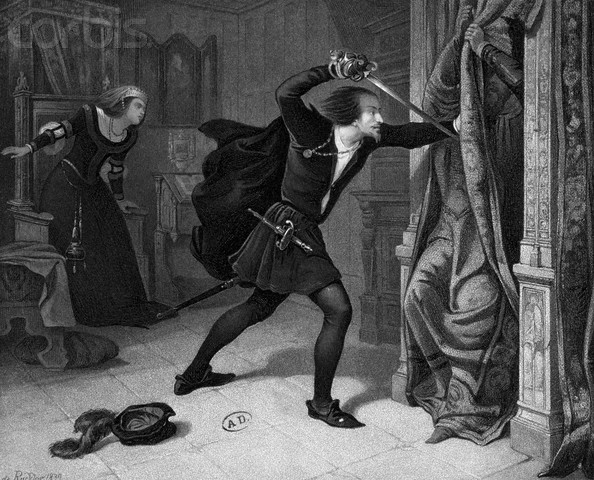
Ninety  years on, despite the likes of Coronation St and East Enders normalising what was then scandalous subject matter, the script still packs a punch.  It opens as a bitchy, gossipy, light comedy. But over the three acts the mood progressively darkens, so that by the end we are presented with a drug-addled and effete young man confronting his mother about her serial adulteries with lovers half her age in a dramatic passage that owes a debt to Hamlet’s anguished “closet scene” with Gertrude. “How can we help ourselves? We swirl about in a vortex of beastliness,” Nicky Lancaster rants.

Goodwin  stylishly handles the play’s dramatic changes of mood in three acts well, and  revels in an at times claustrophobic, overheated, hothouse atmosphere. The compressed second act set works particularly well in this regard. The languid opening and its sedate repartee is played for barbs rather than laughs, its throw away badinage anticipating something of greater moment.

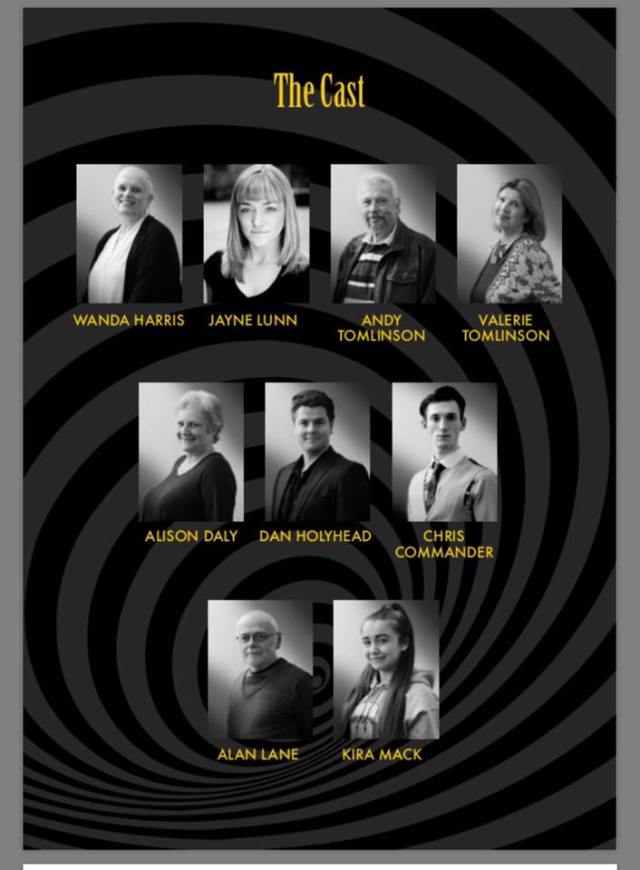
The script lends itself to a period set, a sixties set, or contemporaneous one, and Goodwin roots the action in the 1920’s. The star of the show is Chris Commander, as Nicky Lancaster, as Noel Coward. He bursts onto the stage, an energetic bundle of energy. Flamboyant, effervescent, rakish and sallow. He commands the part, his emotions nuanced, his angular frame twisted to wring out every ounce of value from the script.

Nicky does not present as outlandishly effeminate, the script does the work for him. I should also mention  the  understated  awkward tenderness  he brings to his relationship with his cuckolded father, satisfyingly played by Alan Lane.

In a supporting role Jayne Lunn, as family friend Helen Savile, also shone. Detached from the madness around her, she is the anchor of the script, and production. Carrying a stylish flapper dress with some style, her second act confrontation with Nicky is an unexpected highlight of the show.

The role of Florence Lancaster, Nicky’s mother, is a great part, which is open to considerable interpretation depending upon the actress. Alison Daly assumes a matronly, bombastic strident persona, flirting with her young lover and making  vacuous small talk with her house guests. Her  vanity and insecurity abounds, and she rises to the challenge of playing off Commander’s extraordinary performance  of self -loathing, self-doubt and abandonment, in the final act bedroom scene, admirably.

In the “Hamlet scene”, in which the Prince confronts his mother, Commander is stunning as he strips his mother of her dignity, beauty, youth and self-delusion leaving her with nothing but her  mortality and guilt.

In supporting roles, Pawnie (Andy Tomlinson)), described by Coward as “an elderly maiden gentleman”  entertains, and  Florence’s toyboy, Tom (Dan Holyhead), is portrayed with apt immaturity, his lack of chemistry with Florence, instantly juxtaposed with his affection for Nicky’s temporary fiancée  (Kira Mack). Wanda Harris’s androgynous butler Preston is a little gem, Clara Hibbert ( Valerie Tomlinson) is delightfully dotty.

The curtain falls with Nicky cradled in his mother’s arms, lamenting  his unrequited longing for a maternal bond in an evening that  manages to stay clear of melodrama,  and memorably moves from cocktails, laughter and small talk to  relationships  and character laid bare in raw  drama. A fine production from Stuart Goodwin, go and fill the remaining seats for the rest of the run to enjoy Christopher Commander’s outstanding Nicky, supported by an able company.

The Vortex runs till Saturday 4th February, ticket information: http://www.suttonartstheatre.co.uk/booking.htm


Gary Longden

vortex-cast


Posted in Behind the Arras Reviews | 3 Comments