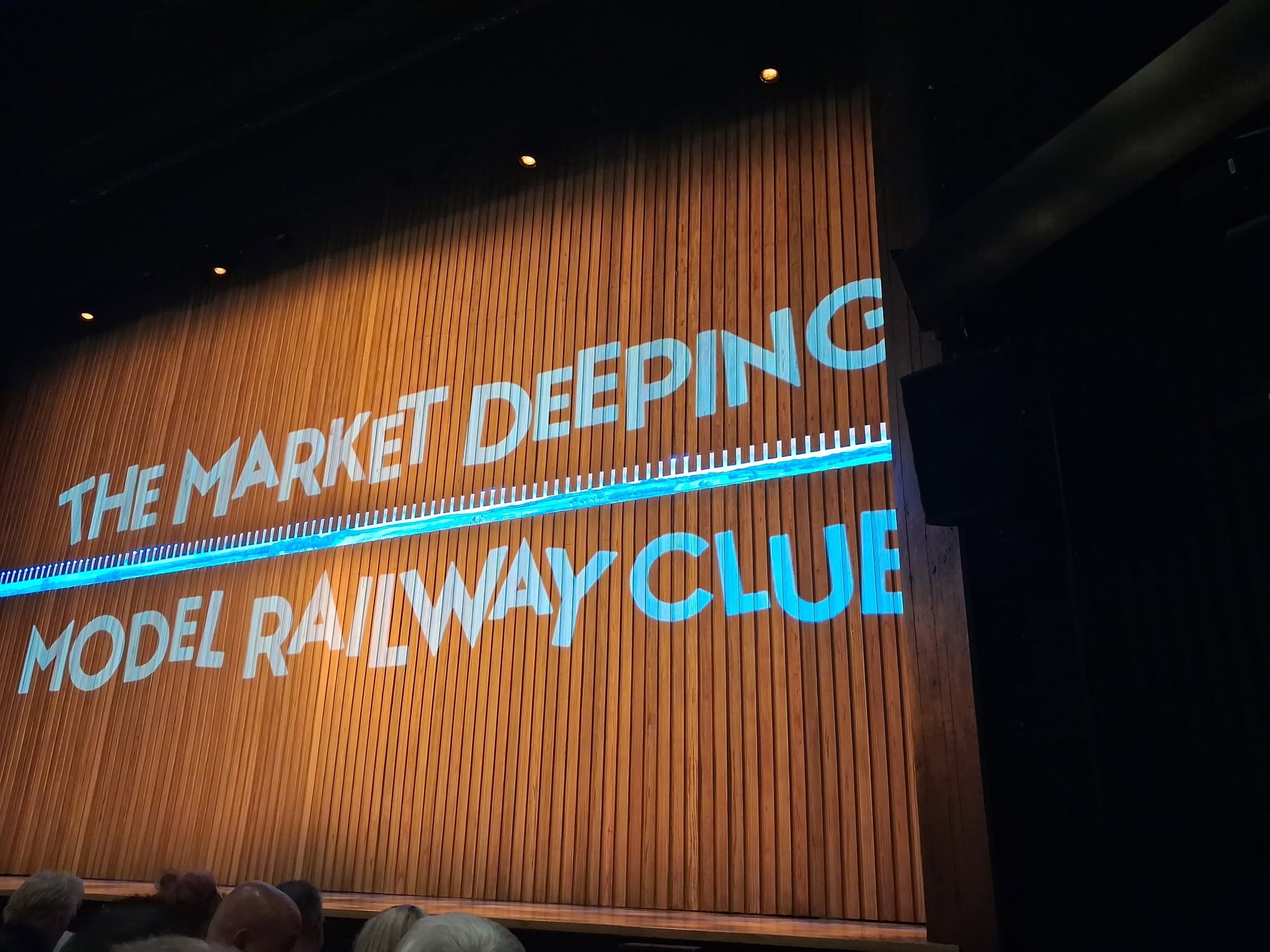
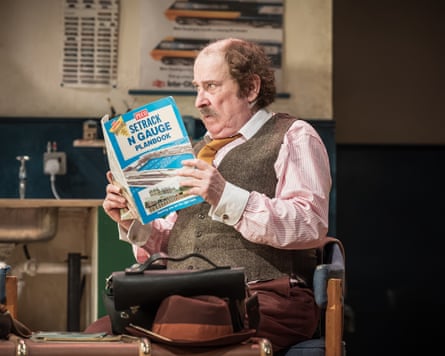
It is not often that I am able to see a World Premiere, but that is what happened this evening for the debut of William Ivory’s new play . Ivory’s previous popular offering was the screen play for “Made in Dagenham” . Once again he is at the heart of British culture and mores.
When I was a child I had a model railway, as I entered the Theatre foyer i was struck how the audience demographic mirrored me.
The set is surprisingly sophisticated, such that it will challenge future Amdram productions, both in location and computerised backdrops. LNER sponsor the show in touching community spirit
The experienced cast is unusually strong no doubt in an attempt to lever a transfer to London at a later date.
The story is Calendar Girls v Dads Army , a period piece of a bygone age, yet it contemporaneously examines masculinity, male friendship and the quirkiness of the human condition set against a backdrop of Brexit Britain and the rise of populism and right wing prejudice.
William Ivory’s comedy is inspired by a 2019 crime , when four youths broke into the school hall at Market Deeping Welland academy only to find a model railway exhibition. For a laugh, they trashed it. They did it because they could in intriguing juxtaposition to the modellers who do it because they can.
The dialogue is very funny. Adrian Scarborough as the Chairman, when attempting to coax youngBabutunde Aleshe to join the old codgers declares “We’re not old- some even pay for their own prescriptions!”
.
The almost all male cast is augmented by Lucy Briers as the put-upon club secretary who provides much needed colour and shade to proceedings directed by Adam Penford.
A modern soundtrack incorporates Bowie’s Rebel Rebel and the Pistols “God save the Queen” with a playfully amusing snippet from” Theme from S’Express”.
When their layout is destroyed by vandals, Rod Stewart not only comes to the rescue with cash, but also provides some good laughs as the members take up his songs too. I suspect he was generous with his royalties requirement.
Sharp, witty, laconic, and playful this play will run and run.
Rumour is that Nigel Farage sponsored the show for £5m
***
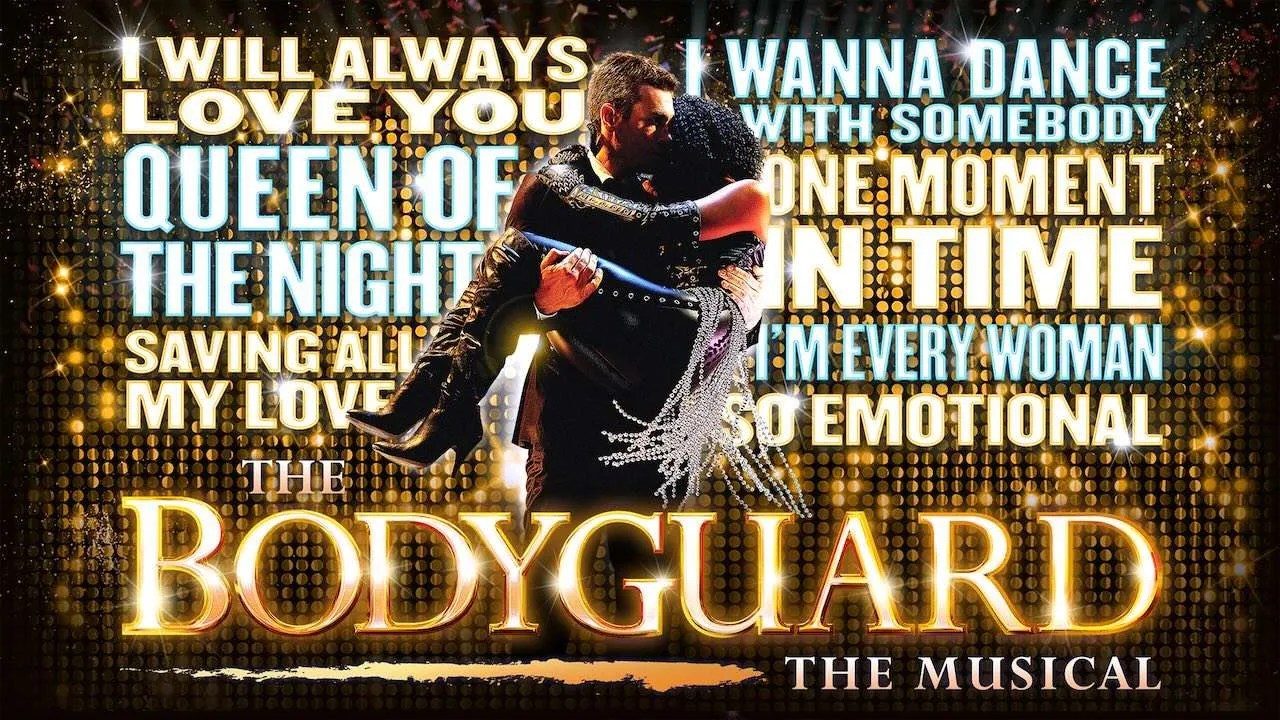
This was my third visit to the show over the yeard, the two previously had featured Alexandra Burke in the starring role.
The billed star attraction was Sidonie Smith, but for this performance understudy Mireia Mambo filled the heels of Whitney Houston.
I have no problem with understudy performances, often they showcase considerable upcoming talent, invariably the performers give their role, and their chance, their all. Furthermore I have no idea who Sidonie Smith is, so did not feel I was missing out
Based on the 1992 Oscar-nominated film, which starred Whitney Houston and Kevin Costner, The Bodyguard is a jukebox musical that features the music of pop legend Whitney Houston. The stage musical follows much the same plot as the cult classic film. However I was surprised both at how much I had forgotten from my previous vivits, and how much I noticed updates from the previous production
The Bodyguard is a rare jukebox musical with a plot, ( book by Alexander Dinelaris based on the screenplay by Lawrence Kasden). Director Thea Sharrock does a good job t putting the “thriller” aspect into this romantic thriller.
Adam Garcia excels in the eponymous role as Frank Farmer looking unnervingly like a Pierve Brosnan er James Bond. His naked torse scene brought gasps from the middle aged female audience as restorative vapours were invisibly seized.
Mireia Mambo takes on the Rachel Marron with the v energy needed to convincingly play a famous pop star. Unexpectedly the musical highlight of the evening was ” I’m Every Woman”, one of those magical moments when a supercharged live band and the vocals entwined together and reached the skies.
Adam Garcia’s comic vocal scene was funny and heartwarming.
Rachel’s sister, Nicki, is played by Sasha Monique, whose vocals sparkle frequewntly duetting with Mireia. The hits keep on coming ‘Queen of the Night’, ‘So Emotional’, ‘One Moment in Time’, ‘Saving All My Love’, ‘Run to You’, ‘I Have Nothing’ and ‘I Wanna Dance with Somebody’, are all present and correct. “All the Man That I Need” , written by Dean Pitchford and Michael Gore and originally recorded by Linda Clifford in 1982 is earth shatteringly brilliant. The signaturet “I Will Always Love You” , performed on top of a podium is now a little hackneyed, the reprise at the end of “I wanna Dance with somebody i” feels a bit mechanical- but the boogying female audience did not care.
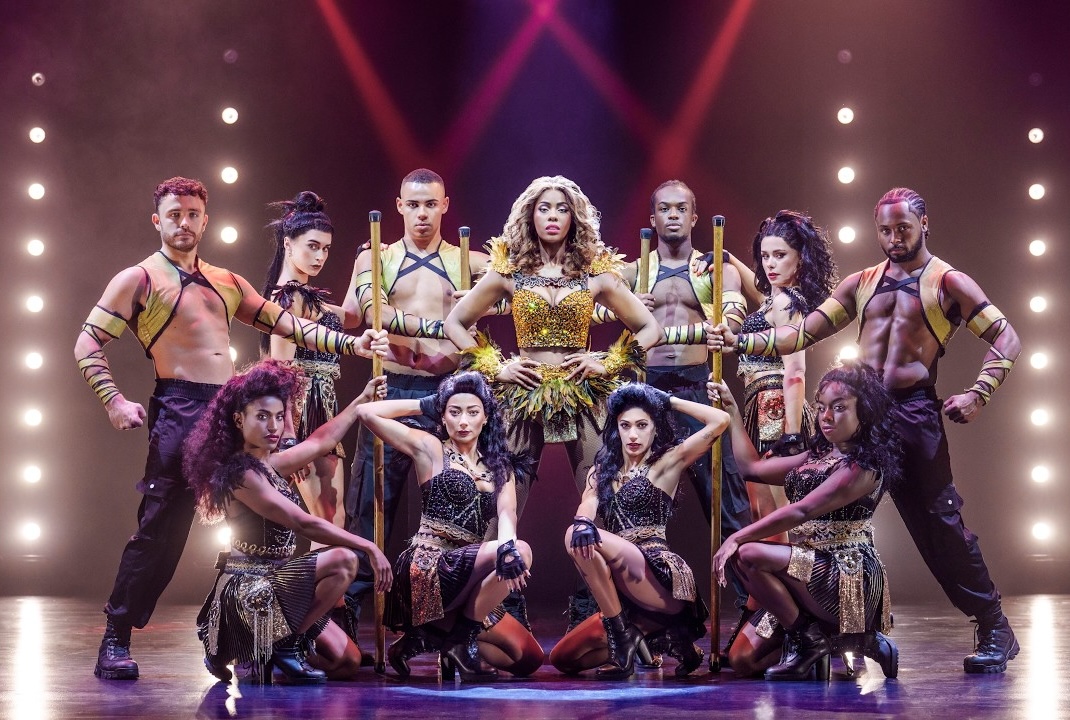
The big musical numbers in The Bodyguard are performed concert style, complete with a cast of brilliant supporting dancers , Karen Bruce’s choreography is sharp the costumes eye-catching and sparkly.
The Bodyguard is set in the 90s, and now on its fourth major UK tour in ten years. It hs probably run its course. Without the star quality of Alexandr Burke to carry it, the story, not the music, struggled. Burke is now starring as Chaka Khan in a new musical which is where the charabanc will probably move to. I will not be seeing this show again.
This was my second gig of the tour. I approached it with trepidation. The first one at Birmingham Symphony Hall ten days previously was dreadful . The sound was awful, as was the mix. Charlie Sexton’s guitar was barely discernible the set list was clunky, Elvis was uncommunicative. I regretted spending another £110.
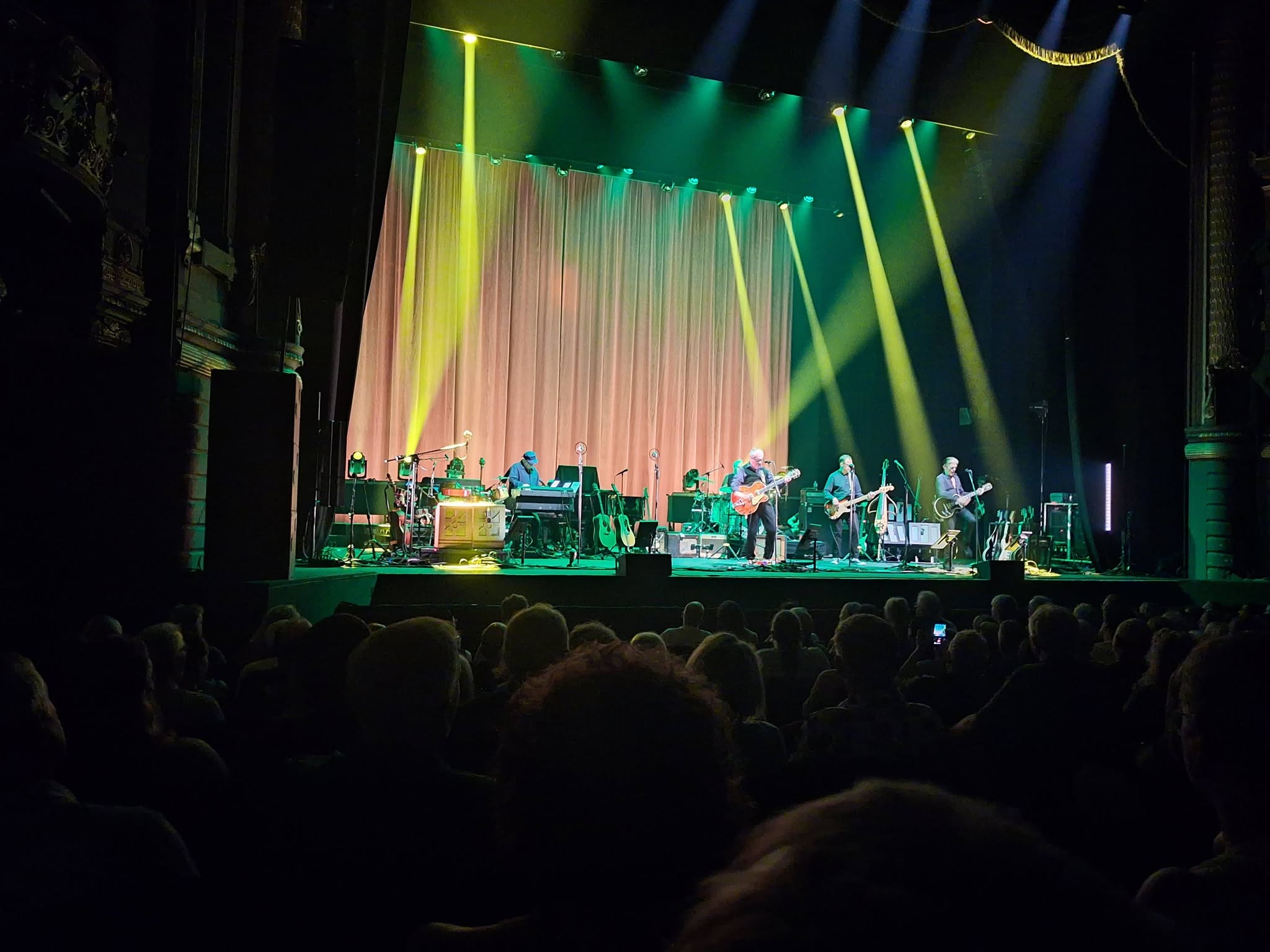
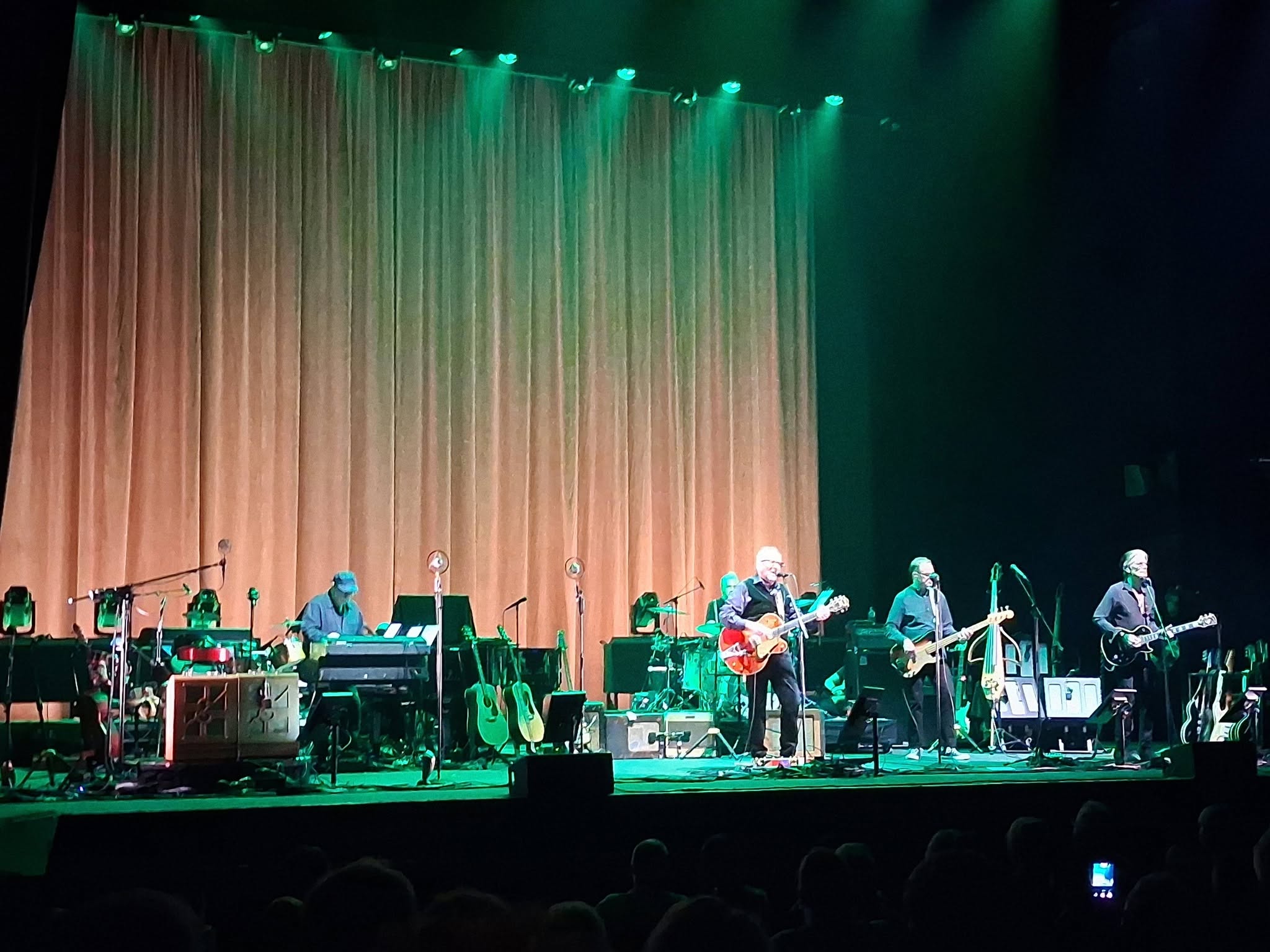
But hey, live music! Elvis bounced onto the stage with a cheery greeting, the sound was perfect, the vibe positive and two hour and ten minutes later he left to deserved rousing applause, delivering a reworked set with enthusiasm and aplomb.
Sexton’s guitar shone, Nieve’s keyboards sparkled and you could distinguish between the bass guitar and bass drum
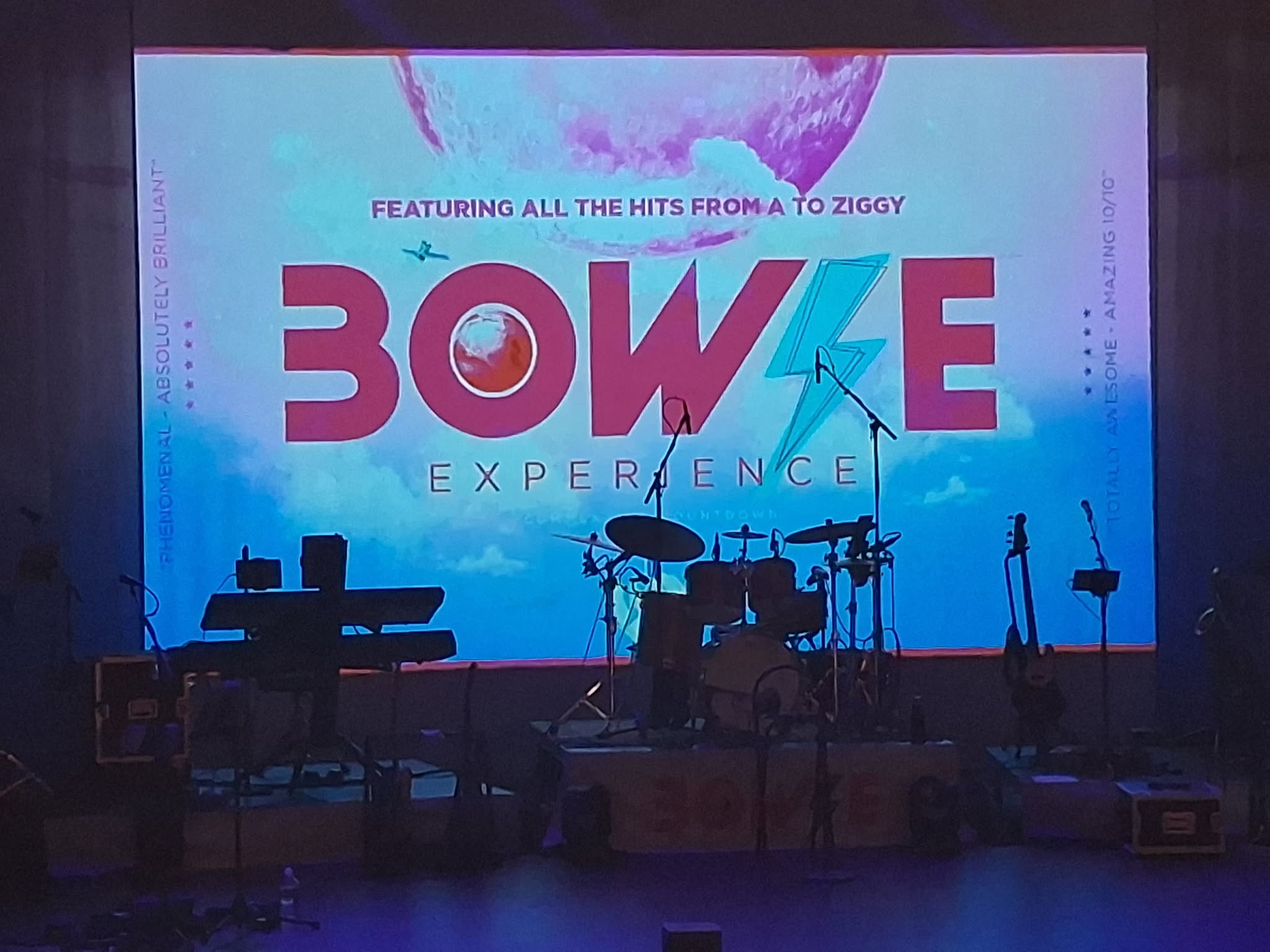
This was the third time I has seen Bowie Experience, this night also clashing with the England V Norway World Cup quarter final clash precipitating a 10pm sharp finish.
Confusingly the band’s name still intentionally clashes with that of The Bowie Experience a band fronted by Laurence Knight whom I have also seen. Essentially the former outfit is the original band minus Knight, the latter a different band with him.
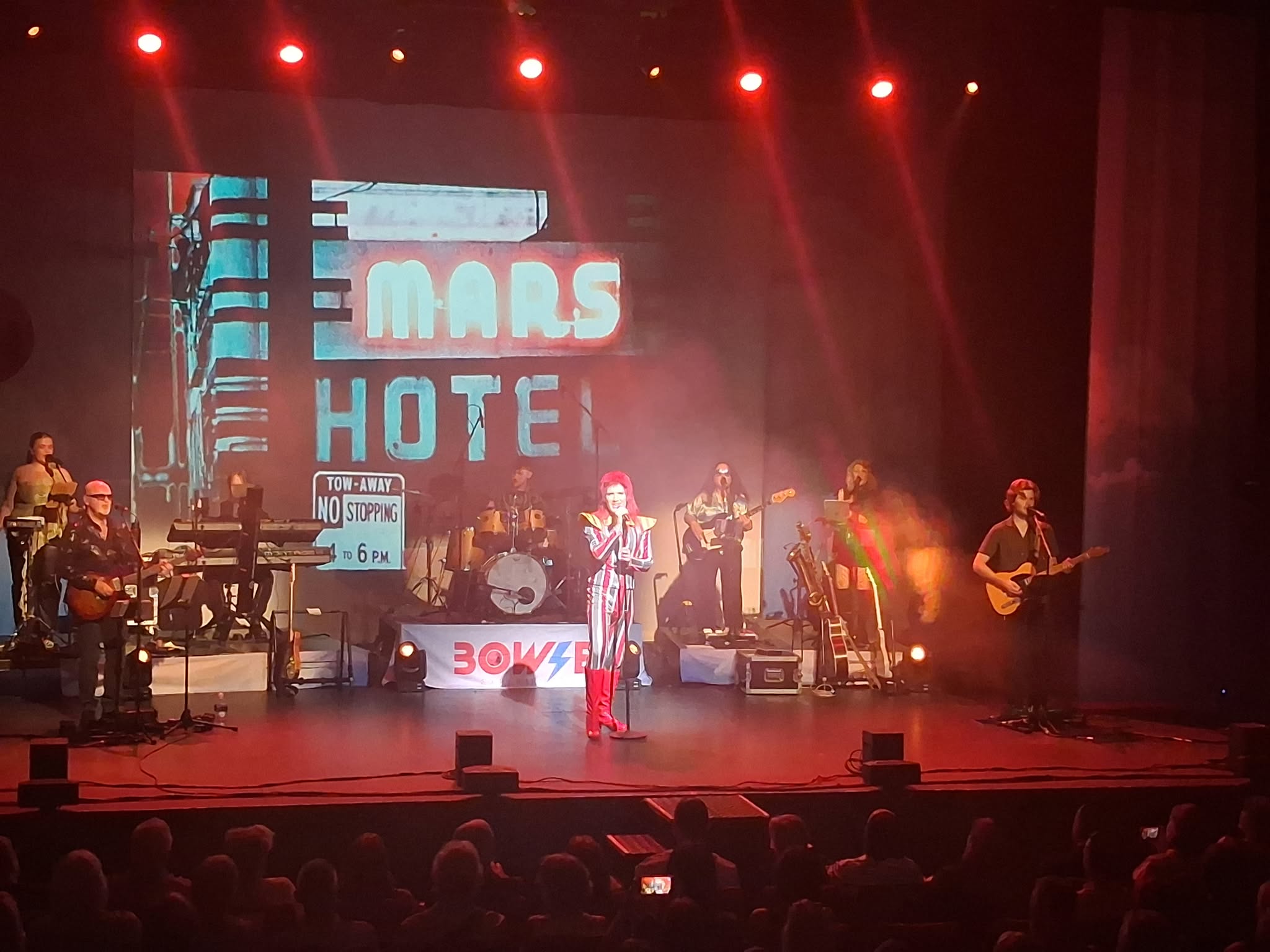
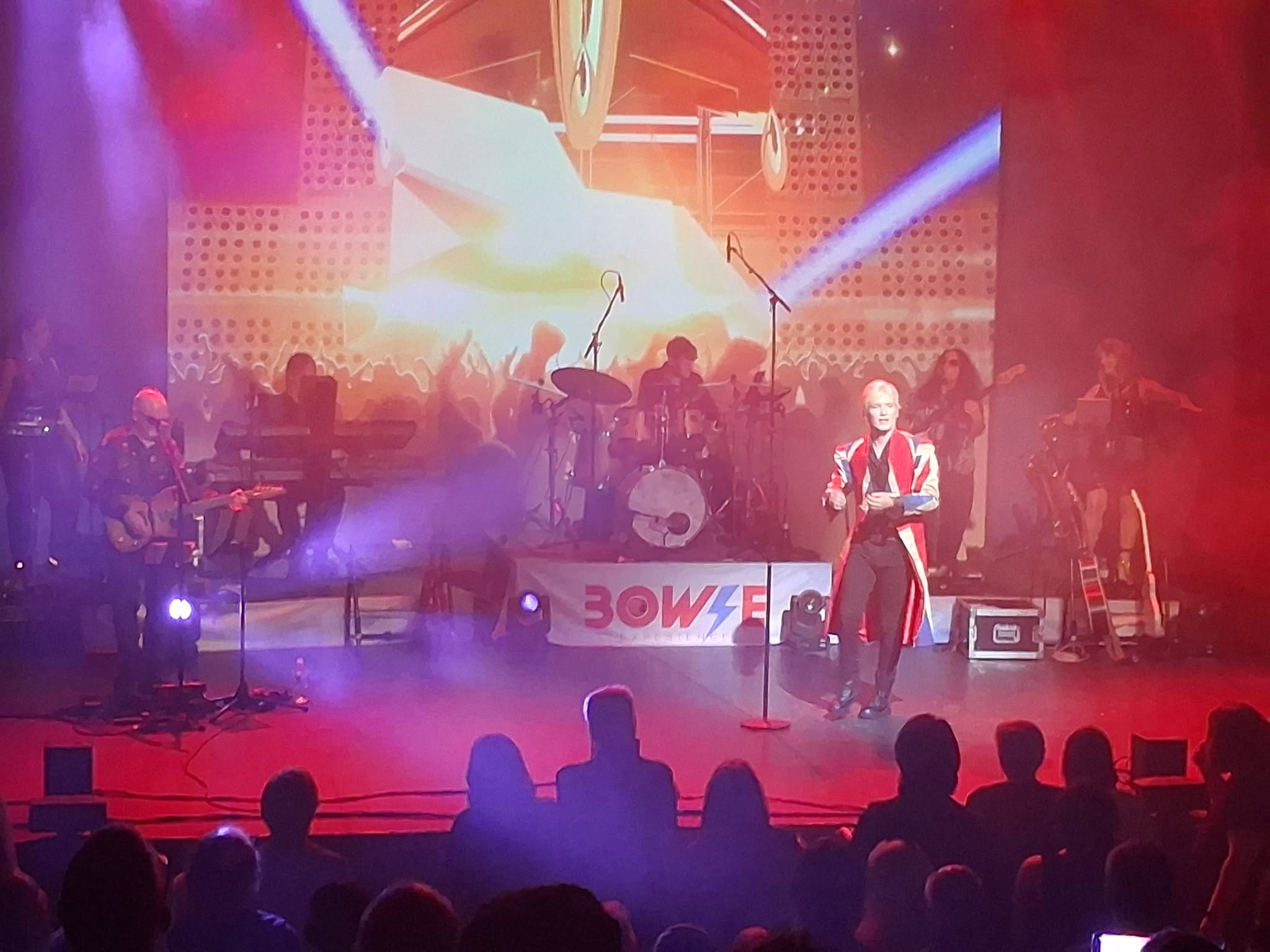
Bowie Experience has now existed for five years with Knight’s replacement- Oliver Slee. He is at pains to point out that the show is attribute to Bowie’s music, not an impersonation, that is just as well. Oliver’s Ziggy Era red wig makes him look like Janet Street Porter, the post Aladdin sane blond wig likening him to Adam Rickets
This show I enjoyed least of the three I have seen. Slee enjoyins a similar lean physique and as Bowie. Has a repertoire of David’s moves , but is not as a good a singer, a shortcoming most notable exposed on “Life on Mars?”
A video back wall has images which are either cliched or random projected onto it.
“Space Oddity” opened well for the first half featuring Bowie’s older material , a set I found more satisfying than the second. Tthe eight piece ( Slee on vocals and occasional guitar), lead and rhythm guitar, keyboards, bass, drums and two backing singers one of whom plays saxophone, the other a multi instrumentalist make a pretty hefty sound in their own right.
Although I loved the older material, as did the veteran cognoscenti, the eighties hits era fans were noticeably subdued.
The Man Who Sold the World was imaginatively rearranged featuring an exquisite sax solo from Sarah who should have been given more time out front, particularly during “Sorrow”, Suffragette City was surprisingly insipid, “Life on Mars” missed a powerful enough orchestration and suffered from a weak vocal
First half
Space Oddity
Queen Bitch
Changes
Sorrow
Ziggy
Moonage daydream
Man Who Sold the World
John I’m Only dancing
FIve years
Rock n Roll Suicide
Jean Genie
Suffragette City
Life on Mars?
Second Half
Rebel rebel
Station to Station
TVC15
Golden Years
Young Americans
Sound n vision
Boys keep Swinging
Ashes to Ashes
Fashion
Lets Dance
China girl
Blue Jean
Under Pressure
Absolute Beginners
Heroes
All the Young Dudes
For the second half, Rebel rebel was a great opener, but I found the newer material less satisfying. TVC15 is a great live number , “Boys keep Swinging” and Blue jean were awful. china Girl as a pop song i hate.The home straight of Heroes and “Dudes” was euphoric stuff with the crowd baying for more . The crows loved it, the second half, more than the first..
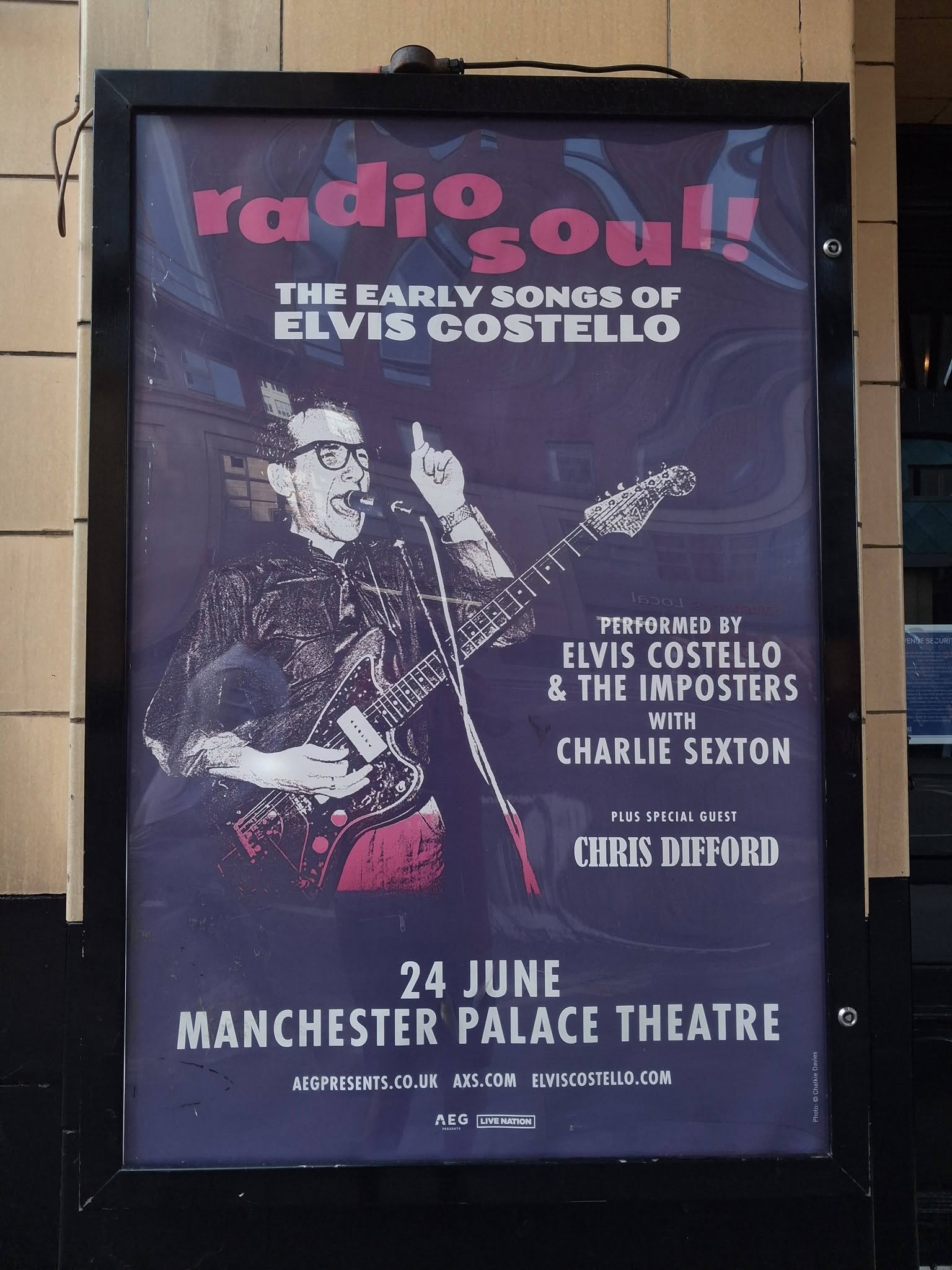
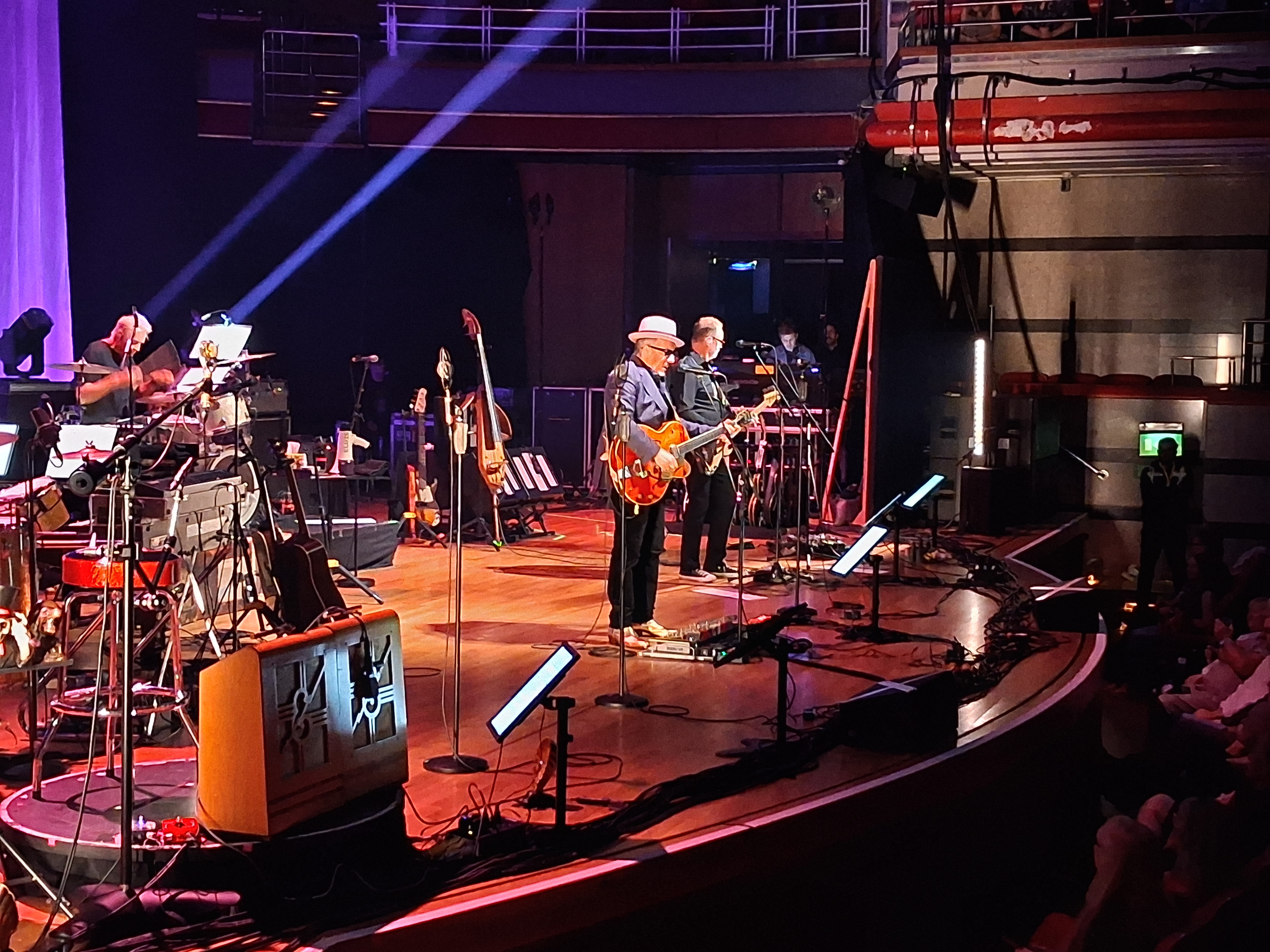
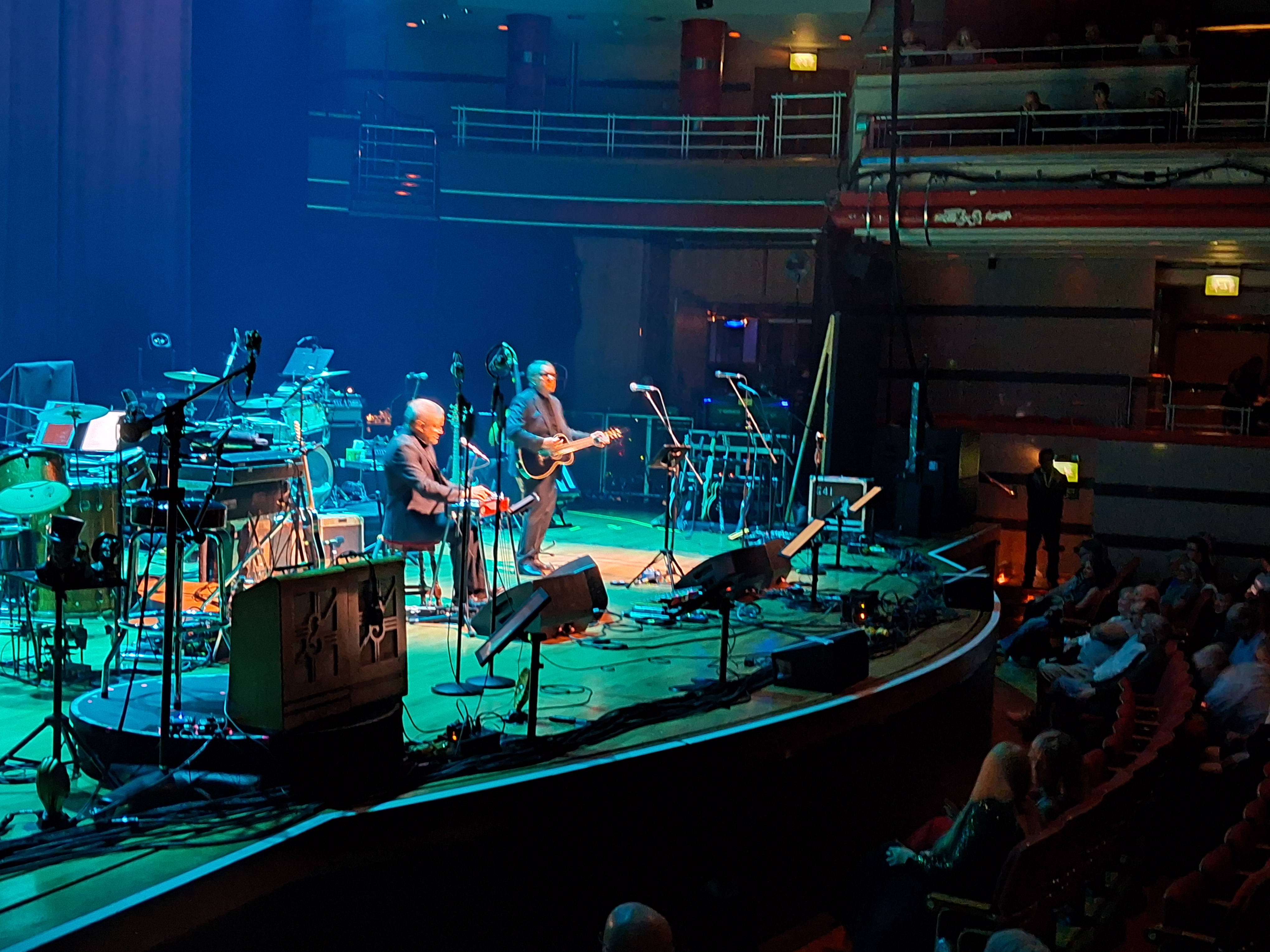
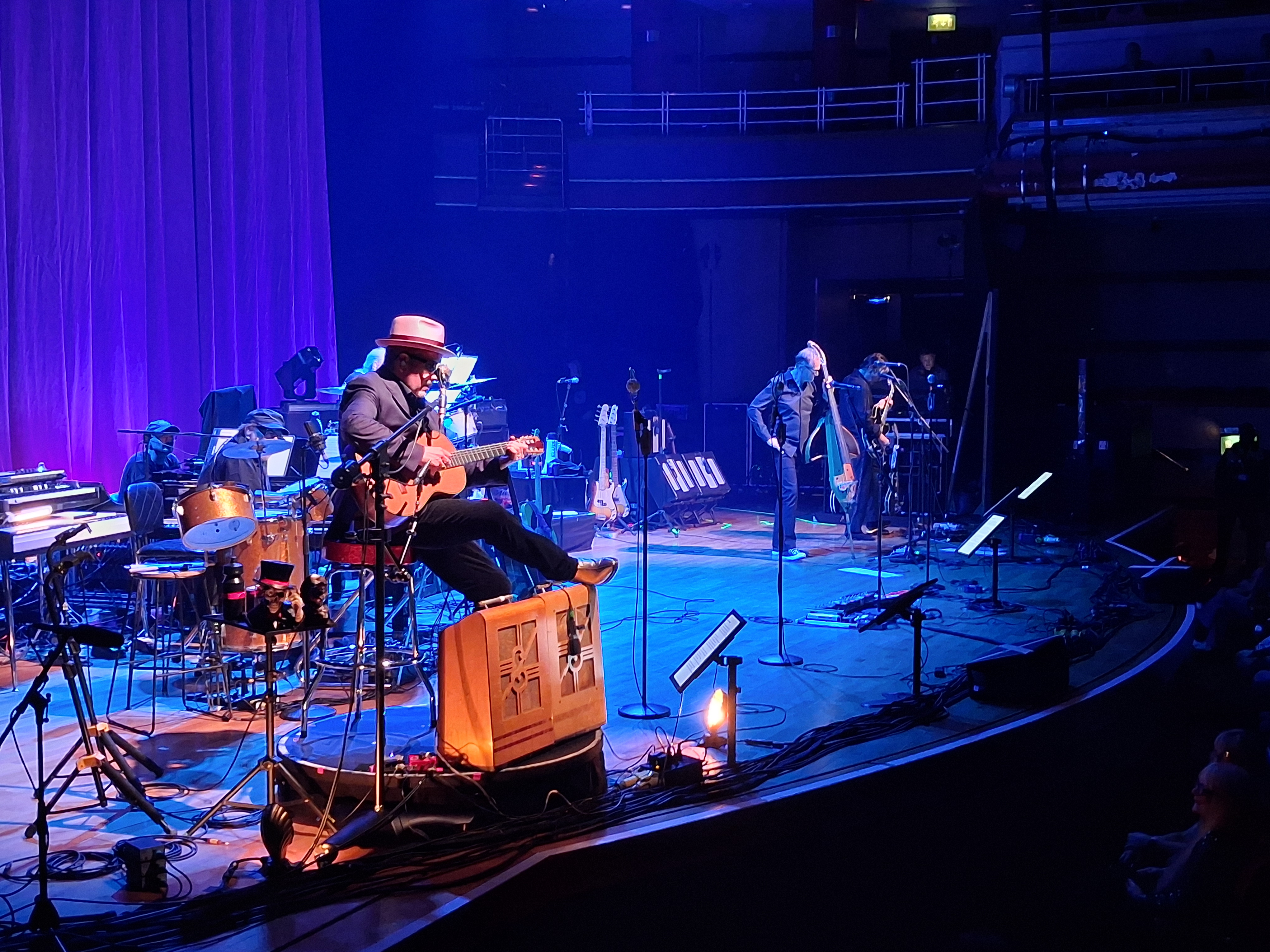
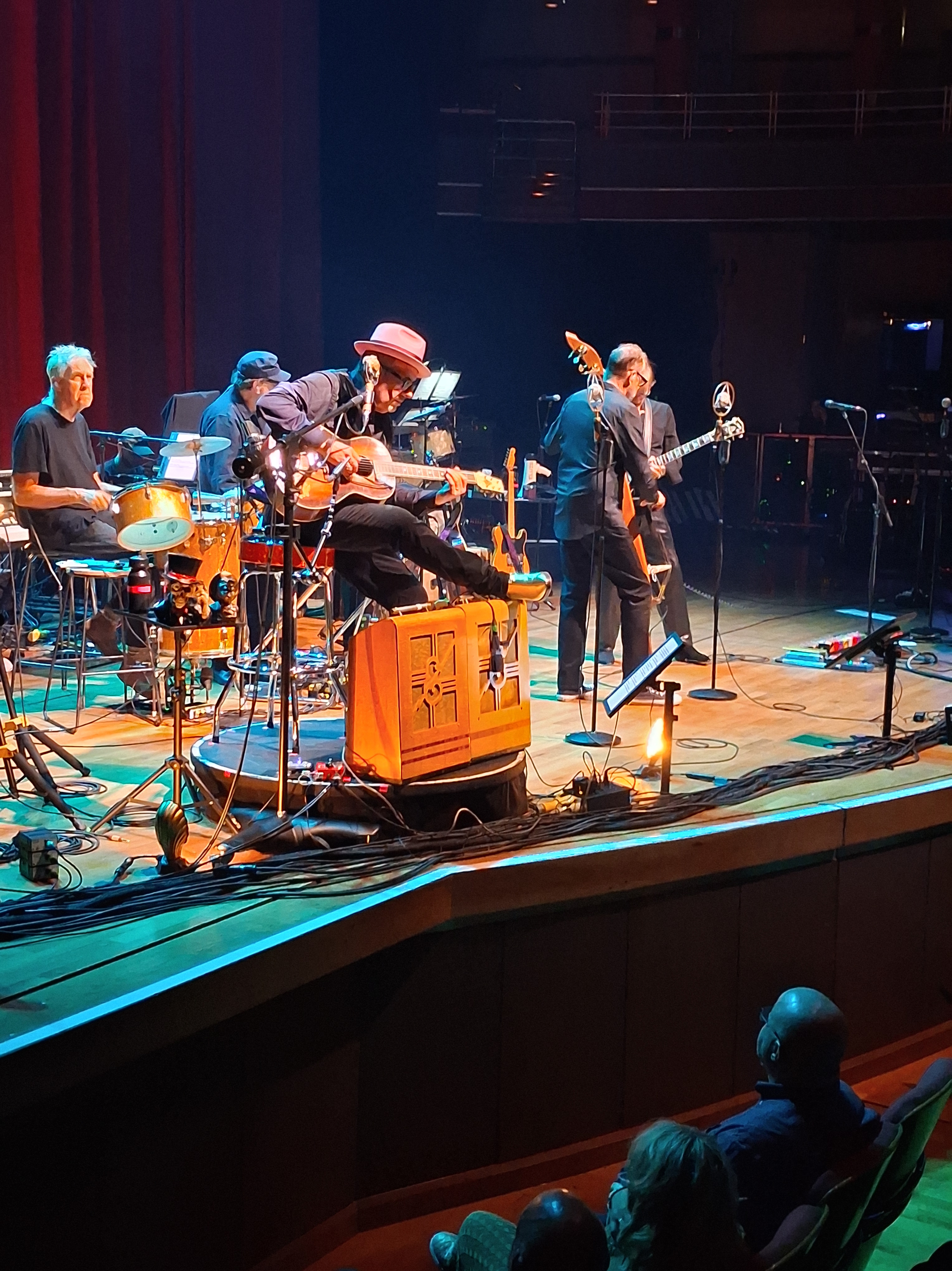
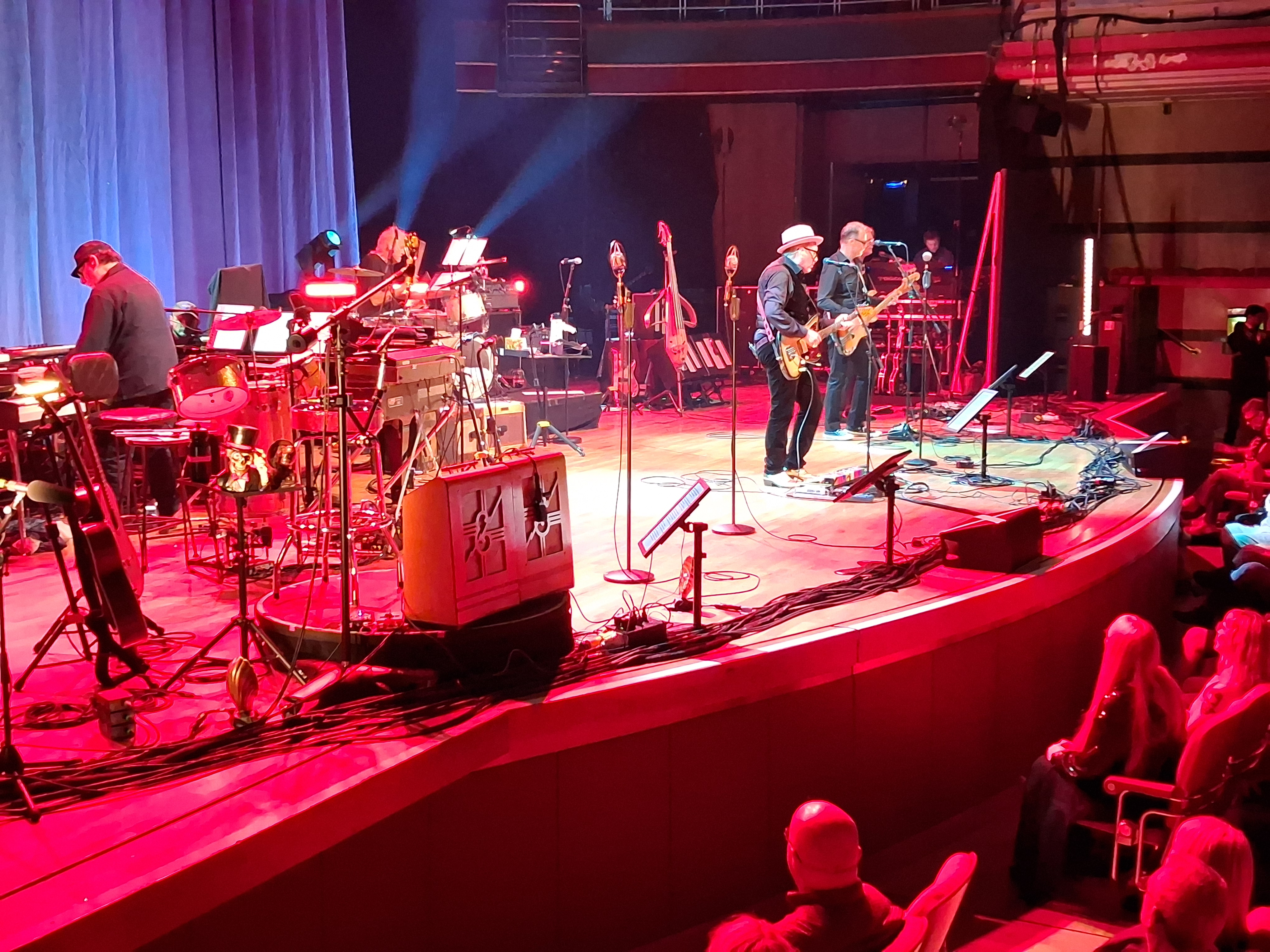
A full band concert after several solo excursions with material drawn from the early years. Elvis pretty much defines the phrase “musically prolific” embracing different styles, formats and genres at a whim.
I first saw him 49 years ago as part of the Bunch of Stiffs tour ( Elvis is a stiff!- ho ho ho), so I predate Steve Nïeve and Pete Thomas
When Elvis broke he was competing with emerging British singer songwriters Graham Parker and Joe Jackson. Both formidably talented. But it was Elvis who endured, not least because he wrote more good songs than anyone else
Opening the night was an hour long set of eight Squeeze songs and anecdotes from Chris Difford. He was very good and won a standing ovation at the end- a rarity for a support act.
Take Me I’m Yours
Pulling Mussels (From the Shell)
Up the Junction
Is That Love
Tempted
Cowboys Are My Weakness
Labelled With Love
Cool for Cats
A healthy looking and vibrant elvis then delivered a nuanced 100 minute set, albeit beset by sound problems
This Year’s Girl
Mystery Dance
Watching the Detectives
Little Triggers
Clubland
Beyond Belief
Watch Your Step
(EC solo, announced as a prototype for AWH, from which he later took lines when writing AWH.)
Accidents Will Happen
Opportunity
Lovers Walk
Hamburg (A Postcard)
Almost Blue / All or Nothing at All
Who Will the Next Fool Be
Lovable
Heathen Town
Brilliant Mistake
Honey, Are You Straight or Are You Blind?
The Angels Wanna Wear My) Red Shoes
Everyday I Write the Book
Less Than Zero
Shipbuilding
Oliver’s Army
Alison
No Dancing
Pump It Up
(What’s So Funny ‘Bout) Peace, Love and Understanding
It was a performance that divided opinion. The set list was excellent, the sound was often awful. Some allege that this was deliberate, in order to mask Elvis’s faltering vocal abilities. However on “Shipbuilding”, “Watch Your Step”, “Oliver’s Army” and “Opportunity” he sounded fine. Steve’s piano and keyboard were too low in the mix, Auxiliary guitarist Charlie Sexton seemed to be doubling up on Elvis’s guitar parts. Drummer Pete Thomas looked ill as did Steve, but his drum opening for “This Years Girl” was incendiary.
A reworked Clubland was superb, a reworked “Detectives” was a mess. “Everyday I write the book” was unrecognisable. I loved the new “Oliver’s Army” I could have done without “Alison” and “pump it up”.
I am off to see him in Manchester in ten days,. His set lists constantly change, his performances have always been mercurial. Cant wait.
On Monday evening, legendary electronic outfit Kraftwerk arrived in Nottingham as part of their first UK tour since 2017, their last gig being also at the same venue some nine years ago. Before that their only previous appearance in the City was at the adjacent Rock City, in 1981, forty five years ago
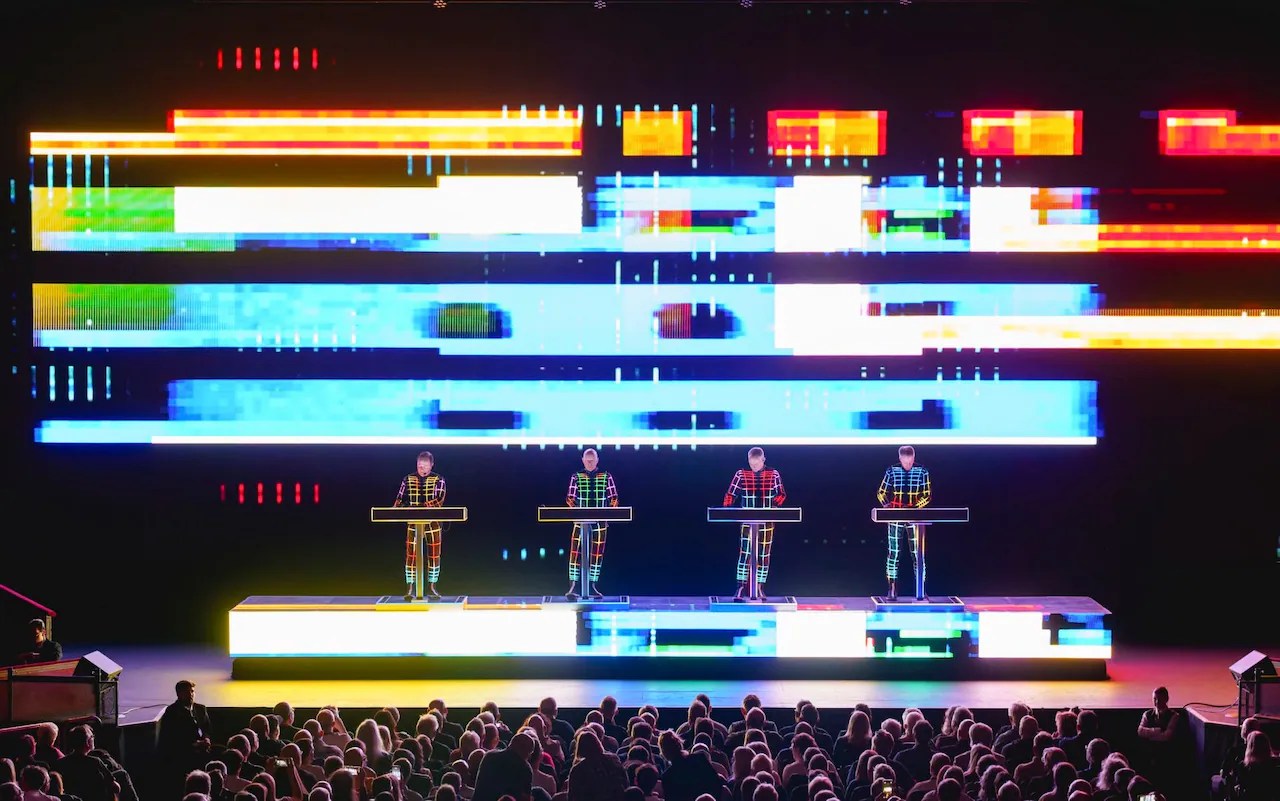
A capacity crowd awaited this rare visit, one which is likely to be their last for the legendary electronic pioneers, influencers for electronica ever since, not least the Human League. This Multimedia tour offers stunning graphics and a familiar crowd pleasing romp through their back catalogue
So many of the band’s tracks have become much celebrated not only for Kraftwerk’s original renditions but also for their sampled use elsewhere in modern music.Tthe main synthesiser motif from the band’s Computer Love track was used by indie-rock titans Coldplay on their single Talk,Whilst Trans Europe Express was sampled by Afrika Bambaataa in their unmistakable hip-hop floor filler, Planet Rock. Both featured in the band’s two-hour career-spanning setlist.
Kraftwerk’s signature use of visuals helped t provided a stunning setting for the musid.of the four members of the group stood static in illuminated boiler suits behind their consoles throughout the course of the show. the sound in this purpose built concert hall was faultless.
Starting with opening tracks Numbers and Computer World, Kraftwerk walked the strong crowd down memory lane, thanks to staples from their discography such as The Model, Autobahn, Radioactive, Tour De France, Trans Europe Express, Music Non Stop and encore closer Robots.
The band even gave a nod to the East Midlands as visuals of Nottingham featured on screen during Space Lab.
Witty onstage badinage was at a premium, except for a moment from only remaining original band member Ralf Hutter to discuss Kraftwerk’s collaboration with Japanese musician Ryuichi Sakamoto- the exquisite “Merry Christmas Mr lawrence.”The band, currently made up of founder Ralf Hütter, Henning Schmitz, Falk Grieffenhagen and Fritz Hilpert were otherwise silent and taciturn
At the end of the show, each member of the group exited ceremoniously one by one by way of finale-Leaving only Hütter to bid his farewells, by way of “Gute Nacht, Auf Weidersehen.”
Enjoying the soubriquet ‘Greatest British Sitcom of All Time’ (Radio Times), Fawlty Towers is back is back – this time on stage! 50 years since it first graced our TV screens, it morphs into a brand-new stage play adapted by comedy legend John Cleese, who wrote and starred in the original as Basil Fawlty and directed by Caroline Jay Ranger.
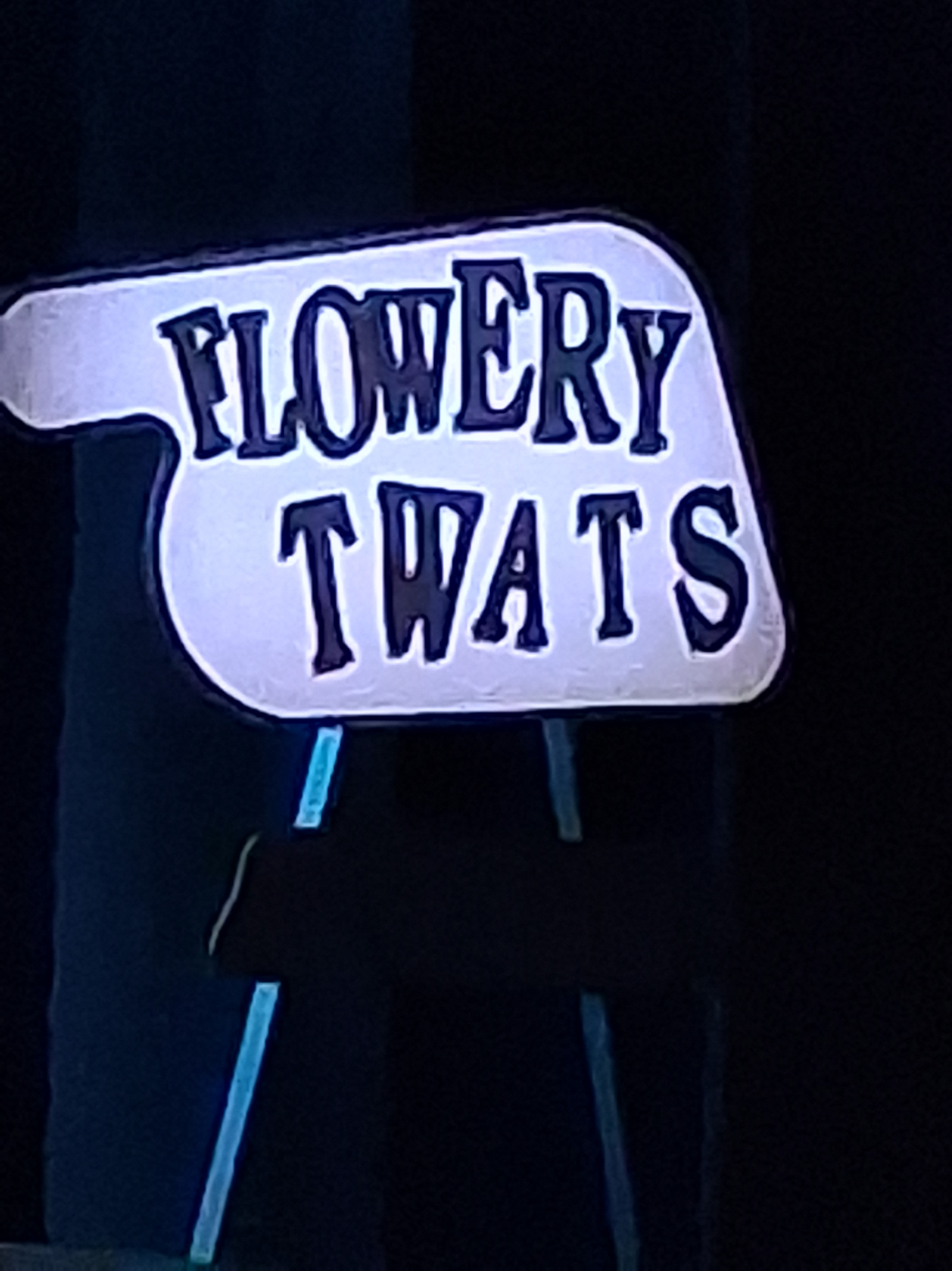
It is a greatest hits mash up of the best bits of the show but with many segments presented in their entirety. As was traditional, at the interval the hotel sign was rearranged. Inevitably gems from the series were truncated or culled in their entirety, most notably the Rat episode. Manuel’s naming of the rat as Basil and declaring “ees not rat is hamster” lives in in our memoriesif not in this production.
Basil (Danny Bayne) is still raging at the world as part of a large 18 strong cast ably assisted by the ensemble.,with sharp wit, chaos, and calamity abound! Polly (Joanne Clifton), is a delight, Mia Austenhas a lot of fun as Sybil the dragon. Paul Nichols is unrecognisable and outstanding as the bumbling Major. The cast on stage aren’t simply doing impressions of their screen predecessors they give them a new identity- the show is all the better for it.
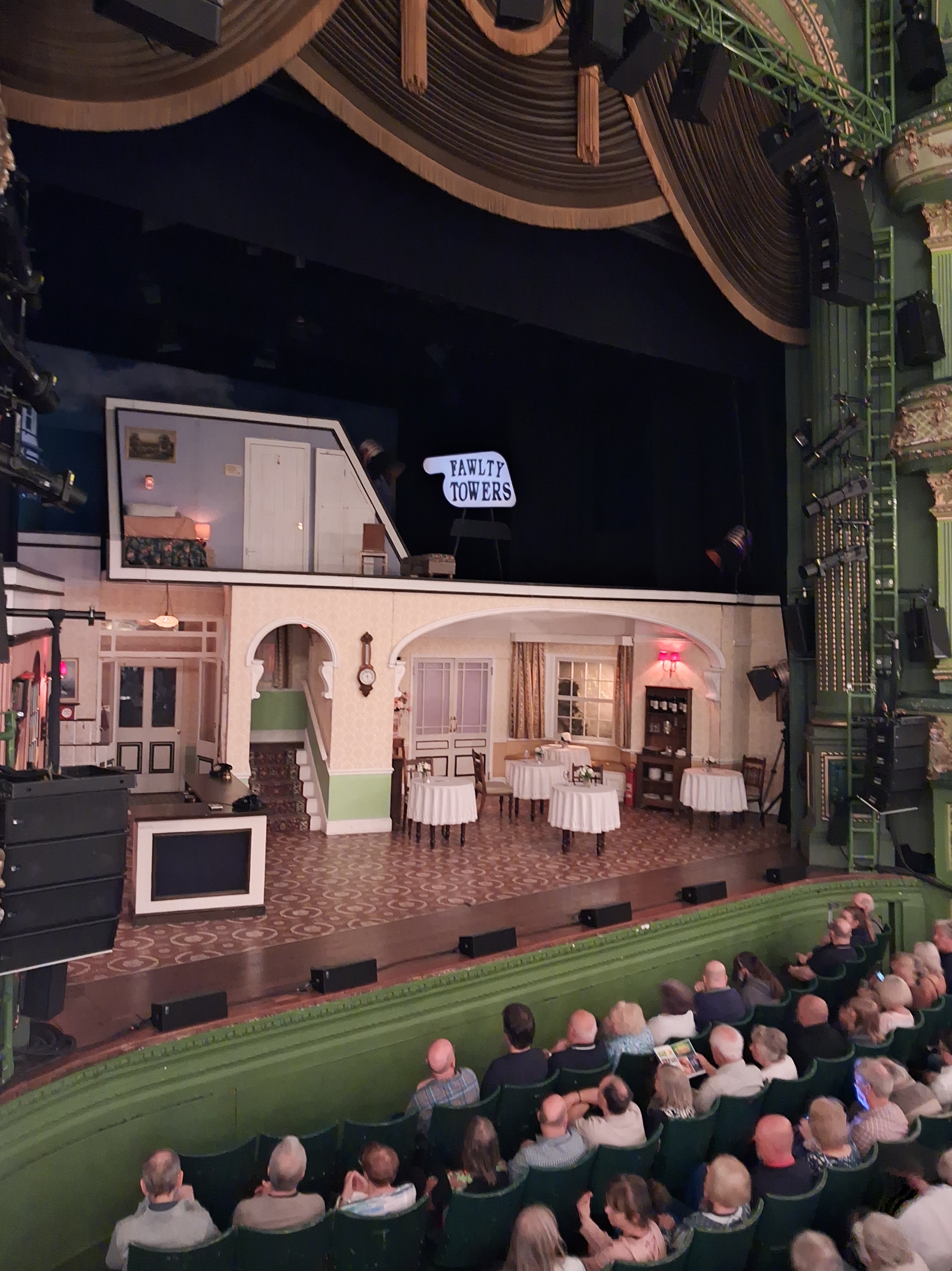
The split level set, designed by Liz Ascroft, is painfully accurate and took me back to 1970s seaside family holidays. Its multi room design is fully exploited for the glorious fire drill finale- the upper level less so.
The packed matinee performance on a Thursday afternoon bears testament to the Series’ enduring popularity. The audience was staunchly aficionados , the cognoscenti scrutinising every word, and every element- the show was not found wanting and drew rousing warm applause at its finale.
The German’s scene is of its time, and Basil’s casual misogyny would have Jess Phillips apoplectic- but Basil wouldn’t care- and nether did the audience.
Intriguingly, despite its one hour 40 minute show time there was enough left out- for an entirely new reworked show. Here’s hoping!
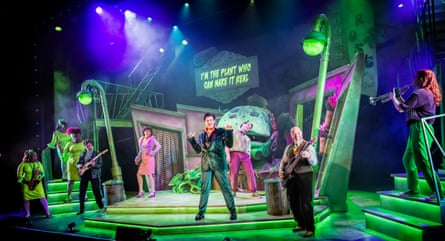
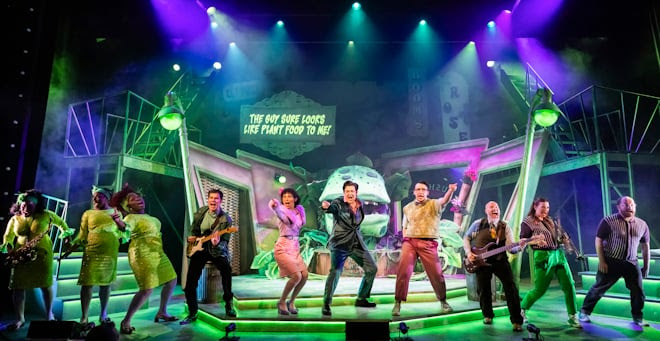
Any revival of this 1982 ( and 1960) cult classic has two alternatives, to reimagine and embrace the absurdist original source material , or go 2026 digital. This production takes option one with an innovative exception- the use of onstage creative captions.
–
It is the tale of how a mysterious shrub turns around the fortunes of Seymour, a hopeless florist in love with Audrey. Like the shrub- this show grows on you.
–
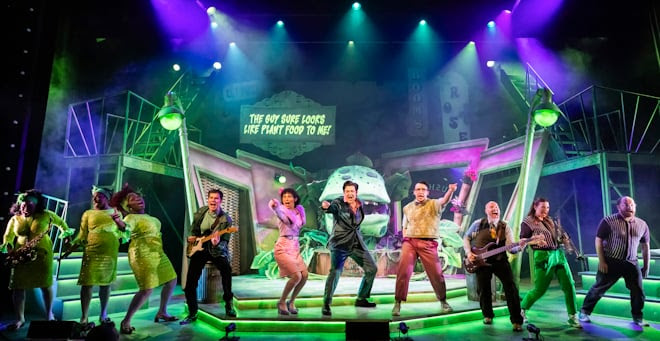
Where it is pioneering , is in its use of creative captions – still a rarity in UK theatre. Caption designer Ben Glover incorporates them into the fabric of the show, making this staging accessible and good fun too, with chunky, horror movie-style lettering and cartoonish speech bubbles popping up on screens behind the action.
–
The star of the show is Audrey II – the carnivorous plant that grows from a bud into a monstrosity. Here, the role is split in two, with Tasha Dowd providing soulful vocals from off stage and Ross Lennon acting as puppeteer, manoeuvring Audrey II’s increasingly bulbous foam head from within.
–
Elsewhere, a cast of actor-musicians lend broad New York accents to the doo-wop and rock’n’roll favourites, including Skid Row (Downtown) and Feed Me (Git It)
–
The show’s origins are awash with illustrious associations. David Geffen was one of the original producers of the off-Broadway show and he began planning to produce a feature film adaptation. Originally Steven Spielberg was attached to serve as an executive producer with Martin Scorsese attached to direct the film John Landis was also attached to the project for a time. Music producer and Four Seasons member Bob Gaudio adapted and produced the musical’s songs for the film.
–
Director Sarah Brigham cannot be accused of a lack of ambition. Brigham loves utilising actor/ musicians and these are used to the fore with veteran Ivan Stott to the fore. She delivers her own revival first ,in advance of next year’s new production of the show from Oxford/ Leeds playhouse.
–
Vocals are consistently impressive throughout,“Suddenly Seymour”, stands out as a highlight and opens Act Two strongly.
–
The success of the puppetry is pivotal, and Audrey II is realised brilliantly. Tasha Dowo supplies powerhouse vocals while Ross Lennon gives the creature genuine menace through expert puppetry. The puppet itself, growing steadily throughout the production, is top-class, and by the final moments genuinely feels capable of taking over the world.
–
Forty years on from the 1986 film adaptation of Little Shop Of Horrors – catapulting it from its earlier cinematic and stage iterations to Hollywood legend – this production delights audiences just as much as it did four decades ago.
–
Under Sarah Brigham’s direction, the carefully illuminated and smoke-filled stage is set for the monstrous version of this tale as old as time – the man who wanted more at any cost. Vibrant colours abound with glowing greens, vibrant purples and pinks, and angry reds fir a show that borders on the noir.
–
Amena El-Kindy brings a fiery depth to the tragic Audrey and arrests with her incredible vocals, while Jon Bonner’s Mr Mushnik adds a warmth while simultaneously skirting around caricature with his dynamic performance. The dulcet tones of the production’s Audrey II, voiced brilliantly by Tasha Dowd, meld beautifully with the plant.
–
David Rankine is superb as the sadistic Orin Scrivello Rankine camp and outrageous.
–
Alongside playing the iconic evil dentist to perfection, Rankine seamlessly transforms into several supporting characters, from the comically noir-coded Bernstein to the lascivious editor’s wife and the pushy Patrick Martin who is hellbent on the proliferation of little Audreys everywhere.
–
–
The music is glorious with Motown and blues-inspired instrumentals and vocals from Chiffon (Chioma Uma), Crystal (Shekinah McFarlane), and Ronette (Emmanuella Chede) as well as brass and strings from supporting musicians,
–
The show is pacy and brisk, and at two hours does its job, before bidding farewell
–
A great night out that is visually striking, tinged with darkness horror and campy thrills -tthe magic of theatre brought to life with puppets.
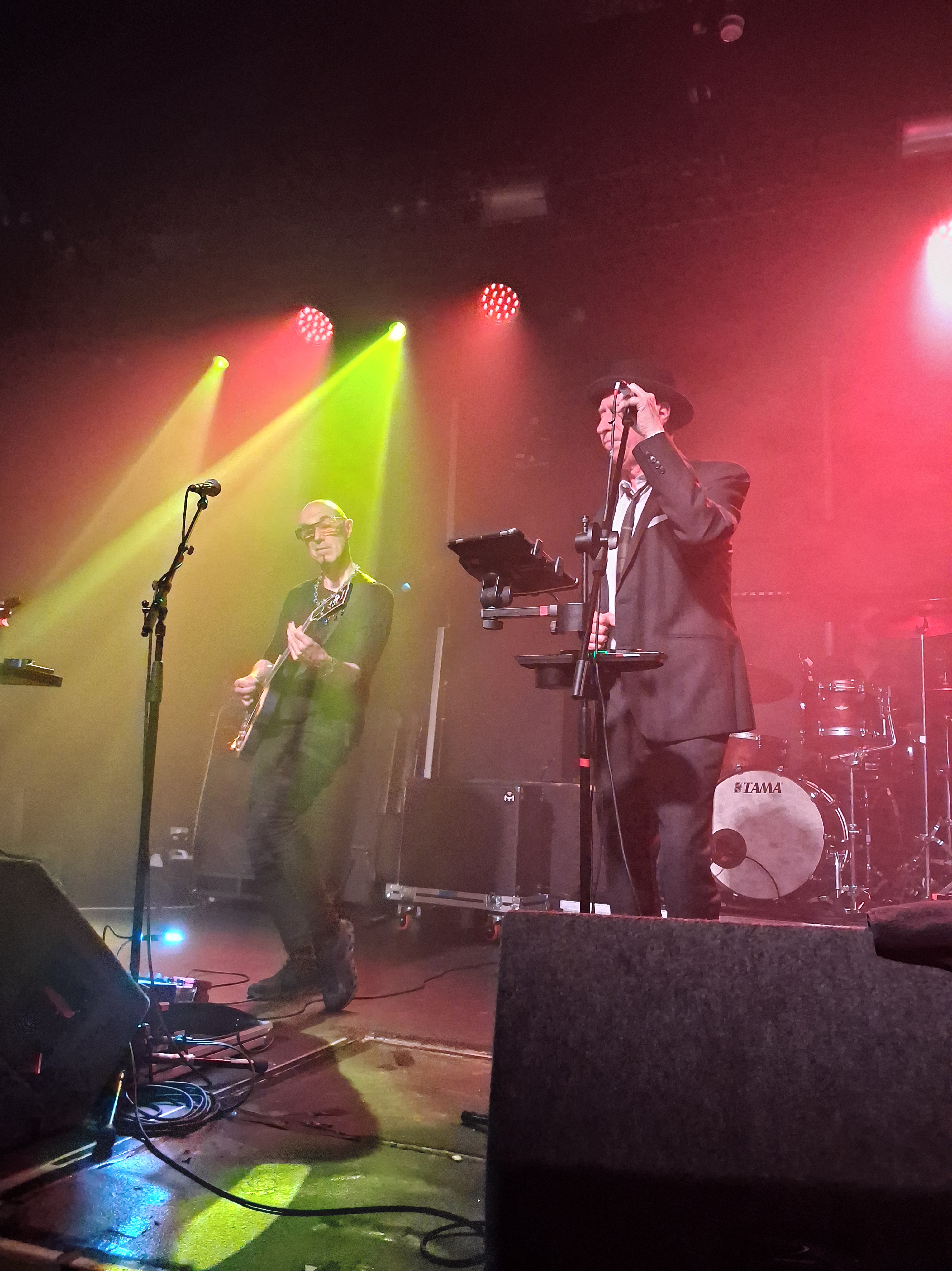
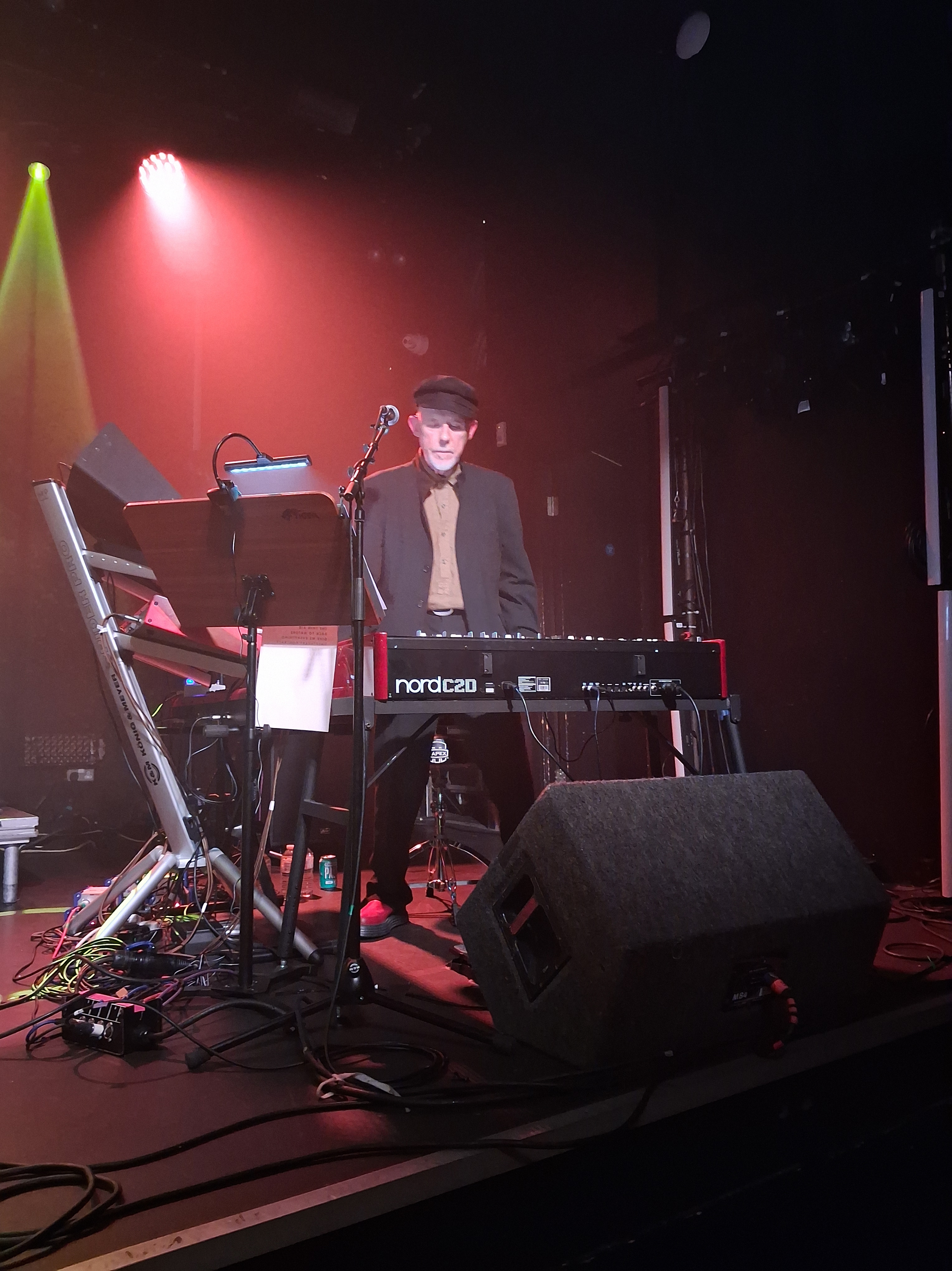
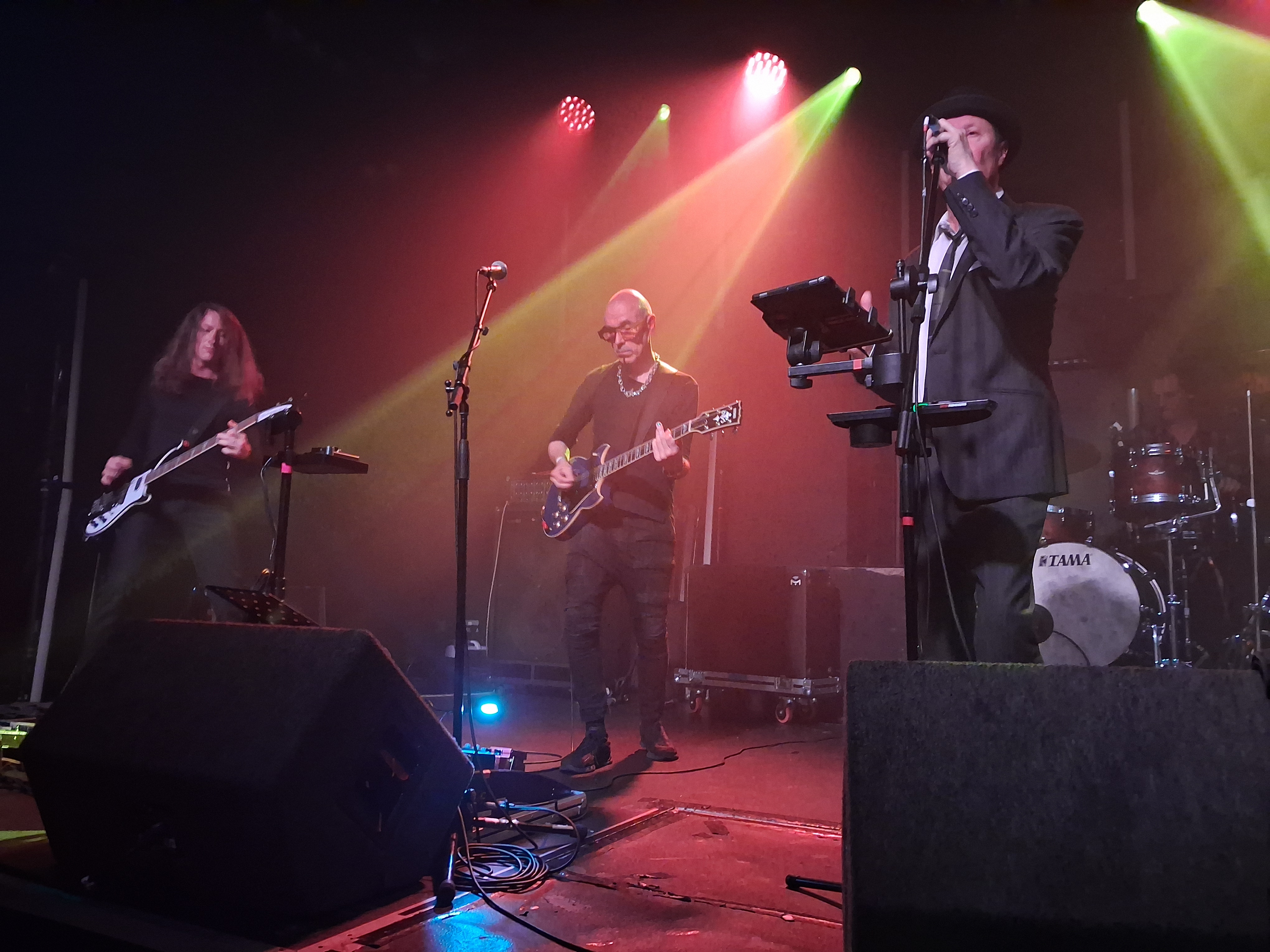
Dave Formula and Noko play Magazine- Rescue Rooms, Nottingham
For the die hard fans of the era. The original line up of the Magnificent magazine is now represented by only Dave Formula on keyboards. Bassist Barry Adamson is now a film soundtrack composer, guitarist McGeough is dead, drummer John Doyle is a graphic artist and frontman Howard Devoto now aged 74, “Just got tired”
Noko on guitar is a long time collaborator, but for this tour, Max, Formula’s son is on drums, Frenchman Peter is on vocals, his son Tim on bass. They are all terrific.
–
I regarded Magazine as being Punk Prog, with Dave Formula’s keyboards and intricate extended arrangements to the fore and so it was once again
–
The big surprise is Peterson on vocals. Could Devoto ever be replaced? Yes. Peterson has a certain gallic Je ne sais quoi and style which is perfect for the role. He pointed out when we were chatting post gig that Devoto frequently used French phrases and quotes anyway
–
The setlist is a meticulously constructed best of. I recall going round to my late friend Petes’ house as a teenager, and listening to Real Life, Secondhand daylight, and Songs from under the Floorboards, and it was just like being back at Pete’s hous forty eight years later .
–
“Now that I’m out of touch with anger- now I have nothing to live up to-I think we’ve been forced to our knees, but I cant tell”
“The border guards smile unconvincingly”
“Shadows flicker, sweet entrée, dancing like crazy mourners”
“I will drug you, and fuck you- on the permafrost”
Hearing these lines again was exquisite- Peter Petersen’s addition ;
“Garcon, l’addition sil vous plait” was genius.
The opening “Thin Air” was ethereal, “Back to nature” barnstorming, “Parade” probably the highlight and the one/two finish of Definitive gaze/ Shot by Both Sides” showstopping.
Thanks for the memories Dave and Noko , and for bringing this great music back to life again with such a great band.
The Thin Air
Back to Nature
Give Me Everything
Sweetheart Contract
Motorcade
The Great Beautician in the Sky
Feed the Enemy
Rhythm of Cruelty
Cut‐Out Shapes
Thank You (Falettinme Be Mice Elf Agin)
Model Worker
Permafrost
Parade
A Song From Under the Floorboards
the Light Pours Out of Me
Twenty Years Ago
Definitive Gaze
Shot by Both Sides
And to cap it all the band came out post gig to chat to the fans. Tim was needlessly anxious that the fans were tracking every bass note ( he didnt put one wrong) and Max, was rock steady on the drums. Dave was charming and generous with his time, Pete as engaging offstage as he was onstage
A production which seems omnipresent on the regional theatre circuit and one I have seen many times
–
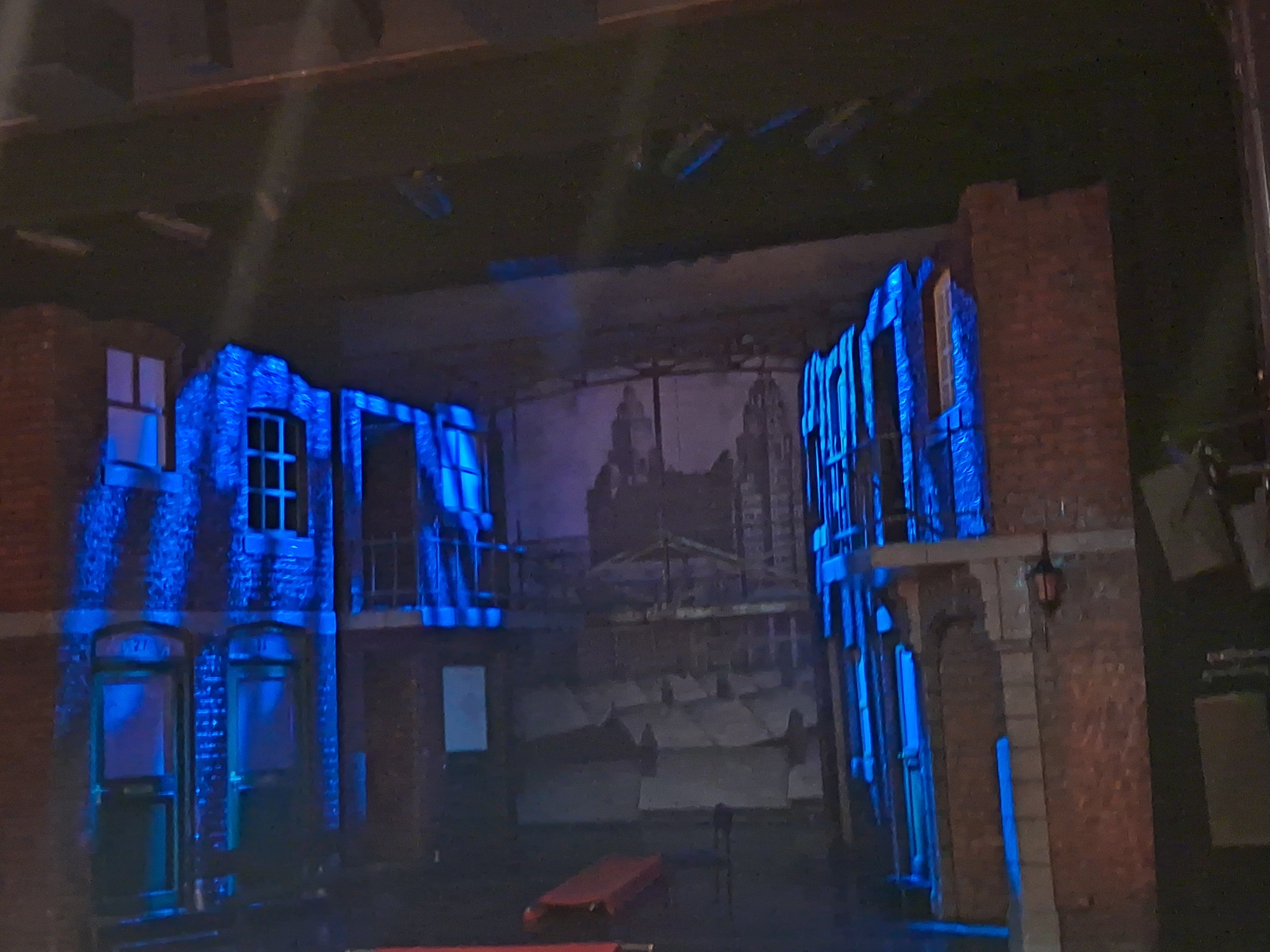
Willy Russell’s tale has endured for a reason. Superficially it is the tale of twin brothers separated at birth but raised in vastly different worlds within post-war Liverpool. One grows up in poverty and hardship, the other in comfort and privilege, with their lives repeatedly crossing as they grow older. A girl predictably coming between them. However underneath, the undercurrents of class, fate and family swirl and twist before colliding for a cataclysmic conclusion.
–
Blood Brothers has been performed for forty five years now. Over that time the familiarity of the audience with the narrative has given it greater weight. The inevitability of the denouement is inescapable in the finest tradition of Greek Tragedy from which the tradition of a narrator/chorus is borrowed.
–
Vivienne Carlyle excels as the pivotal Mrs Johnstone, combining beautiful vocals delivered with a nuanced dramatic performance alongside Kristofer Harding as the Narrator who is authoritative, brooding and menacing.
–
The ensemble assume multiple roles with Alex Harland and Graeme Kinniburgh working particularly hard. Nick Richings does a superb job with the lighting. Great lighting does everything from atmosphere – the suggestion of interior or exterior mood and time of day – to animation and heating up scenes with energy. Richings achieves all of these things, offering seamless punctuation: controlling tension and flow.
–
Fortunately, the Garrick is a modern, acoustically refined space, perfect for hearing Bright New Day, Marilyn Monroe and the curtain closing Tell Me It’s Not True. Musical Supervisor Matt Malone, and sound man Dan Samson deliver crispness and volume in perfect measure.
Blood Brothers continues until sat 23rd May then continues on nationwide tour. The so called “Standing Ovation Musical” lived up to its aim at the end from an enthusiastic Lichfield audience.