
In the morning I had been playing in the woods with pre school age grandchildren. I was booked into the hospital for the afternoon for a routine echo sound in response to a feeling of general malaise. An unremarkable day.
The nurse ran the echo sounder over my stomach- the same procedure as millions of pregnant women experience. Suddenly I was overcome by a sense of nausea and stomach cramps. I abruptly informed the nurse that I needed to visit the toilet and left the side room to find it.
The corridor floor felt cold and hard against my back. The ceiling lights were bright. As my vision focussed, I realised that I was surrounded by at least three nurses, two green garbed doctors and three casually dressed consultants. It was quite a crowd.
“oops, sorry about that, I’m feeling better now and want to go home” I imparted.
They smiled as if I had told a rather good joke. “You are coming with us into accident and emergency, now ” they replied.
You need an aortic valve replacement was the verdict
Glenfield Hospital had a specialist heart unit. The surgeon explained the procedure and the risks- 5% mortality risk on the table, 4% stroke risk. I would be dead in two years with decreasing interim health without the operation. The risks seemed to be dwarfed by the rewards.
The day before one of the surgical doctor theatre team came into see how I was. Could I sign the consent form? 10% mortality risk, 4% stroke risk. I could hardly bail out now.
The morning of the operation the anaesthetist came to see me.
“You do realise that there is a 20% mortality risk and a 4% stroke risk?”
Another form to sign- the anaesthetist is only interested in who dies on the table or not. I didn’t even ask about the stroke risk-all of a sudden I wanted to keep the mortality risk at 20%.
Thery had warned me that the operation could take seven hours and that they might put me in an induced coma. Heavily sedated I came to with a young female intensive care nurse asking how I was feeling. Frankly I had felt better. I asked for some water and rewarded her with vomiting all over her. She hasn’t been in touch since.
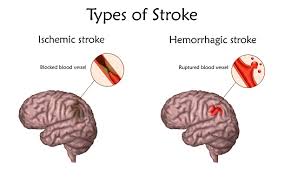
I tried to come to terms with my surroundings, to make sense of them, and the pain. Out of the ether the nurse intoned :“Gary, we think you are having a stroke”. This was news to me. “How can you tell?” a disembodied voice slurred in reply. Slowly I comprehended that the voice I could hear was mine.
On reflection, if you are going to have a stroke have it in an intensive care ward with your own personal nurse and a team of acute care doctors and consultants on hand.
The following day I woke up in a ward. I couldn’t speak and had no feeling or physical control on my left side nor could I swallow. I was totally unprepared. Hospital affords much time to think. The other recovering patients are gravely ill and have no time for witty badinage. The nurses have no time.
I took stock. My droopy dropped face was the least of my problems- I was not that good looking to start with. My speech was the biggest issue. My voice is my best bit. Getting around was then second- it was useful. Every waking second was then spent on those two things. It was a cold late winter. My covers had slipped off my left side. I was freezing. An auxiliary nurse breezed by.
“Excuse me, nurse could you pick up my covers for me?” I asked.
“Can’t you do it yourself?”
“No”.
I lost (and have still lost all sensation in my left torso, arms, hands, legs and feet) and could not, and cannot, distinguish between hot and cold, A distinct disadvantage when bathing. Compounded by the savage impact on my body of open heart surgery, I resolved to go home an announced my decision to a ward doctor. Strokes wreak havoc on our capacity to understand information, and make decisions.
The Doctor was female, tall and Afro Caribbean . She bore a remarkable resemblance to Tina Turner in the film “ Mad Max beyond Thunderdome”.
” You can, if you want to” she shrugged – “but you will die” before moving on with calculated nonchalance.
On balance I decided to give it a few more days.
The final test was the patient’s kitchen. A room designed to prove that I could pour boiling water for tea, and use a knife to butter toast. Easy.
After a week’s practice, and a month after the stroke, I was out.
 Garyswordz
I’m so pleased for you, Gary. Our family has nothing but praise for cardiac care at Glenfield hospital.
Thank you. It was a horrible time. This piece is an edited excerpt for an article I did for the stroke association