
***

An extraordinary one woman show featuring a table, a chair and Ruby Wax.
This is not her stand up comedy show, instead a stream of consciousness monologue about mental health in general, her mental health in particular with reflections upon all of our mental health. What appears on paper dour and down beat is energetic, vibrant and quixotic in her hands as she promotes her book: “I’m not as well as I thought I was”
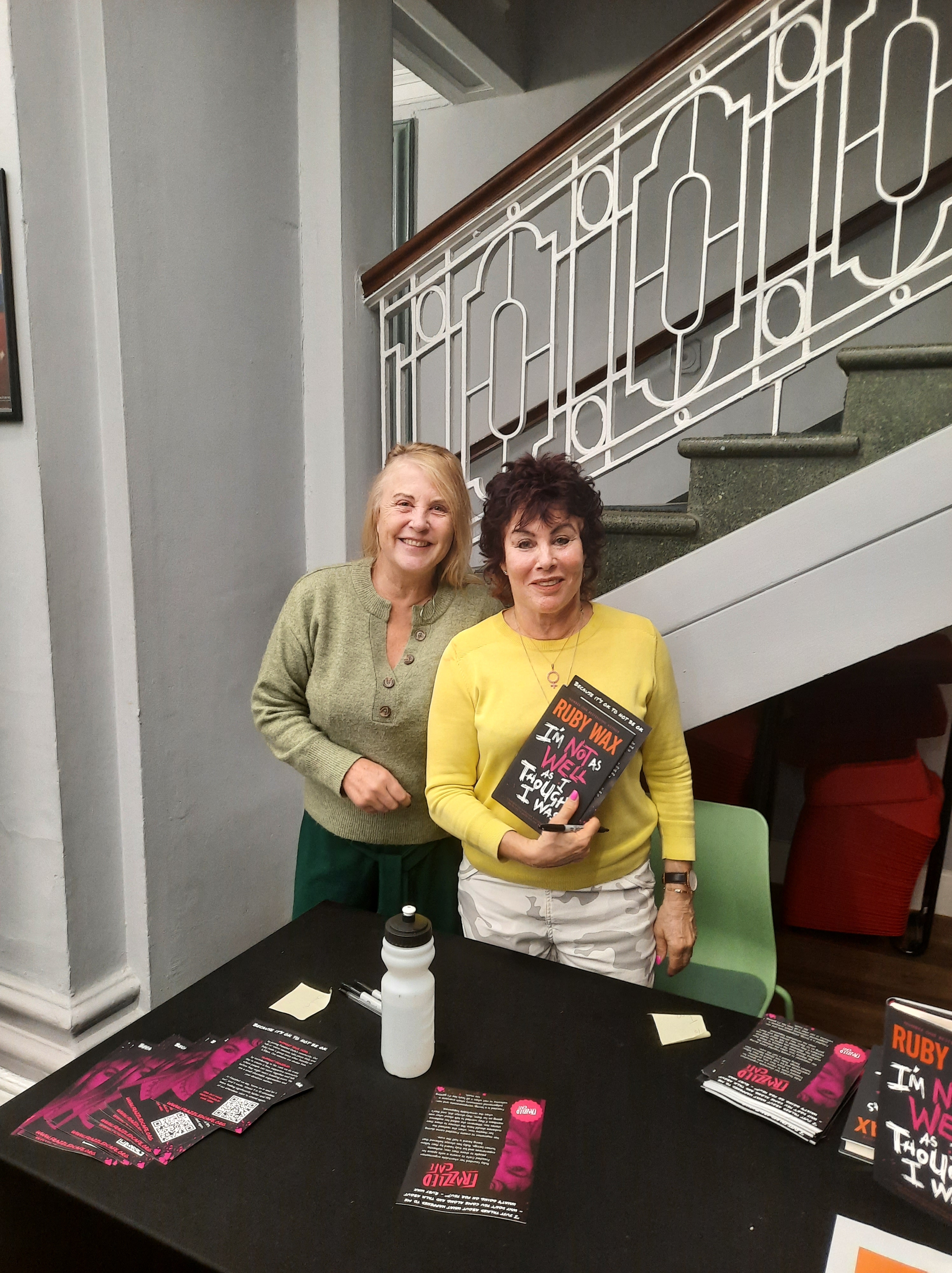
The highlight is unquestionably her trip whale watching with some reassuringly offbeat characters. she does meander and go off piste, but not i suspect, off script, whilst always commanding her audience and performance.

The show is short, about 45 minutes for the first half, and barely 30 minutes for the second, but perfectly formed. Afterwards she was charming for the book signing, around 200 people at £18.99, the best part of £4000 after you have finished work – not bad….
Ruby Wax’s comedy career has been eclipsed by her prodigious campaign work for mental health (for which she was awarded an OBE in 2015). I’m Not as Well as I Thought I Was is her seventh book, and another that mines her life and her experience of mental illness, as well as exploring routes to good mental health. But it was derailed from its original destination: “I didn’t set out to write a book about being in a mental clinic. It was going to be a kind of guide for people who wanted to find something deeper in their lives: find a purpose outside of a job and a partner and living the ‘same old, same old’”.
Wax planned to undertake a series of journeys “with the intention of finding meaning, purpose to life, peace, compassion, joy – whatever you want to call it”. She went on a month-long silent retreat at Spirit Rock, a renowned meditation centre near San Francisco; she sailed from the Dominican Republic with a contingent of American and German “healers” to swim with humpback whales; and she helped in a refugee camp in Greece. But it was during her stay with a Christian community in Yorkshire that Wax’s mind eventually gave in to collapse.
While talking to a priest, she began to feel truly dreadful. She lied, telling him she had a Zoom call, and headed to her bed. Even at her most vulnerable, she couldn’t help her hard-wired defence of humour: “I think he probably knew I didn’t have a Zoom call, but he still looked at me with non-judgemental love. These guys just won’t stop giving”. She was soon admitted to a clinic where she wrote the beginnings of this book. Her depression – at bay for the best part of twelve years – had returned.
One chapter, “Television”, seems to want to remind us, and Wax herself, of her success on screen (with speedy accounts of her most memorable interviews). Yet her relentless output – and desire for affirmation – contributed to her undoing, and she can feel the wounds of her past keenly. (Her parents escaped Vienna in 1938, and the home Wax grew up in was emotionally abusive and unsafe.)
 Garyswordz